

Today’s post is brought to you by my sponsor, Mechanize. They’re hiring junior software engineers at $300K/year base salary.
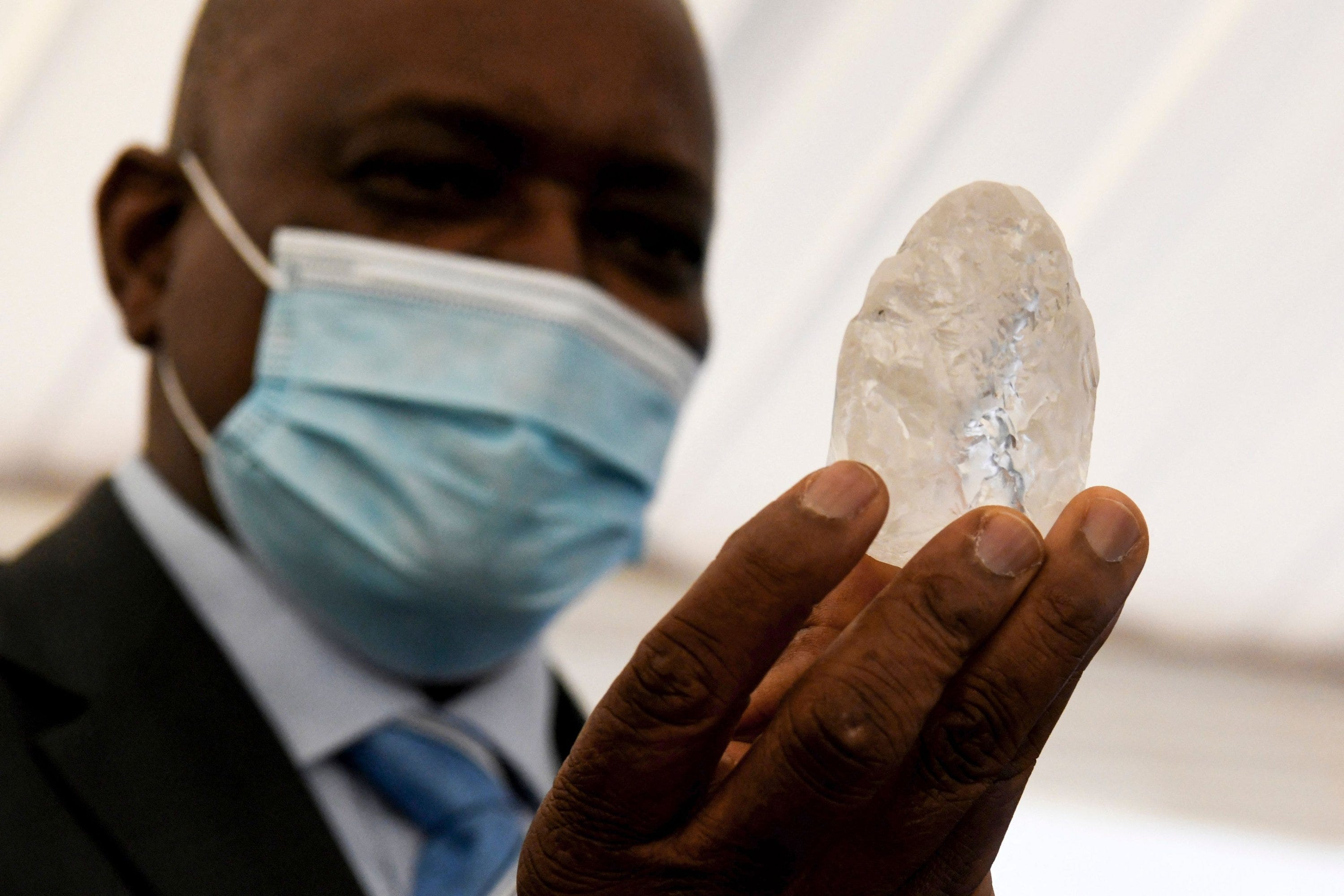
Having a wealth of natural resources isn’t all upside; in fact, many of the countries with the greatest mineral bounties are among the world’s poorest and most dysfunctional. Economists have noticed this and dubbed it the “resource curse”, the paradoxical observation that countries with lots of natural resources have slower economic growth and worse living standards compared to countries with fewer such resources.
This has been explained in a few ways. Primarily:
Dutch Disease: Money going to one industry or resource drives up the value of local money, so other industries like farming and manufacturing become too costly to produce exports.
Price Changes: World prices for resources like oil and gold go up and down all the time, with high volatility, which makes the budgets of governments reliant on those prices unstable.
Bad Leadership: Easy money from natural resources allows leaders to ignore expanding the tax base and going out and collecting taxes, it allows for lower public accountability because the leader’s power comes from a few easily secured resources, similarly, it allows for greater levels of corruption, and a fast track to dictatorship.
To escape the curse, economists recommend putting aside money from resource booms to buoy the country’s economy in future down times; using the money from resource booms to build up other industries; opening up the government and sharing its financial data publicly so as to prevent corruption; and, most important of all, using the money to educate the citizenry so they have the skills to diversify the economy and compete on the global stage.
But what actually happens when a country does all these things? Botswana did.
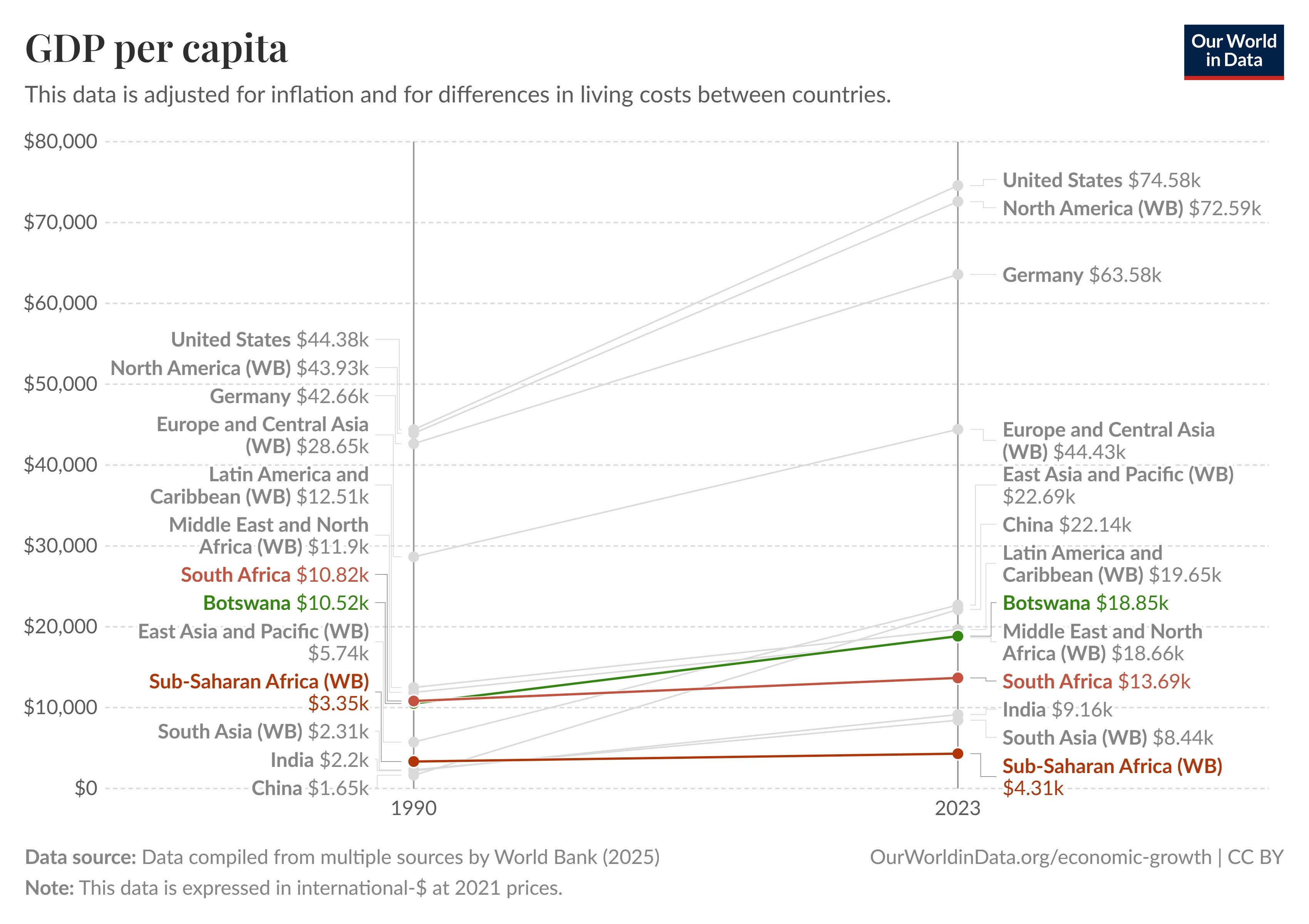
Growth in Sub-Saharan Africa is anemic. Between 1990 and 2023, the region’s mean real GDP per capita PPP rose by less than $1,000. The outlier was Botswana: its GDP rose by more than $8,000—an amount that’s small by first-world standards, but stands out as more than twice the average GDP in its region and puts the country a tier above.
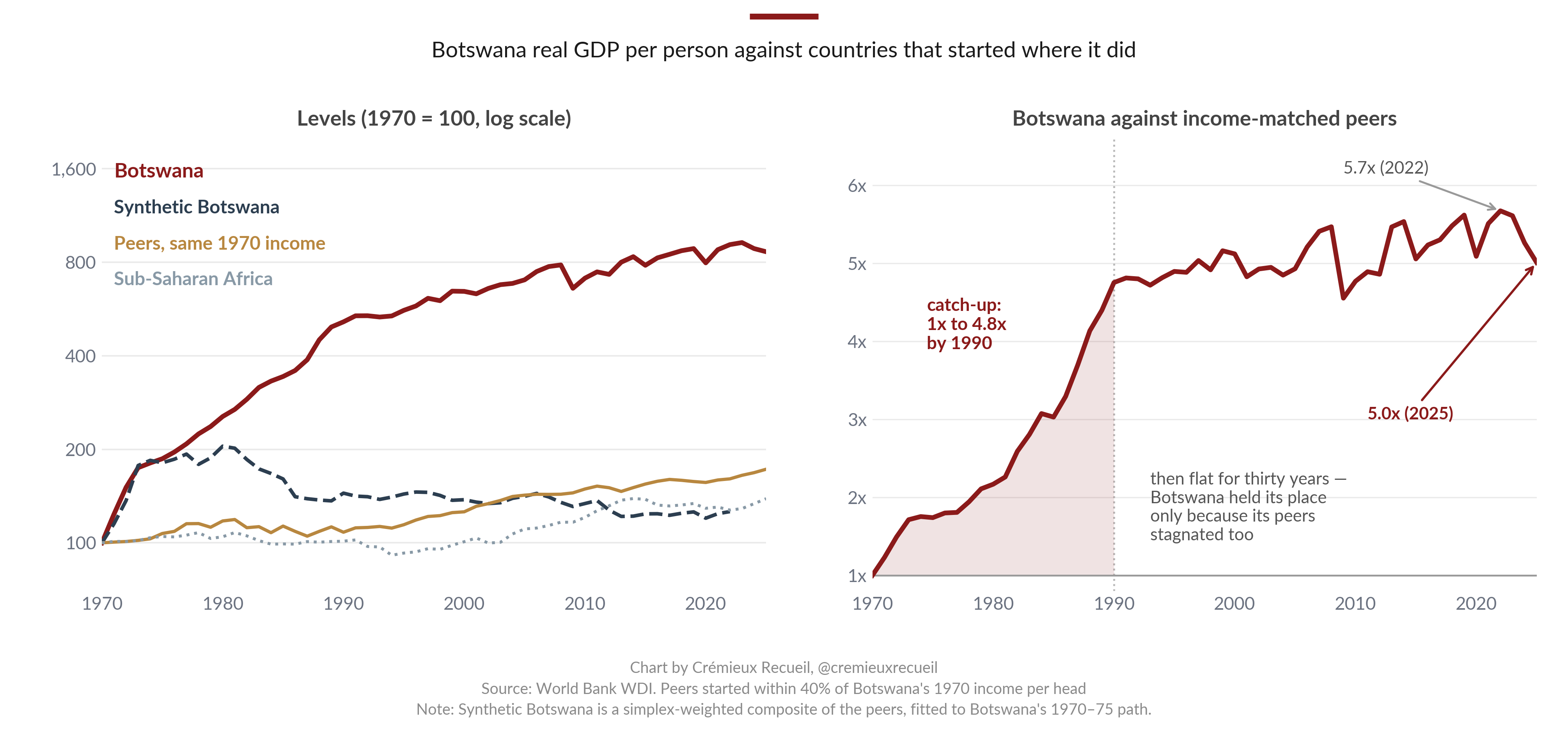
Botswana has been exceptional since shortly after geologists with the De Beers company discovered some of the world’s largest, most accessible diamond stores there in 1967. This led to staggering growth multiples. But there’s no need to be vague; we can make this comparison much more precise by placing Botswana next to peer countries that started off similarly poor and plotting exactly how it’s grown:
During Botswana’s boom, they took economists’ advice seriously: they were a world-leader in saving resource rents (#1 among peers), building foreign reserve buffers (#1 among peers), investing in education (6 of 166 globally), maintained high national savings (16 of 183 globally), invested heavily in gross capital formation (#7 among peers), and—partly because of their Southern African Customs Union membership—they had the 4th-lowest tariff rate in the world. What Botswana did was not yet ‘textbook’, but would become it: they established a sovereign wealth fund to overcome resource volatility issues before Norway was the reference; they bound recurrent spending to non-mineral resource revenues so their mineral wealth could only fund investment; through rigorous anti-corruption efforts, they became far and away the least corrupt country in Sub-Saharan Africa, ranked #2 in regulatory quality, #3 in rule of law and government effectiveness, and ranked #4 in voice and accountability, with globally respectable rankings in each category.
Botswana’s governance success has allowed it to avoid any coups since 1966, to avoid ever being an IMF structural adjustment case, and has given it the leverage needed to renegotiate its agreements with the De Beers company, moving the state towards capturing ever larger portions of its diamond rents.
Nobel laureate economist Daron Acemoglu dubbed Botswana “An African Success Story” and chalked up its success to a combination of “relatively inclusive pre-colonial institutions, placing constraints on political elites”, “maintaining and strengthening institutions of private property [being] in the economic interests of the elite”, “Botswana is very rich in diamonds, which created enough rents that no group wanted to challenge the status quo at the expense of ‘rocking the boat’”, and “a number of important and farsighted decisions by the post-independence political leaders, in particular Seretse Khama and Quett Masire.”
But let’s be real: the story is that Botswana sold a lot of diamonds, and little more than that. There’s no meaningful evidence of precolonial institutional hand-offs that explain Botswana’s current success and most policy successes economists credit with keeping Botswana’s economy above those of its neighbors are icing on the cake rather than the sponge itself.
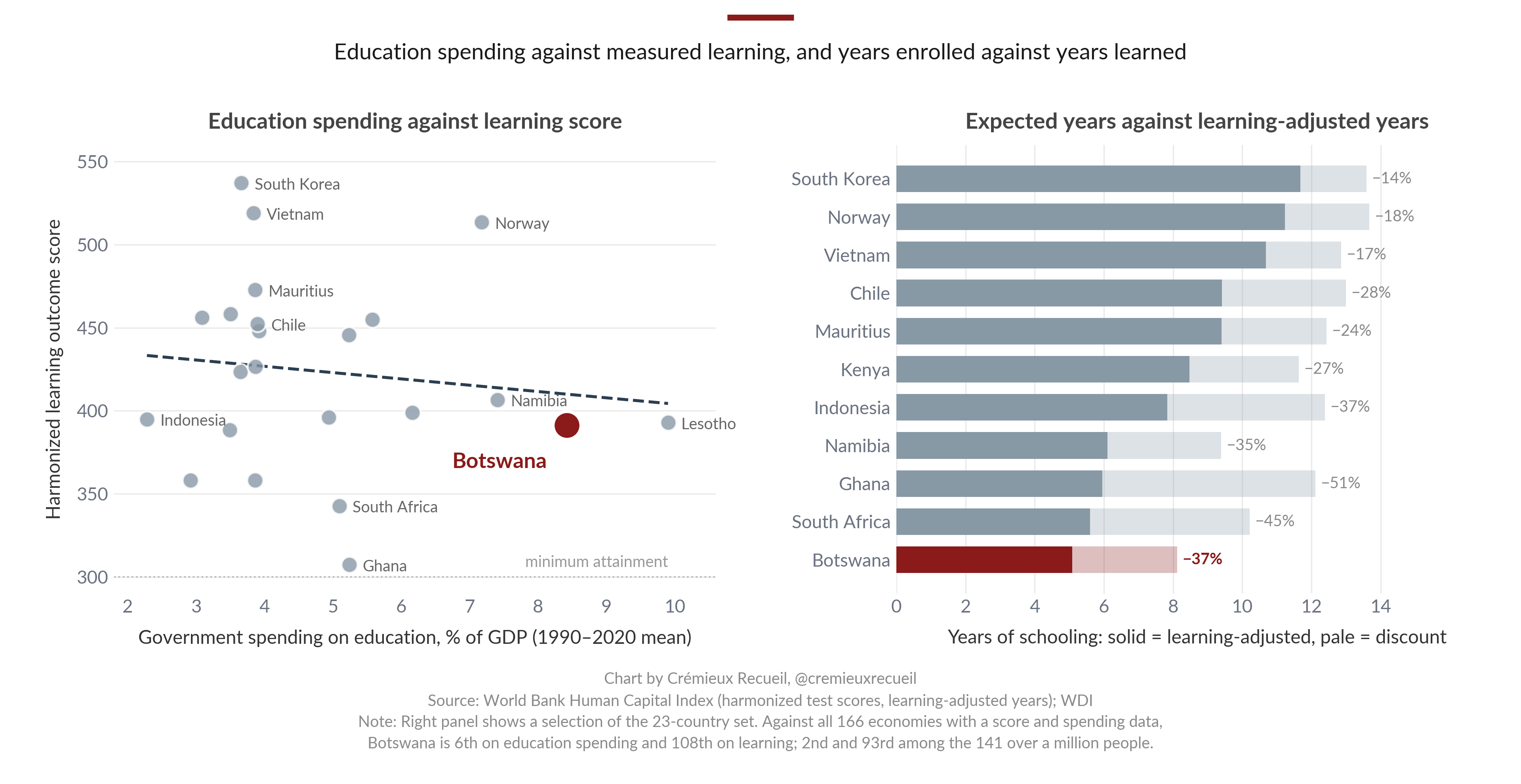
Botswana has invested substantially in education, but world-class educational investment hasn’t made their population any more cognitively capable. Their spending is longitudinally unrelated to the measured cognitive skills of their students, and it doesn’t set them apart from peer countries.
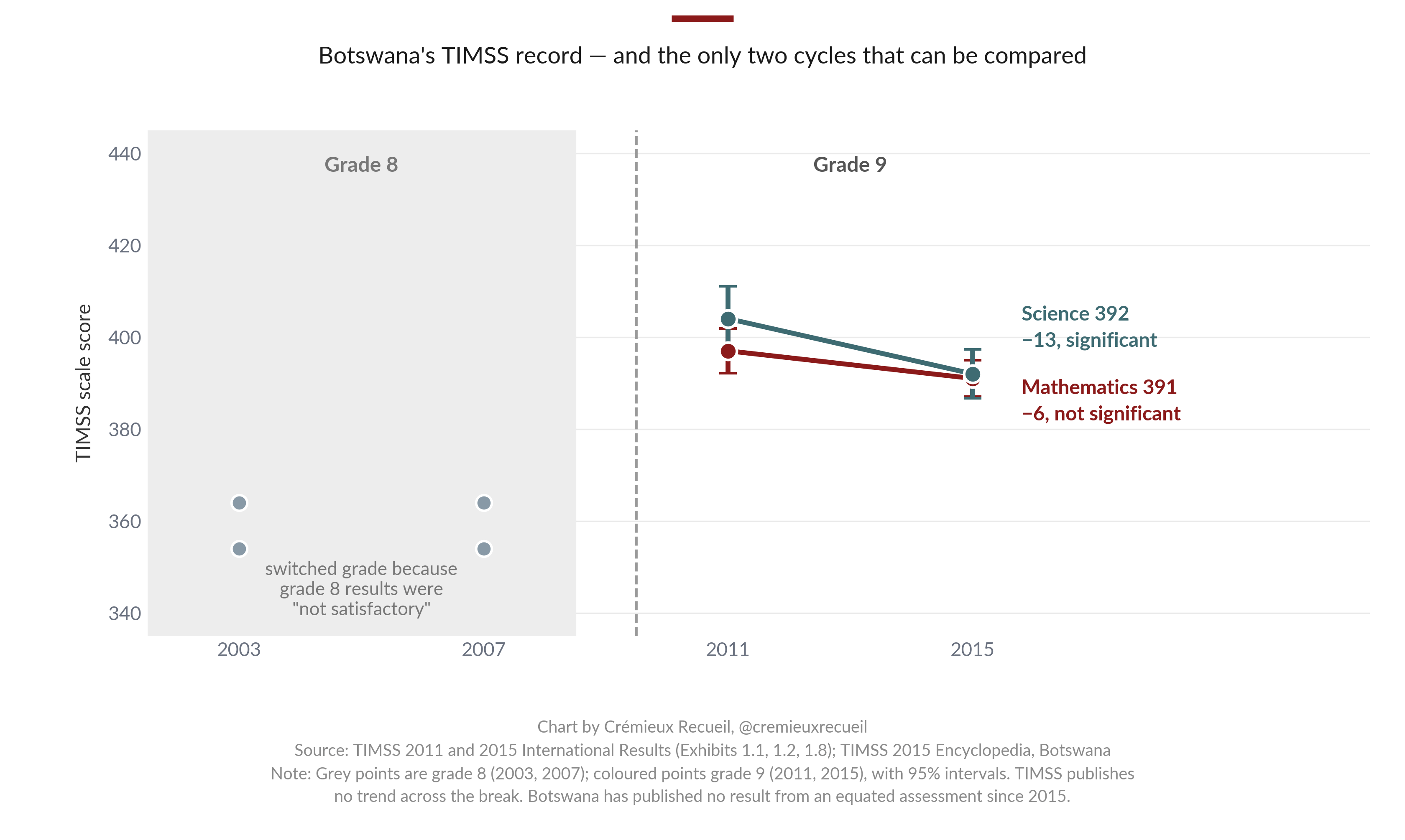
Consider Botswana’s lousy TIMSS performances:
Or look at Botswana’s pitiful SACMEQ improvements:
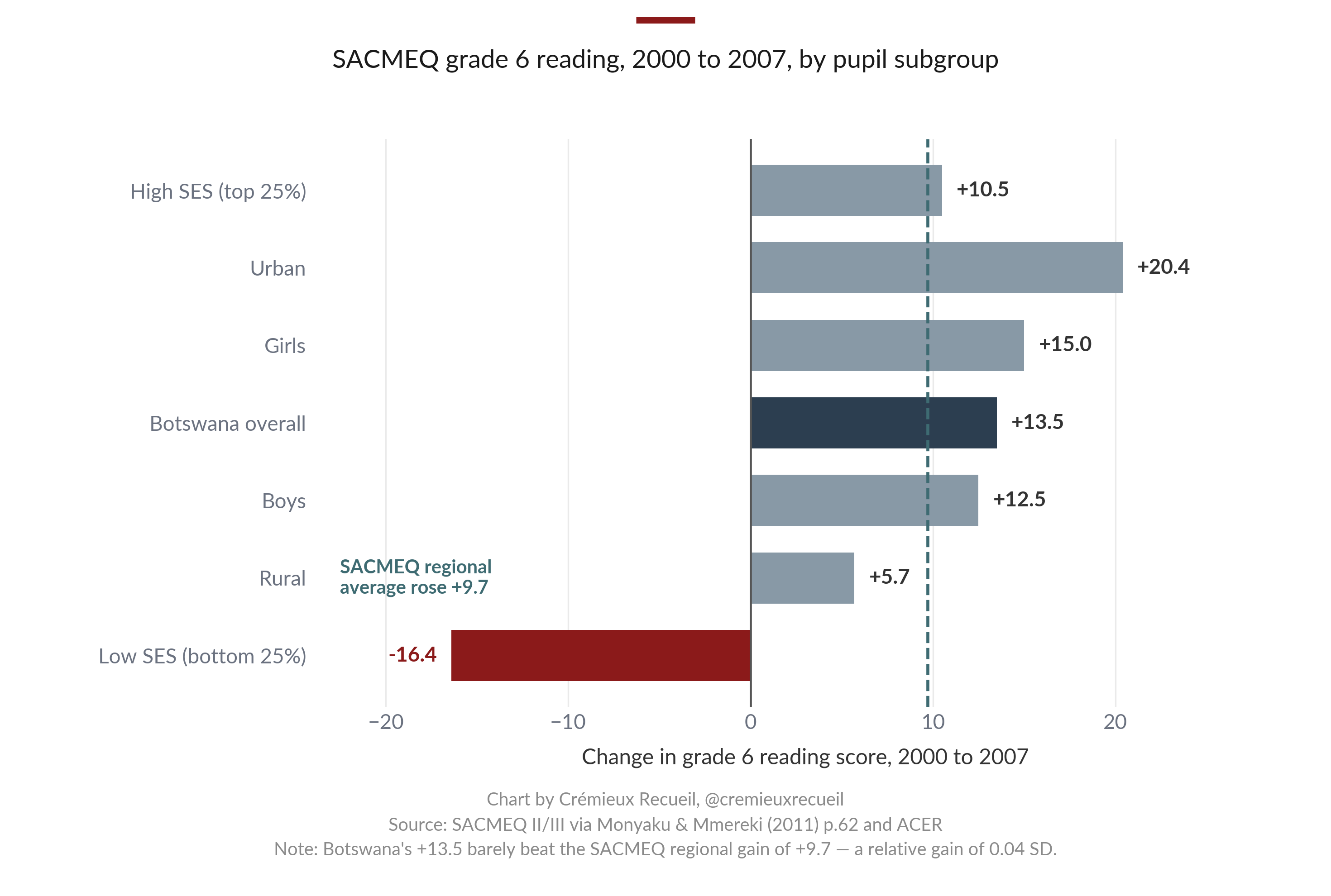
Botswana may nominally be doing things right when it comes to education, but they don’t have a lot to show for it. In fact, they may nominally also be doing things right when it comes to economic diversification, but it doesn’t look like they’ve managed to follow the typical route taken by developed countries, where manufacturing increases to a high level then falls back, to be replaced by services:
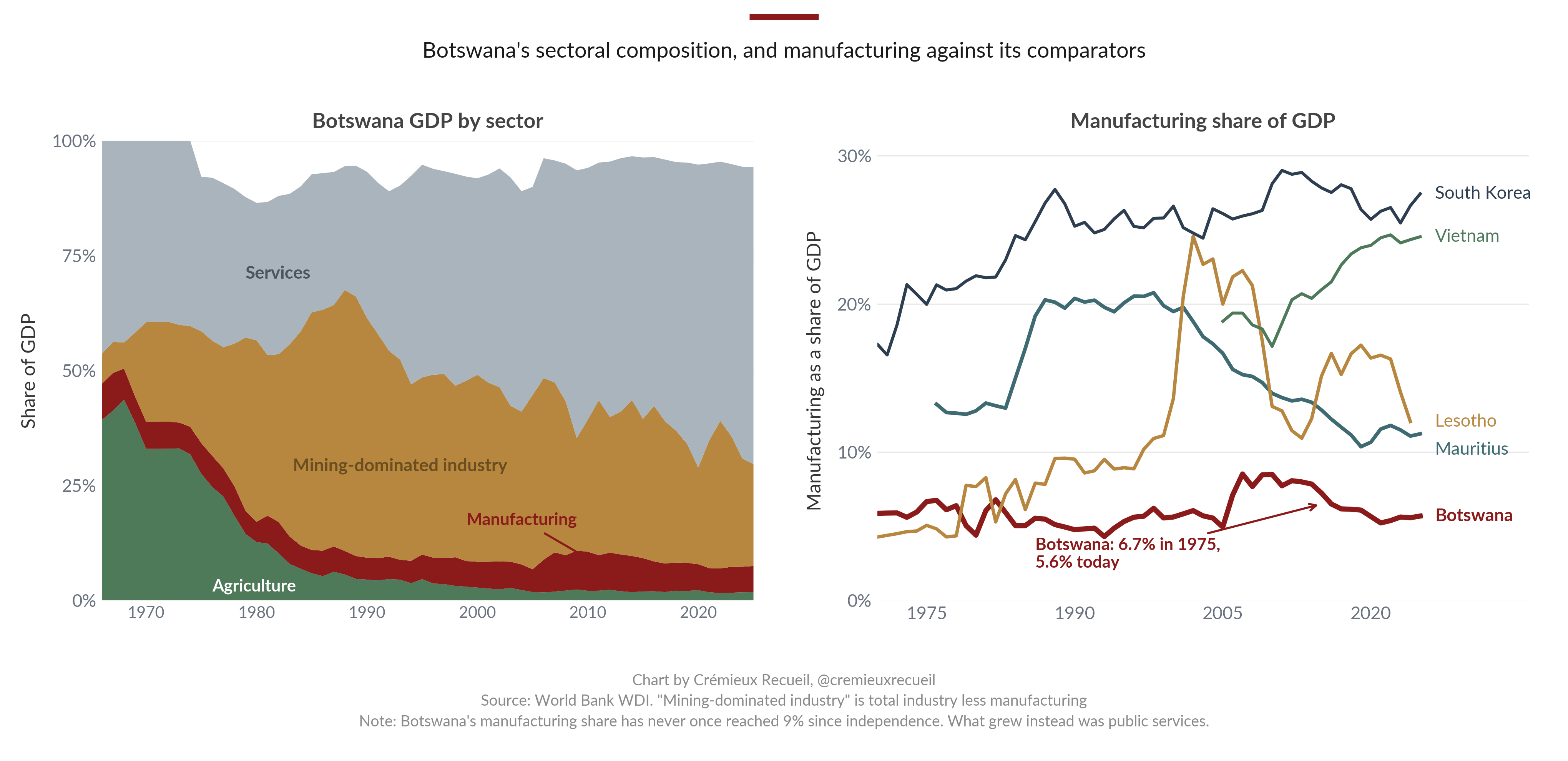
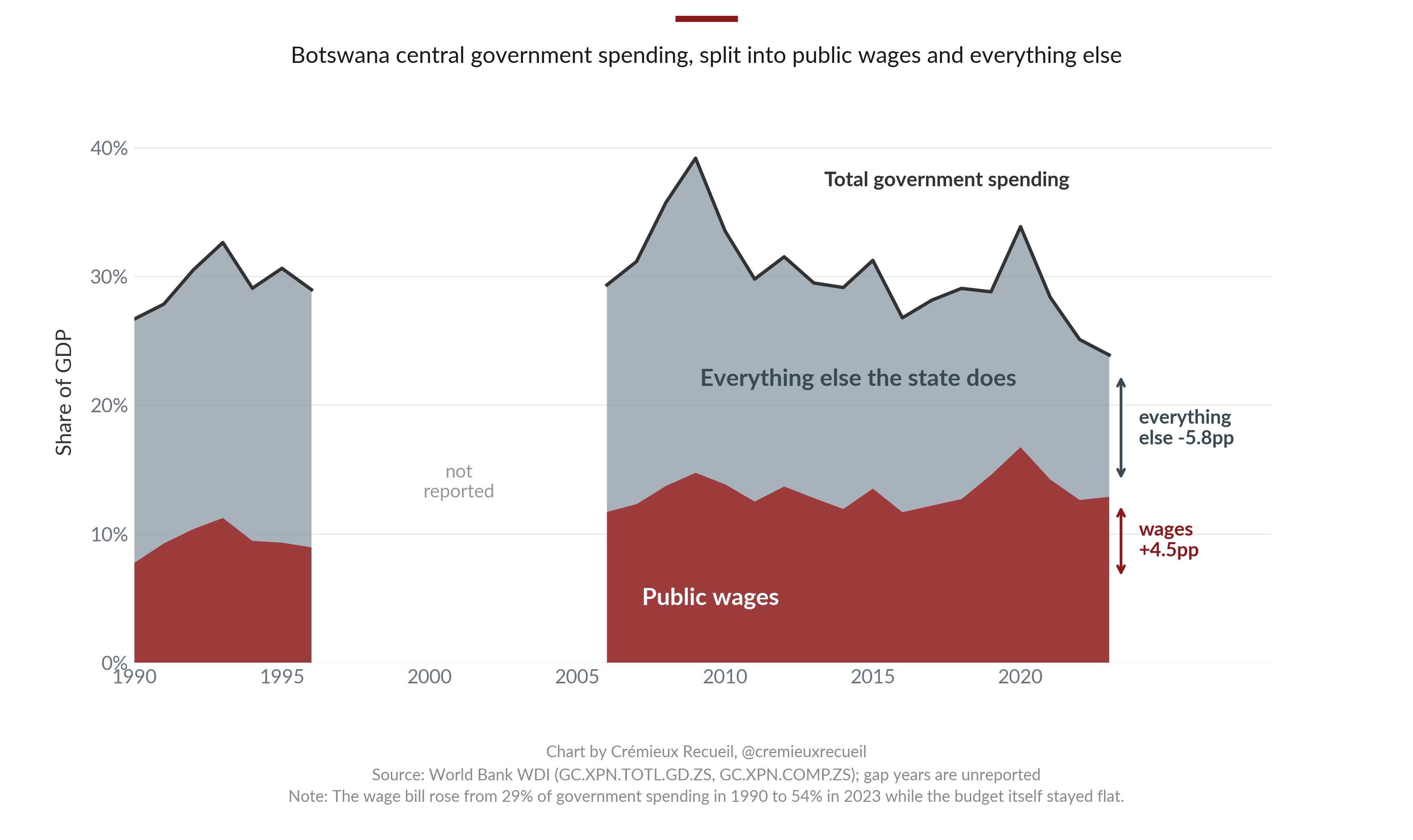
The chart may make it look like Botswana has rapidly moved towards advanced economy status, with a focus on services, but this is misleading. The kinds of services it’s funding are not that productive, and are in no small part driven by previous spending: a lot of this is the public sector, with a large share just being teachers’ pay, mandated by the state’s wasteful educational investments. Those sorts of unproductive jobs are alright to a degree, but without leading to other, more productive jobs being created, they’re not self-supporting, as in Botswana’s case.
But Botswana has diversified their economy. If you look at the diamond-specific share of Botswana’s GDP, you’ll notice it’s absurdly high, and indeed, the world’s highest there is. But, they have reduced that share from being nearly a third of everything to being just under 10% now. Success?
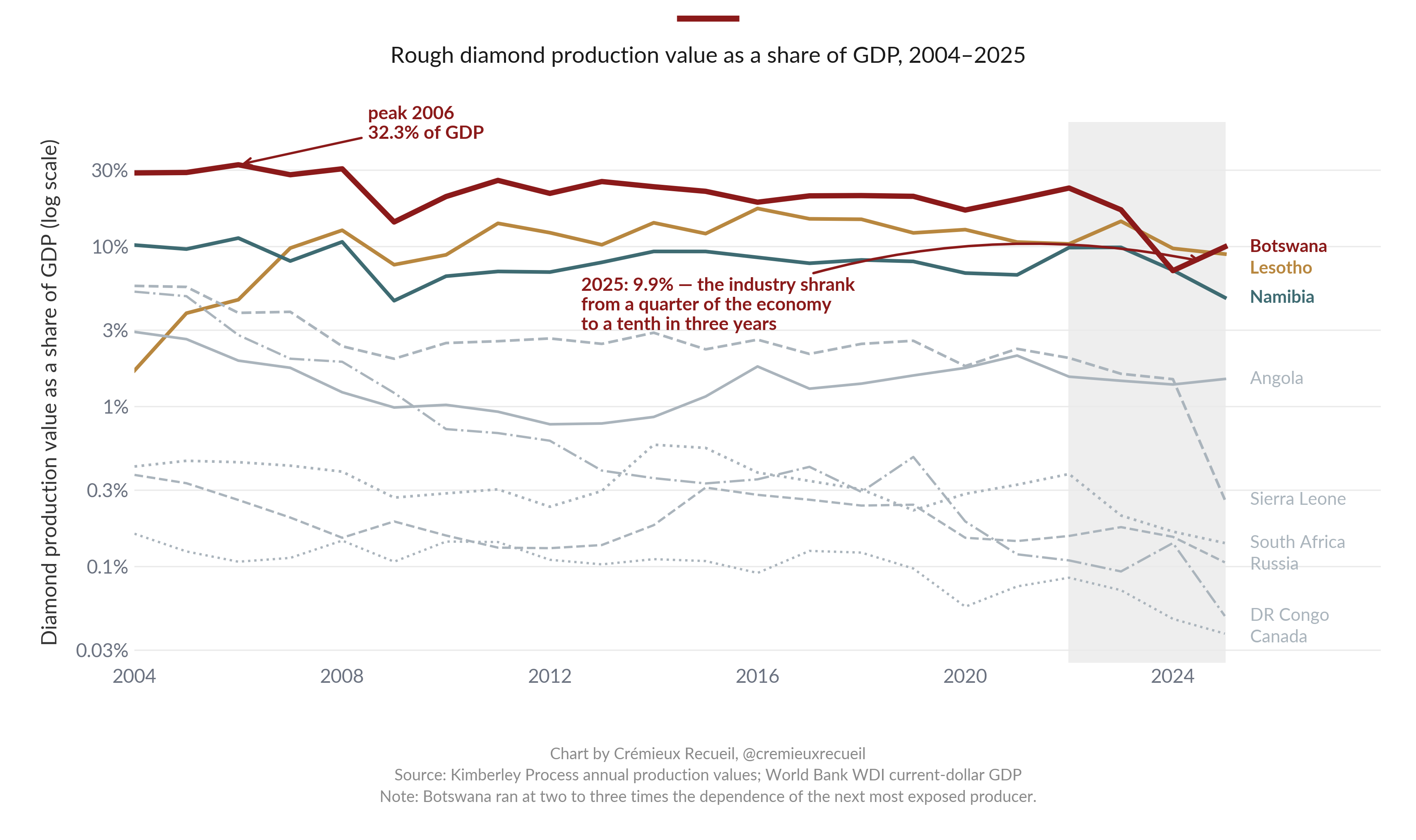
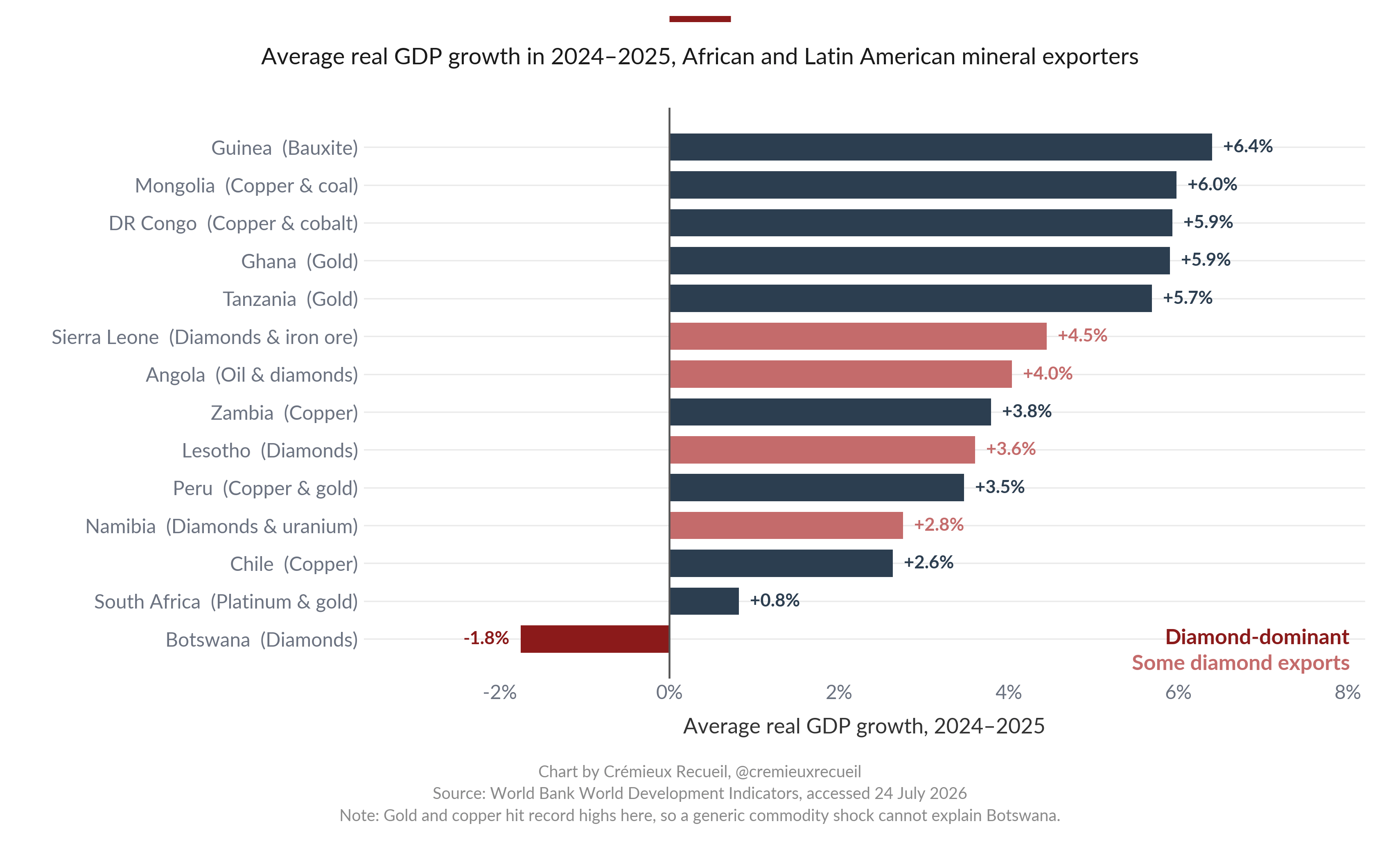
Unfortunately, Botswana’s diversification has not been beneficial; their economy has not grown as a result of moving away from diamonds. In fact, they’ve just had their first pair of consecutive years of GDP decline, even though many of their neighbors and mineral export-reliant peers are doing just fine in that time.
The issue for Botswana is that they are extraordinarily reliant on diamonds and the demand for diamonds is down. Specifically, the demand for natural diamonds is down. There are two things going on here. Firstly, the technology to create artificial diamonds that are large, clear, and cheap has advanced substantially. Lab diamonds were in 1-in-8 American diamonds purchased in 2019, and that’s risen to 61% by 2025:1
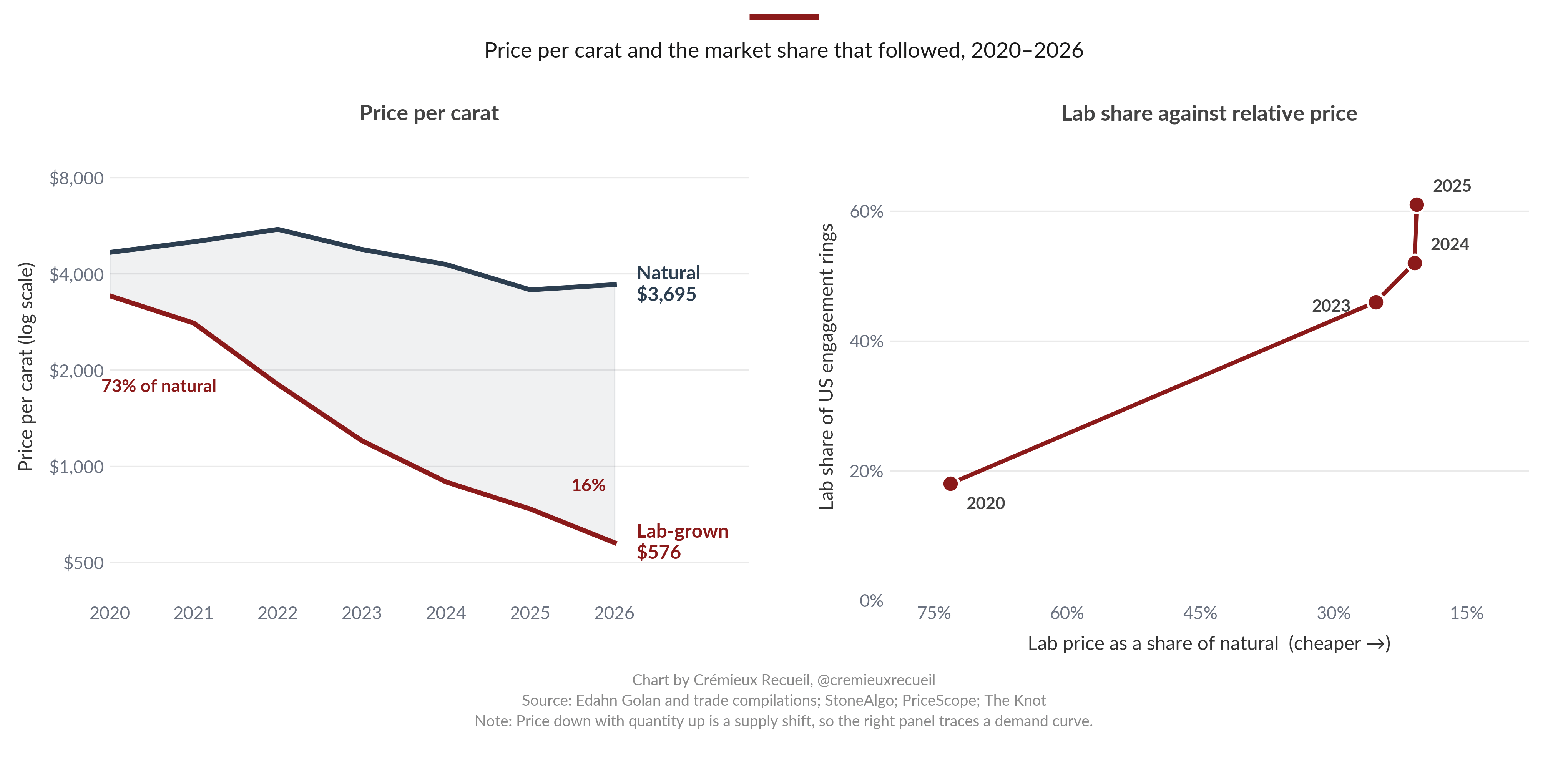
To make matters worse for natural diamond sellers like Botswana, marriage rates are down, and those account for the vast majority of diamond sales. 90% of U.S. engagement rings had natural diamonds in 2020 versus just 42% in 2025, and in that time, fewer Americans are getting married. The decline in marriage in China alone is enough to explain about 6% of the roughly 42% global decline in natural diamond demand between 2022 and 2025. An additional trend might explain another up to 14%, and that’s China switching towards gold jewelry and away from diamonds.
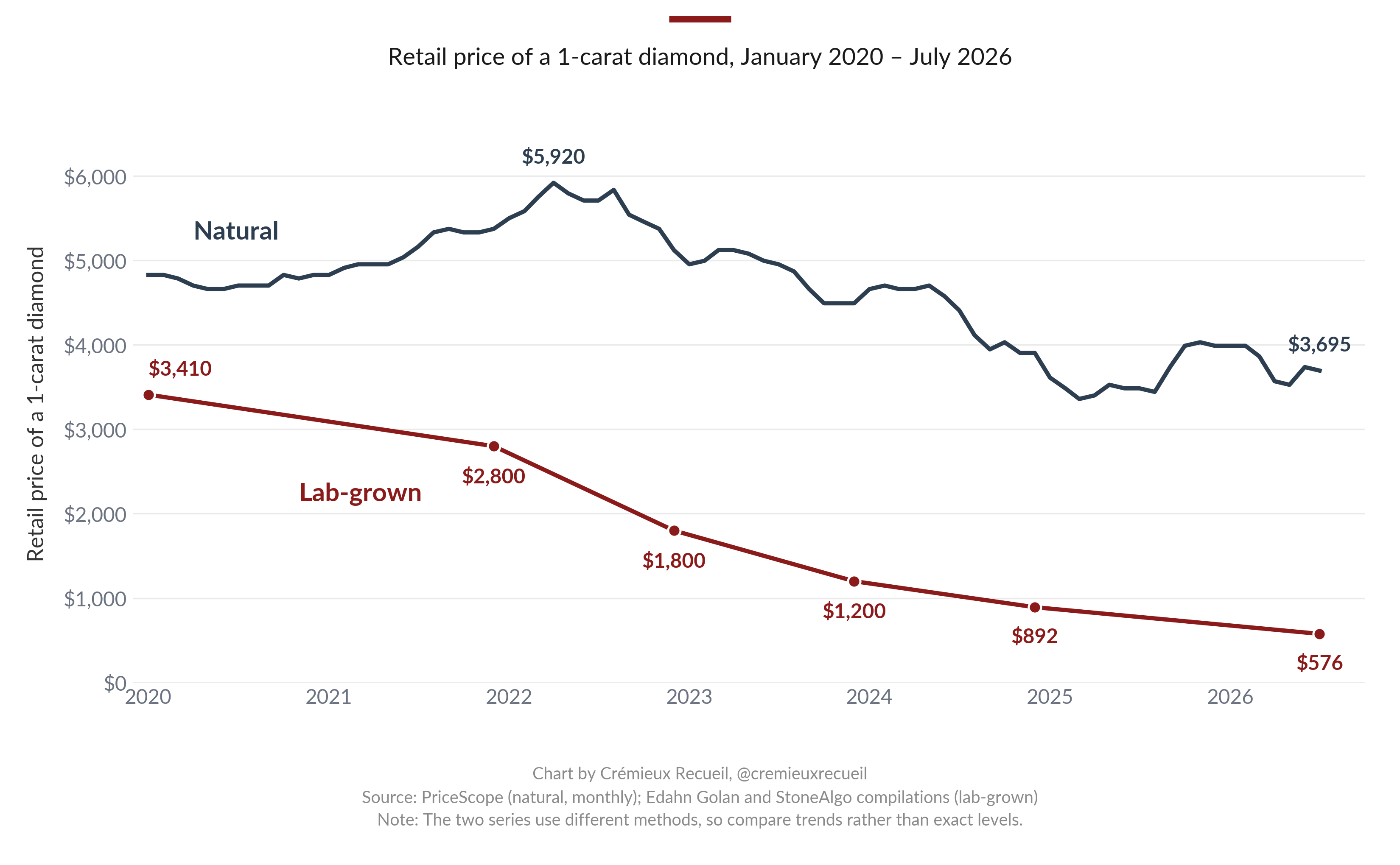
Through competition, lab diamonds have also pushed down the price of natural diamonds. As a result of all of these trends, the value of Botswana’s diamond production fell from $4.7 billion in 2022 to $1.98 billion in 2025. Accordingly, the Botswanan economic miracle has likely ended:
Despite decades of institution-building and population-education efforts, Botswana has only wound up a bit richer2 than peer countries, and it’s both unclear how long that can last and how it can continue growing from here. Despite institutional reform proponents’ suggestion that you can effectively set up quality institutions and let things ride, Botswana seems like the bull case, and it’s an example of good institutions allowing extensive resource extraction with much less in the way of lasting good.3
You can find everything needed to reproduce my results and more here. Happy coding!
This was a timed post. The way these work is that if it takes me more than two hours to complete the post, an applet that I made deletes everything I’ve written so far and I abandon the post. You can find my previous timed post here.
A message from my sponsor, Mechanize:
We’re hiring software engineers to build environments and evals that frontier AI labs use to train coding agents.
To get a better sense of the work we do, you can check out GBA Eval, where we had models build Game Boy Advance emulators from scratch and scored their performance.
Base pay starts at $300K/year for junior software engineers, with more for senior roles, plus equity and performance bonuses. Apply here.
An alternative view:
A lot in relative terms, a modest amount in absolute ones, and it looks worse when Botswana’s very high inequality is acknowledged.
Their reforms have still certainly had benefits, but my argument is that they do not appear to be sufficient to generate continued growth and they have not addressed the core fragility issue common to all undeveloped economies.
Great read Cremiux.
It's even worse than you think for Botswana. The president of Botswana right now, Duma Boko is trying to get more ownership of the diamonds from de beers right when natural diamond market is weakening. Natural diamonds getting replaced by synthetic diamonds is like when Chile's finances were annihilated in the early 1900s when Chilean nitrate got replaced by German scientists figuring out the Haber-Bosch process which mass produced nitrate fertilizer.
Just some things to add, botswana struggled in manufacturing in part due to South Africa's post apartheid nationalism. I'll give one example, in Botswana, a zimbabwe businessman named Billy Rautenbach made the Motor Company of Botswana (MCB) which entered a joint venture with the Botswana government's Botswana Development Co. which made Hyundai & Volvos in a lego kit fashion in Gaborone in 1990s and thanks to the Southern African Customs Union (SACU) free trade agreement, MCB could sell volvos and Hyundai cars tariff free in the South African market.
Nelson Mandela had the nationalist industrial policy of the Motor Industry Development Programme (MIDP 1995). These were tax credits and incentive schemes that rewarded assemblers located in South Africa. So now, multinationals in South Africa were more competitive, hurting Botswanan firms competing in South Africa.
In addition in the SACU, South Africa lowered the import quota of cars so there would be less competition.
MCB needed to sell at least 2K cars per month to break even, but Mandela's government limited the quota to 1K at lower tariffs, then after 1K, every foreign car was sold at 100% tariffs. This quota scheme made it uneconomical to sell cars from Botswana since the whole point of a multinational to sell in Botswana was to use Botswana's cheaper labor at the time to sell to the South African market tariff free. Also, since, none of the other Southern African neighbors had a big enough market (Namibia didnt even have 2M people in the 1990s) or was lucrative enough (think Zambia or Zimbabwe) to justify the fixed costs of making a factory there. The MCB operator also had some fraud charges. By 2000, the Hyundai plant in Botswana closed.
https://iol.co.za/business-report/international/1999-03-11-sa-botswana-may-collide-over-hyundai-sales/ (link for quota scheme)
https://www.thenewhumanitarian.org/report/11782/south-africa-job-losses-follow-hyundai-liquidation (link for hyundai plant going bankrupt in botswana)
Secondly, the only reason why Botswana succeeded is because it didnt nationalize from de Beers while my country Ghana, Sierra Leone, and Zaire (Congo) did and ran their industries to the ground. Or to be "charitable" they treated their nationalized diamond company as a public sector job welfare slush fund and completely ignored the enterprise part of it, making them unprofitable black boxes until the country went bankrupt and IMF recommended privatization. I think it also helped that in all those other African countries, their diamonds were alluvial which are easily smuggable, while botswana diamonds need top end diamonding mining equipment. As a result, Botswana diamonds were unsmugglable. So botswana also had a geology advantage there.
Also, Botswana kept De Beers running the operation only getting more ownership over time.
I wrote more about how screwed Botswana is with more detail here. You did an awesome job, but i added some extra detail in my Q&A here:
https://yawboadu.substack.com/p/guns-germs-and-cobalt-q-and-a-9-insights?utm_source=share&utm_medium=android&r=garki
The era of dominance of natural diamonds is over. Not only is there now competition from excellent lab diamonds, but there is lab Moissanite (Silicon Carbide) which is no mere costume jewelry but in my opinion forms superior gems with better radiant appearance than even diamond, and is only inferior in very marginal difference in absolute hardness, which, unless you are going to use your pretty stone for cutting or grinding something, makes no difference.