

Today’s post is brought to you by my sponsor, Mechanize. They’re hiring junior software engineers at $300K/year base salary.
Crime is generally rare and is virtually always done by very few people. It’s mostly done by adolescents and young adults, in a few neighborhoods, on a few streets, by people from a few households. It is, in a word, concentrated. To understand just how extremely concentrated crime is, consider a few notable real-world cases.
In Leeds circa 1995-96, a series of burglaries by deception ended after one man was arrested and charged for three burglaries. During the local anti-burglary operation, fourteen prolific burglars being caught resulted in residential burglaries falling from 48.7 to 18.5 per month.1
In the City of London, putting two bike thieves behind bars helped reduce bike theft by 78.57% between Q1 2020 and Q1 2021.2
In Leinster, a car crash killed three men and, immediately after, the burglary rate fell by 20%, without being affected in areas they didn’t frequent.
In Kettering, a local MP reported that residential burglaries doubled after the release of a single prolific offender.
Brå—the Swedish National Council for Crime Prevention—reported that 0.11% of Sweden’s adults committed some 36.88% of the crimes in 2025.
The examples I’ve provided so far come from Britain, Ireland, and Sweden, countries not exactly known for crime. So, how far does the concentration of crime generalize? Perhaps it’s less concentrated in America? Believe it or not, it doesn’t seem that way:
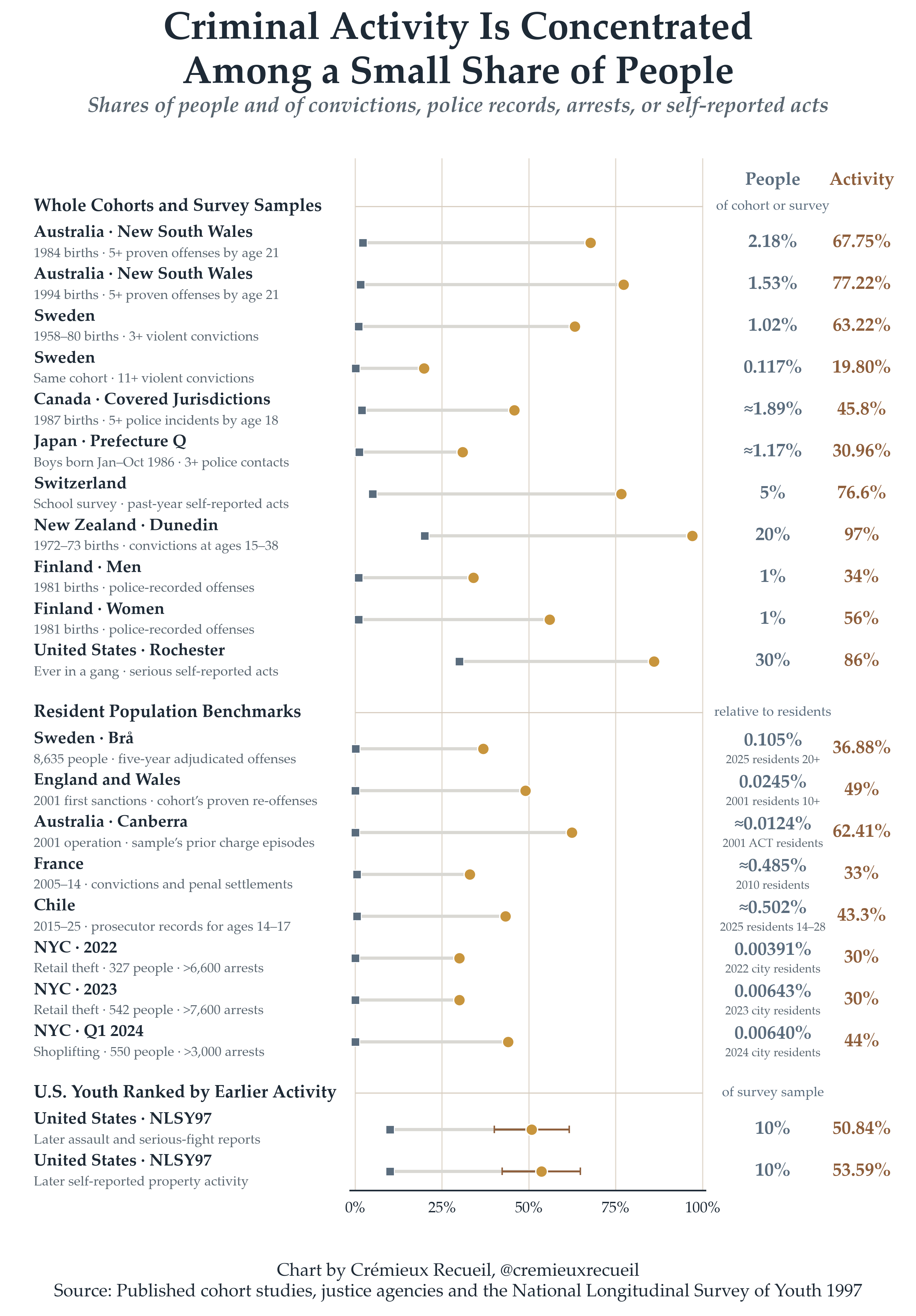
Incredibly small portions of society are responsible for most of the crimes and practically all of the severe ones. If we were to put crime perpetration into Gini terms like we do for income and wealth inequality, we would be stunned.3
Imagine it like this: you have a town of 100 people. If the town’s wealth was like Sweden when it comes to crime, one person would hold 98.92% of the wealth and the other 99 would split the remaining 1.08%. By contrast, if Little Sweden’s wealth inequality matches real Sweden, then that one person owns 75% of the wealth. If it’s like disposable income inequality in real Sweden, then one person owns 32.4% of it.
Understanding facts like this, it starts to become clear that it’s very hard to explain crime as something that’s substantially mediated by poverty or income inequality or through any of the typically-proffered sociological explanations. But knowing how concentrated crime, wealth, and income are isn’t enough to reach that conclusion with much certainty. To go further, we can invoke some other facts.
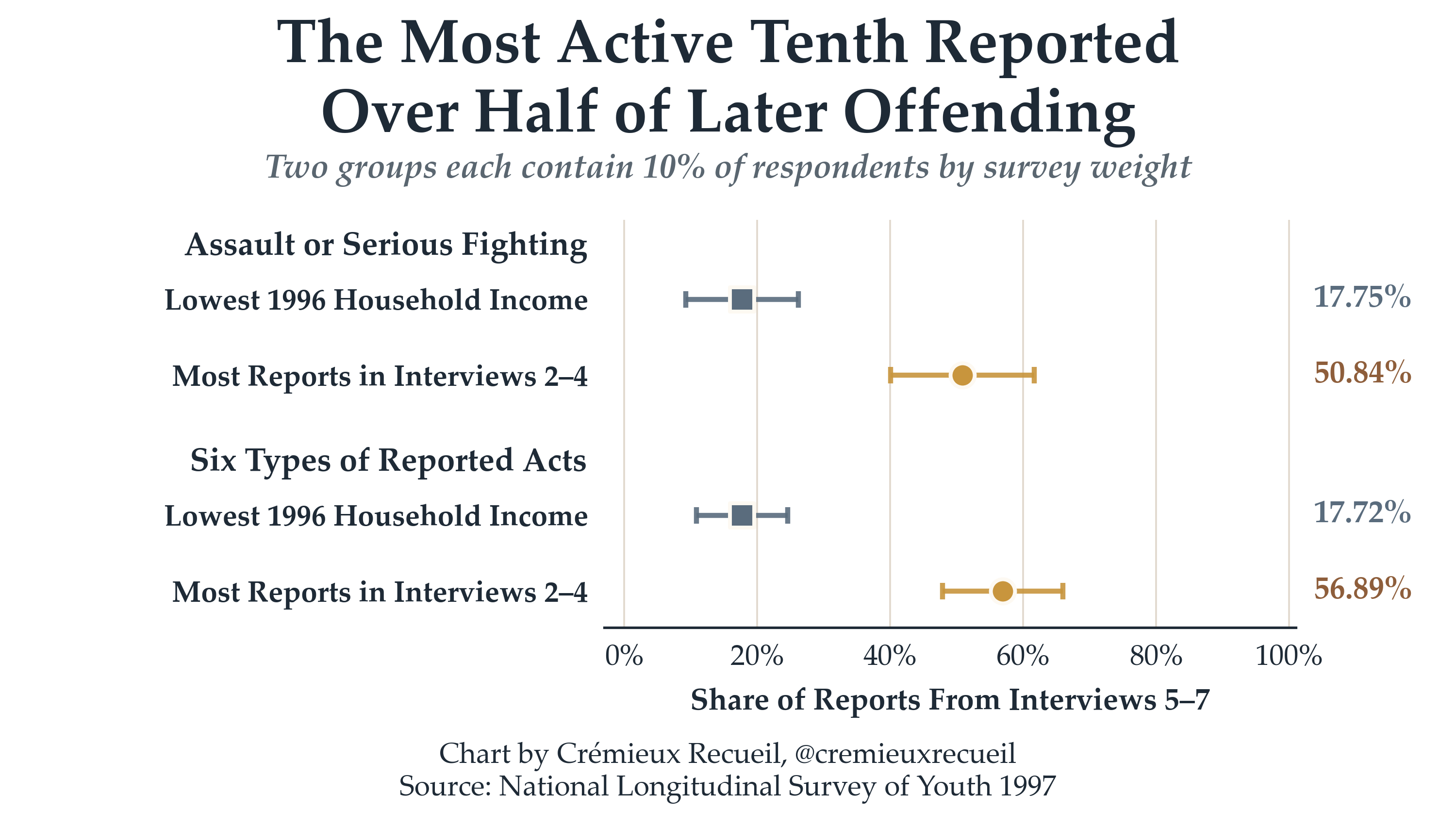
How much does the top-10% of offenders match up with the bottom-10% of earners? The answer is not much! The top-10% by priors account for most of the crime, whereas the bottom 10% by income account for only about 18% of it.4
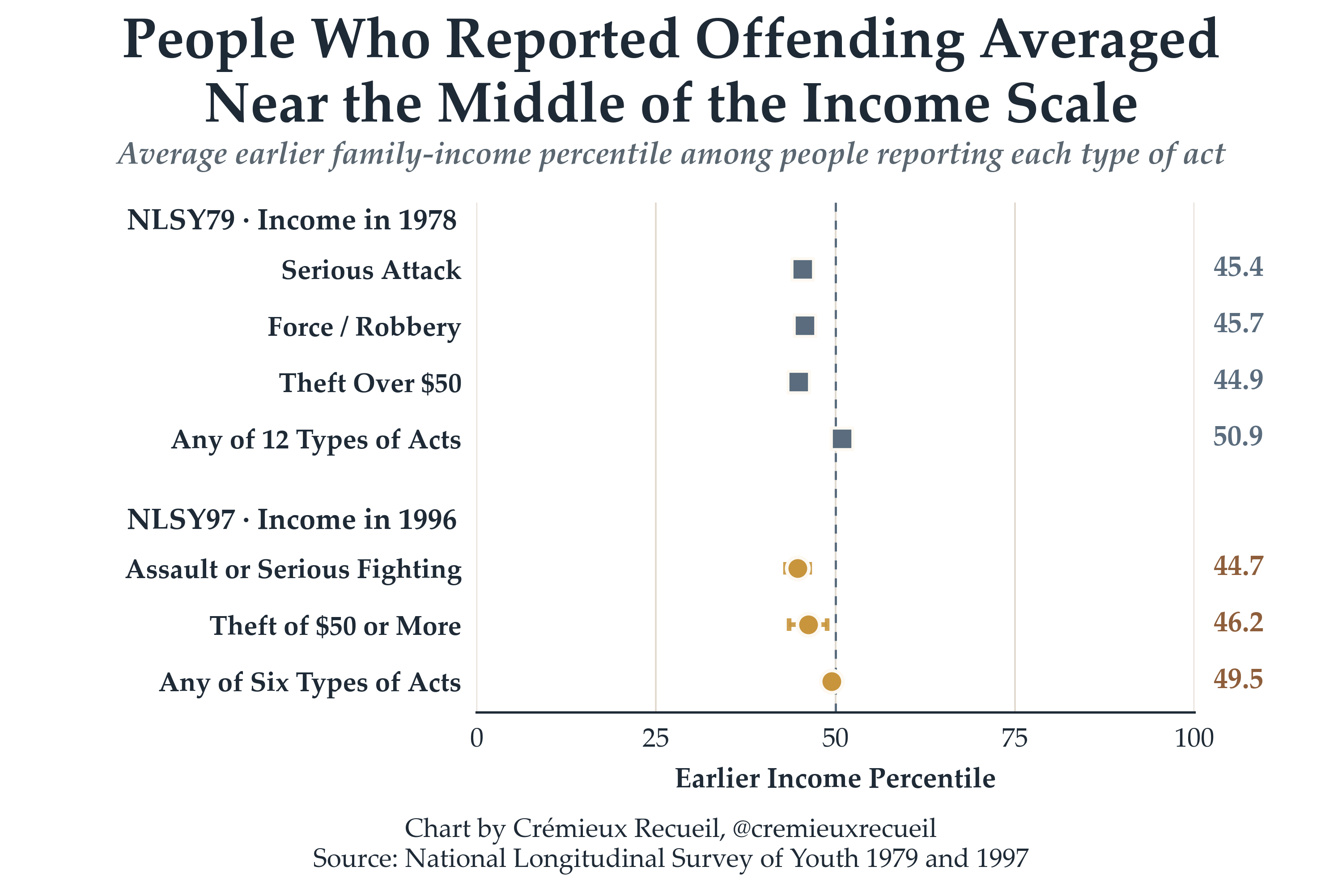
How poor are people who go on to become criminals, on average? Not very. They’re slightly poorer on average, but it’s not egregious. There is, however, a conceptual issue here: doing crimes versus getting caught doing crimes. For reporting doing crimes—which is validated by subsequently getting caught, as seen in Footnote 4—, there’s not much socioeconomic difference with the general population.
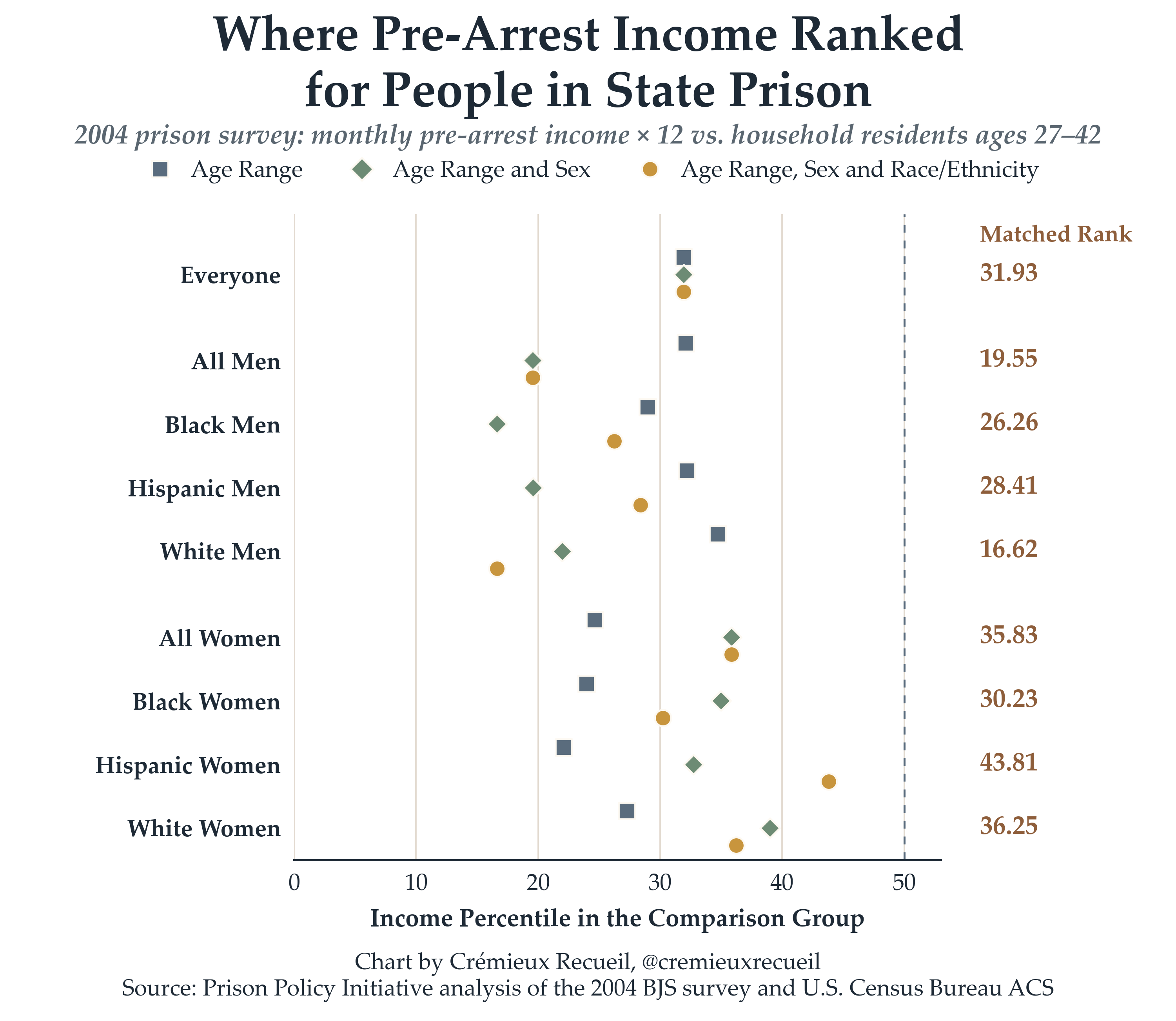
The people who get caught doing crimes and end up incarcerated as a result, however, look to have even lower incomes ahead of their run-in with the law. But, how much lower? Considerably, but not so low that the typical criminal tends to be in poverty. In this example, poverty is at the 22.51st national percentile, and most groups cleared it:5
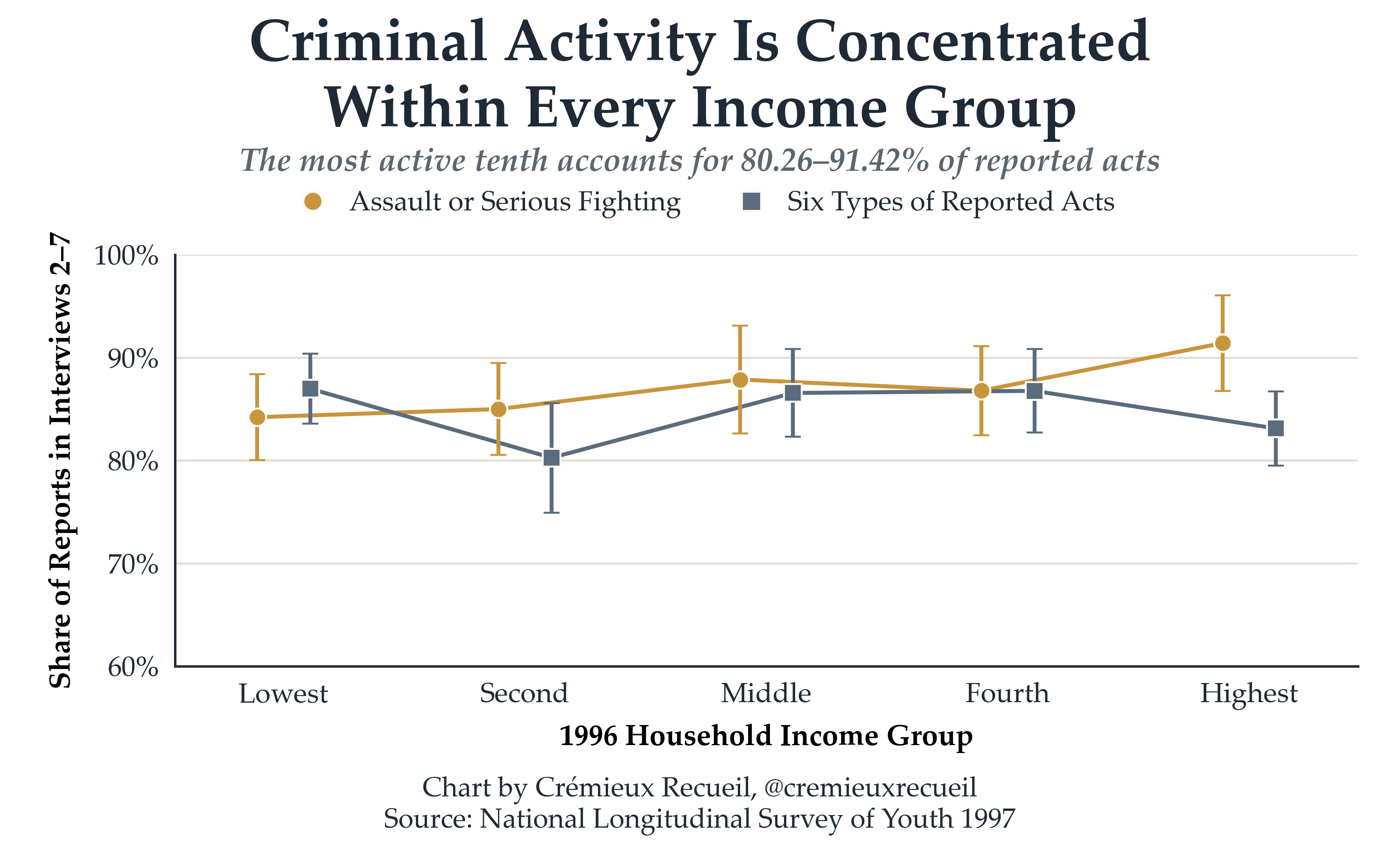
Is crime concentrated, even within income levels? Yes! From low to high incomes, the people who do the crimes are always few in number, but extreme in how often they find themselves breaking the law.
Try to fit theories through these facts, and you’ll find that they entail a lot of stricture. It’s difficult to explain with poverty, discrimination, malnourishment, unemployment, too much free time, inequality, or any other variable, why there should be so few people actually doing crimes. Even the conjunction of all the variables you can think of probably doesn’t help since, to the extent they appear to explain the propensity to do crimes, they largely do so due to what they have in common. As a result, there’s not much room for predictions to improve by bringing them all in.
The concentration of crime is an important fact to remember if you’re going to understand crime more generally. It’s also an important fact to understand if you’re going to act on crime. In fact, it’s been exploited to substantially reduce crime without arresting very many people in plenty of places!

The country of El Salvador has even exploited it to go from being the world leader in homicides to being among the world’s safest countries, practically overnight. They did this by locking up about 2% of the population, to the intense joy of most everyone else.
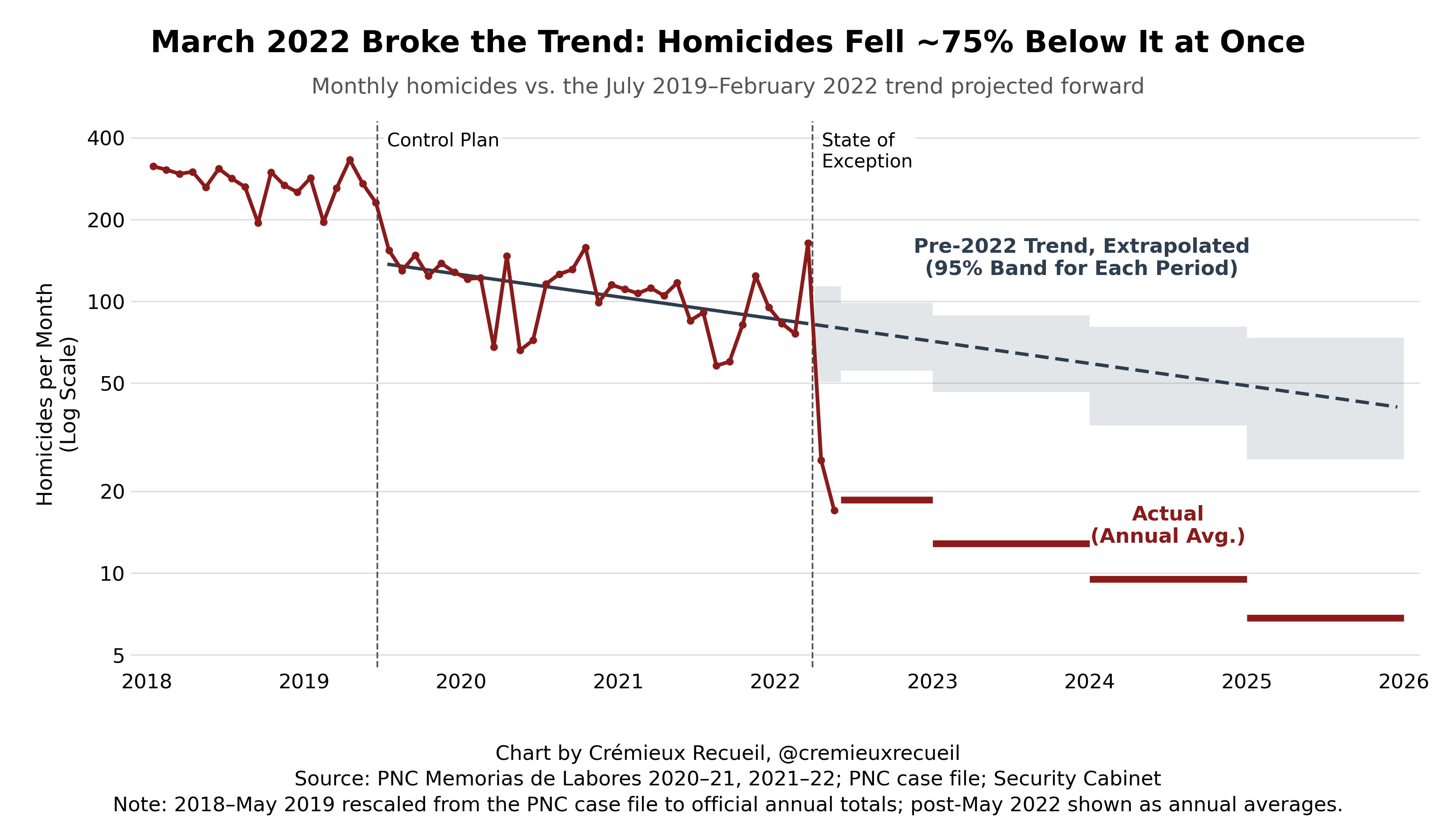
Because crime is so concentrated, we can achieve these sorts of results elsewhere. We just have to work to document the super-predators—and they’re usually known to police—and then put in the leg work to lock them up. It can be that simple.
