

Today’s post is brought to you by my sponsor, Mechanize. They’re hiring junior software engineers at $300K/year base salary.
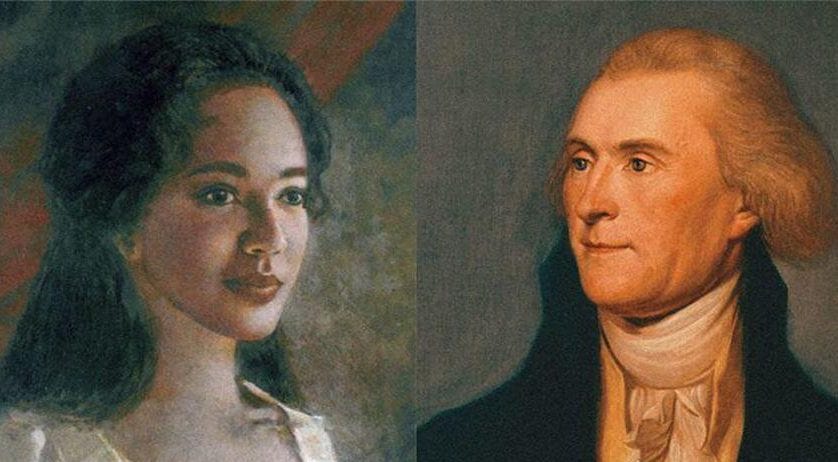
Thomas Jefferson is the well-known Founding Father who wrote the Declaration of Independence. Sally Hemings was his three-quarters White (‘quadroon’) slave and his wife’s half-sister. She was tasked with being the attendant to his daughter Martha.
In 1787, Martha took Sally on a trip to Paris, where Hemings’ slave status was not recognized, making her legally free. During that time, she stayed on as Jefferson’s servant, and over the course of their 26-month French sojourn while she was a free woman, Jefferson and Hemings began a romantic relationship. At the time, she was roughly 15 years old and Jefferson was a mid-40s widower.
When it came time to return to the States, Jefferson negotiated with Hemings: come home, return to slavery, and you’ll be afforded considerably leniency in work, and your kids will all be manumitted when they come of age. After returning to America, Hemings had four children and Jefferson and his estate eventually freed all of them.
This bit of history has caused considerable political consternation. There are those who want to tar Jefferson for this relationship for all manner of reasons. At the time, the main focus was on the relationship being miscegenation, and thus illicit for that reason. Nowadays, the main focus is on the relationship being necessarily coercive due to Hemings’ status as a slave. Regardless, there was and remains controversy.
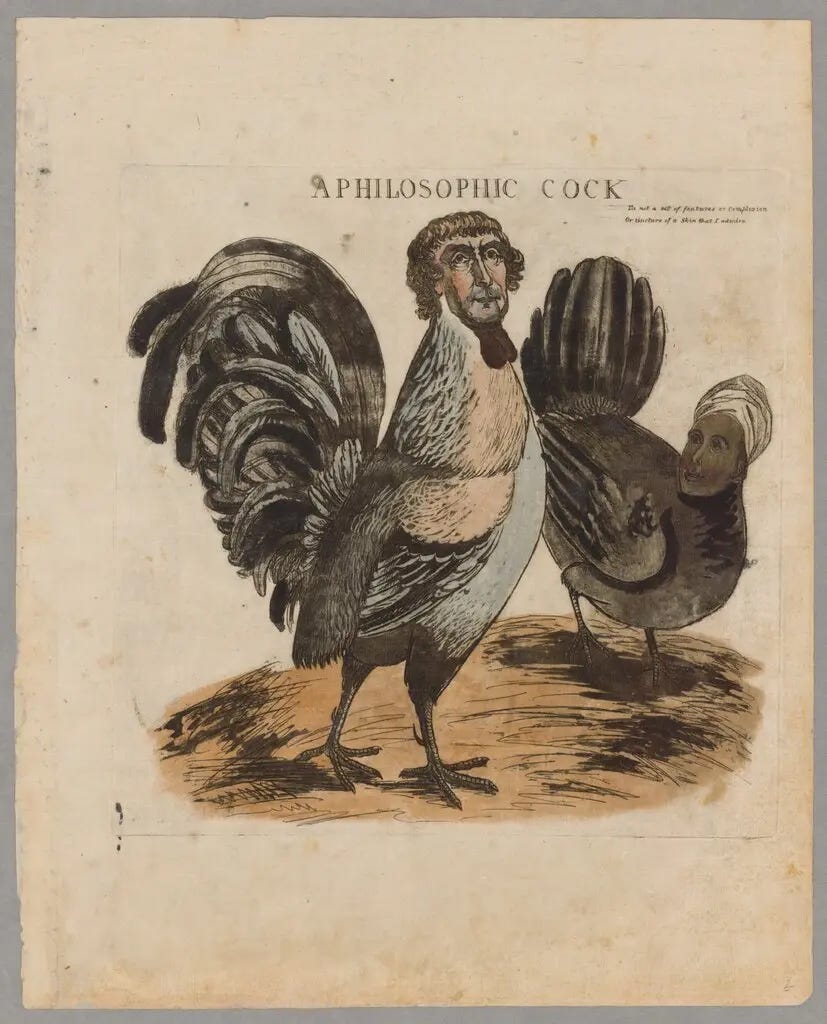
Part of the controversy about the relationship between Jefferson and Hemings was about whether it even resulted in children. It’s certainly the case that Jefferson and his estate freed Hemings’ children, and it’s also the case that slave-owners disproportionately freed slaves who were their children. However, this on its own does not establish that Jefferson was the father. Jefferson may have simply kept his word and freed Hemings’ children regardless of parentage.
This perspective runs into several issues. For example, people at the time frequently attested to and mocked Jefferson for his involvement with Hemings, and they even claimed that Hemings’ kids had a striking resemblance to Jefferson. Moreover, we know from genetic tests that there are certainly many people alive today who are related to Jefferson.
In 1999, a genealogical project established that Jefferson’s Y-chromosome was passed down to the modern-day, establishing for many that he had fathered Hemings’ children. But this finding is not unambiguous. Two years later, the Thomas Jefferson Heritage Society published a report noting that the Y-chromosomal evidence was consistent with Hemings also being impregnated by a different Jefferson man. This perspective deserves some credit precisely because there were candidate Jefferson men in contact with Hemings beyond Thomas: his brother and his nephew.
That back-and-forth leaves us where we were until a few days ago: unsure if Jefferson was actually the father of Hemings’ children, or merely a bystander to the impregnation of one of his favored slaves by a male relative. But now, the Smithsonian has sequenced Jefferson’s whole genome—mystery no more!
We now have percentages of autosomal DNA sharing between Thomas Jefferson and a handful of Hemings’ descendants. This is the DNA that’s not mitochondrial or from the sex chromosomes. You share 50% of it with either of your parents and your full siblings share an average of 50% with you as well (vs. 25% for half-siblings and avuncular and materteral relatives, and 12.5% for first-cousins), with a range of relatedness due to the randomness involved in inheritance.
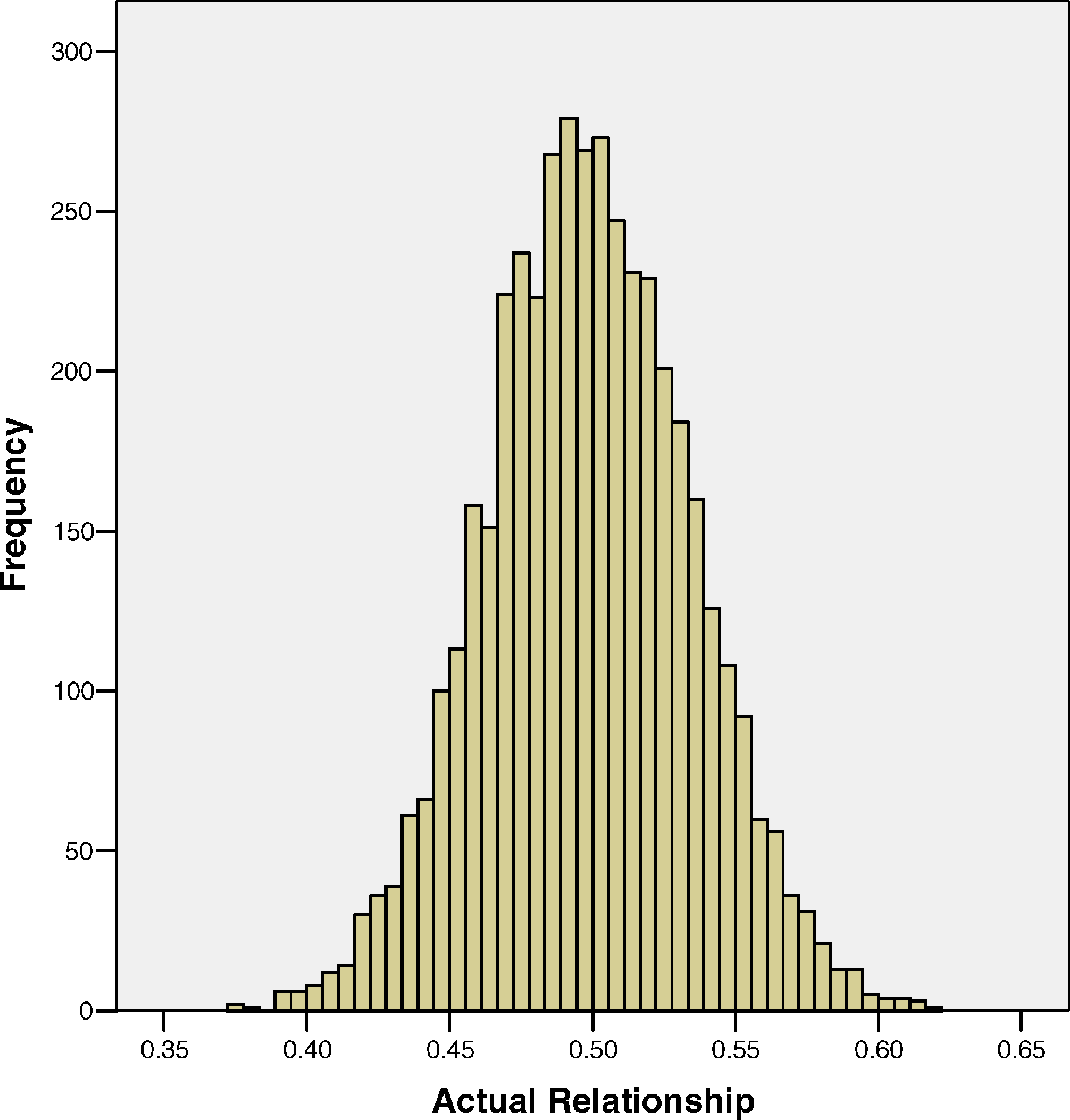
The new paper on the Jefferson descendants lists Hemings descendants (with identification via labels like ‘M5’ and ‘E9’) who share 5.01%, 4.27%, 3.66%, 3.64%, 3.50%, 2.09%, 1.01%, and 0.55% of their DNA with Thomas Jefferson. The expectation for fifth-generation direct descendants is an average of 3.125%. For a brother, it’s 1.563%, and for a nephew, it would ordinarily be half as much, but Thomas Jefferson's nephew was more related to him than an ordinary nephew because Randolph married his and Thomas’ first-cousin. This made Thomas’ nephew 31.25% related to him rather than the usual 25%, making the expectation about 0.977% rather than 0.781%. For comparison, we also have DNA from two descendants of Jefferson and his wife—not Hemings—, and they share 2.57% and 2.69% of their DNA with Jefferson.
Because the expected levels of relatedness differ between descent from Thomas or his brother, we can categorize each of these observations based on their consistency with either option to obtain a likelihood that the kids came from either potential father. Arranging each observation by the order they’re presented in the paper, they’re positioned like this relative to the expected parental distributions:
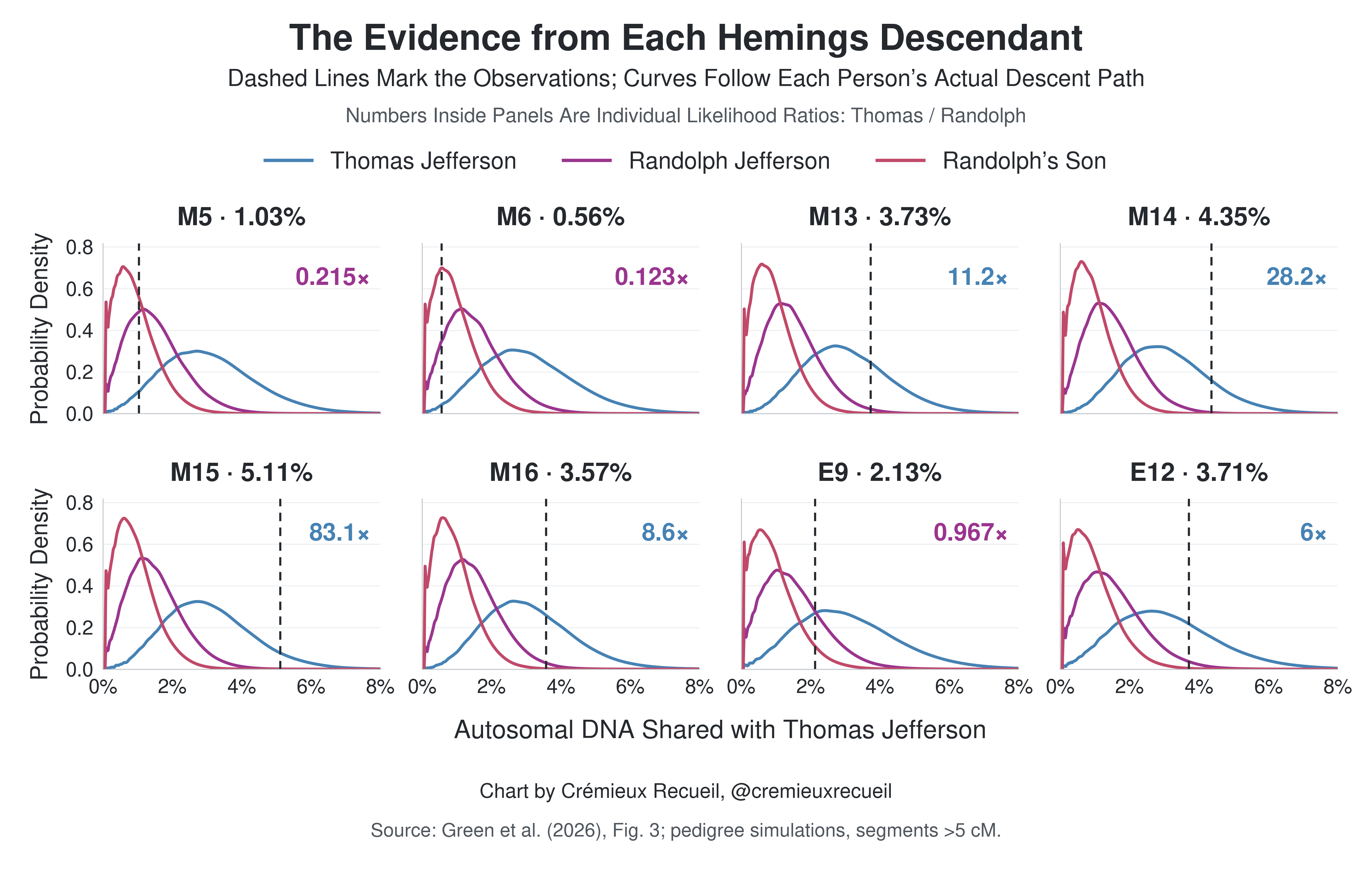
If we go from the least-Thomas Jeffersonian person to the most-Thomas Jeffersonian person, we can see the likelihood of a match to Thomas rising to a very high level. The probability that Thomas was the father rather than his brother reaches 851:1, and the probability of Thomas instead of his nephew reaches an even higher 6.8m:1.
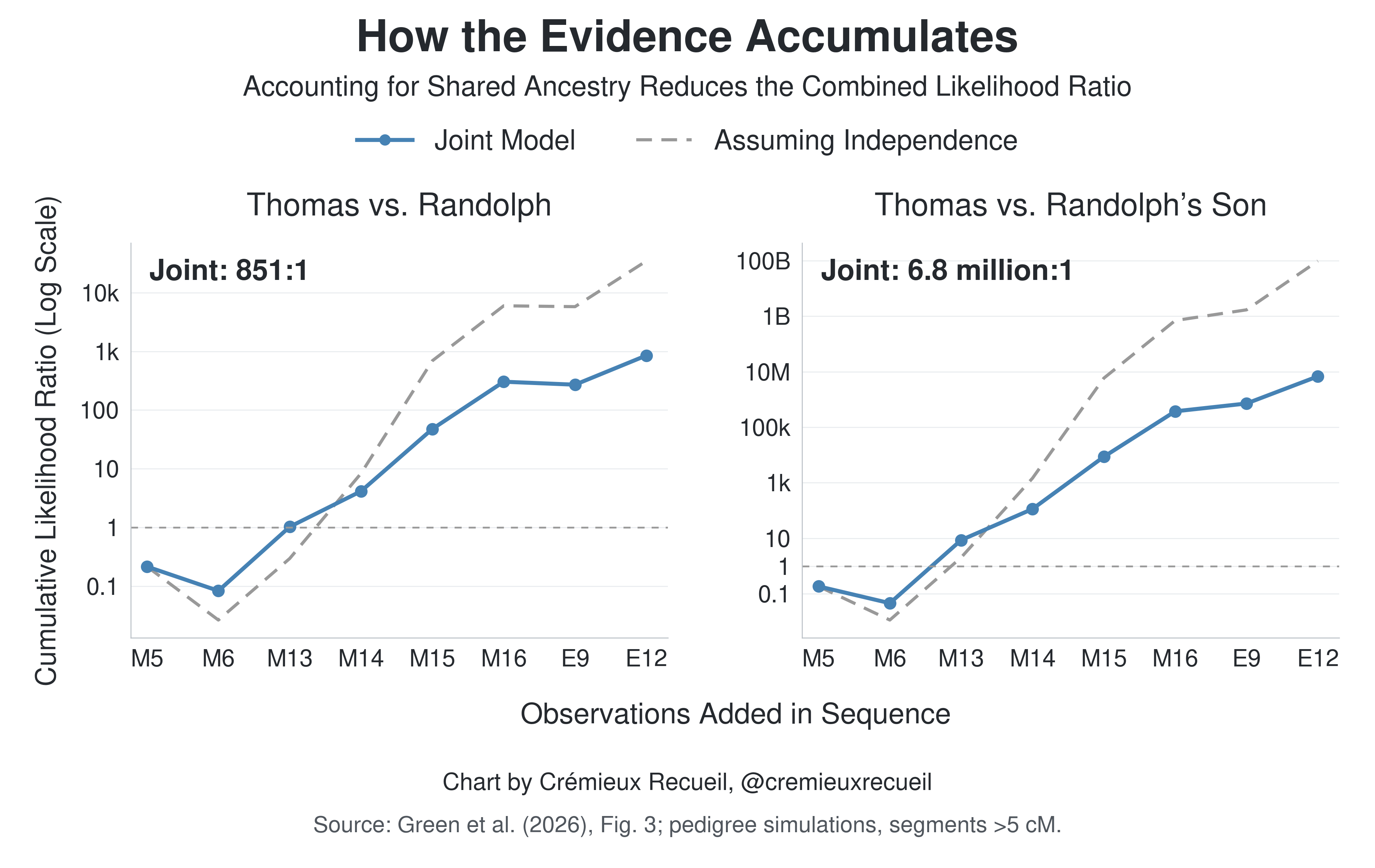
These results directionally match the more complicated simulation result presented in the paper, which makes sense given that they’re both driven by the same underlying logic. The authors’ preferred likelihood of Thomas compared to his brother is 2,213:1.1 Clearly it’s highly likely Thomas Jefferson had kids with Sally Hemings.
To alter the judgment that Jefferson fathered at least one of Sally Hemings’ children, one or both of two things would’ve needed to happen: gross error in DNA sample identification and/or handling; or major problems in sampling. I seriously doubt either possibility. It seems one of the country’s historical mysteries is now solved.2
You can find my replication package for this project by clicking the link here. Enjoy!
This was a timed post. The way these work is that if it takes me more than an hour to complete the post, an applet that I made deletes everything I’ve written so far and I abandon the post. You can find my previous timed post here.
A message from my sponsor, Mechanize:
We’re hiring software engineers to build environments and evals that frontier AI labs use to train coding agents.
To get a better sense of the work we do, you can check out GBA Eval, where we had models build Game Boy Advance emulators from scratch and scored their performance.
Base pay starts at $300K/year for junior software engineers, with more for senior roles, plus equity and performance bonuses. Apply here.
This number is even higher for the probability of Thomas instead of his nephew and it’s much higher in both cases with a doubled minimum segment size threshold.
One additional possibility that’s likely already ruled out is inbreeding in subsequent generations.
Finally proof that Thomas Jefferson wasn’t racist. Will woke ever recover from this blow?
I’ve never doubted the claim since reading John Hartwell Cocke’s diary entries which were not shared with the public until long after his death and were hidden away. The Cocke family were enormously powerful in their time and were hands behind the scenes types. The family were descendants of Henry VIII and Anne Boleyn (see ‘Other Boleyn Girl’) through Lord Delaware and had a multi generational close association with the Randolphs (Jefferson’s mother’s family). Cocke played an administrative role in the execution of Jefferson’s estate.
“Cocke, John Hartwell. Diary, 1853, 1859. Papers of John Hartwell Cocke. University of Virginia.
http://www2.lib.virginia.edu/small/collections/tj/jhc.html
Cocke, a close friend of Jefferson, attests decades later to the reality of the Jefferson-Hemings relationship twice in his diaries. In 1853 Cocke complained that many slave owners had children by their slave women, and there's no wonder that this should be so "when Mr. Jefferson's notorious example is considered." And in 1859 Cocke complained about the common practice of unmarried slave owners keeping a slave woman as "a substitute for a wife. . . . In Virginia this damnable practice prevails as much as anywhere -- probably more -- as Mr. Jefferson's example can be pleaded for its defense."