

Today’s post is brought to you by my sponsor, Mechanize. They’re hiring junior software engineers at $300K/year base salary.
Why are men more violent than women? ‘It’s the testosterone.’ Why do some men end up in jail? ‘They’re high-test.’ Why do teens commit more crime than 40-somethings? ‘Testosterone decline.’ Why are bodybuilders always flying into a rage? ‘Roid rage!’
These are all popular beliefs about testosterone, and there are many more like them. Many—and I’d argue a majority—of the public believe that testosterone is some sort of rage or aggression chemical, that it radically increases risk-taking, aggravation, the propensity to commit violent acts, and so on. But is there much evidence for this?
The first thing to establish is the baseline for testosterone. Male testosterone levels are generally not very high, and they’re quite stable even into the beginning of old age. The big decline comes in the elderly years, and its cross-sectional shape is likely impacted by selection.1 take a look:
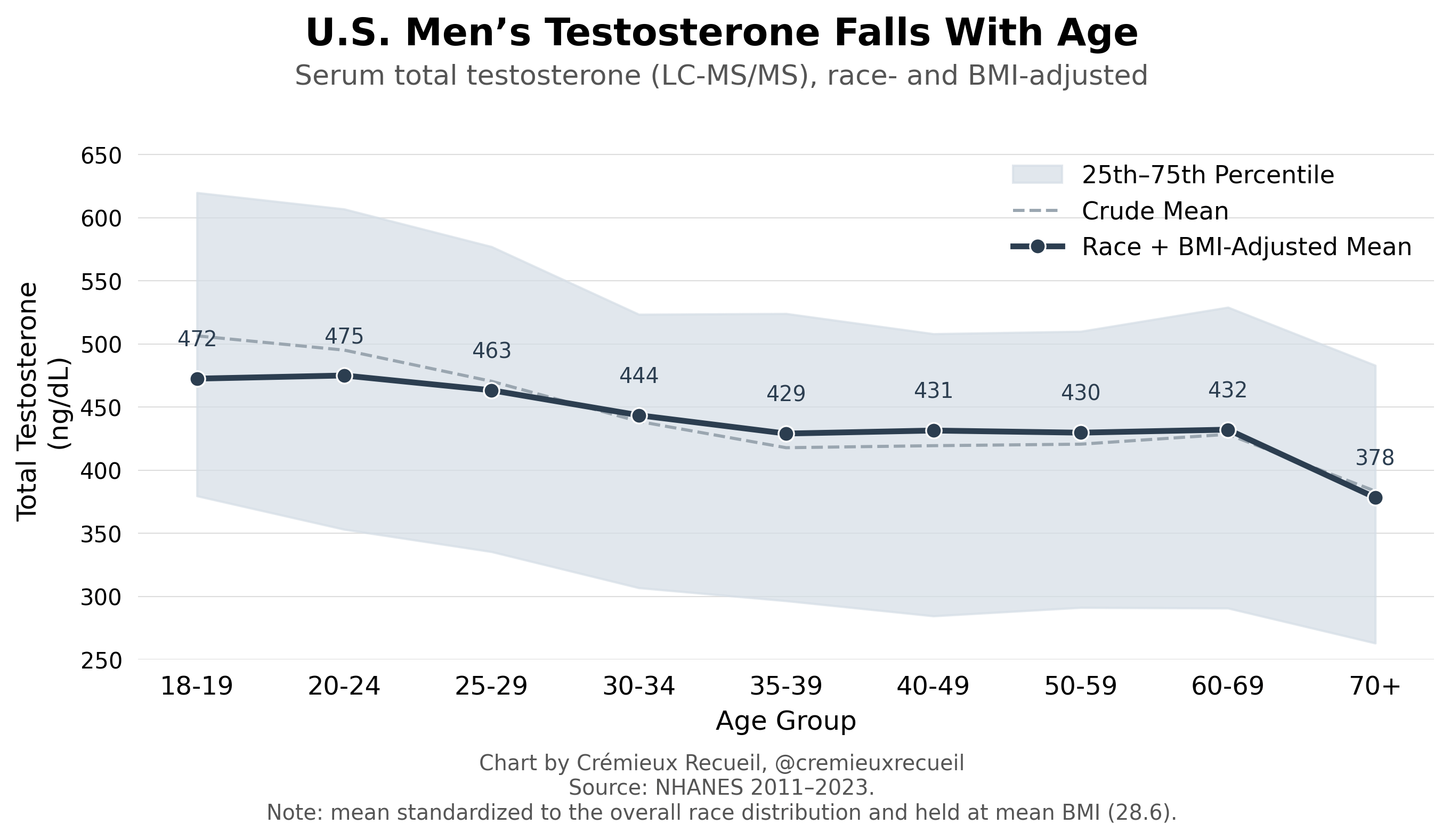
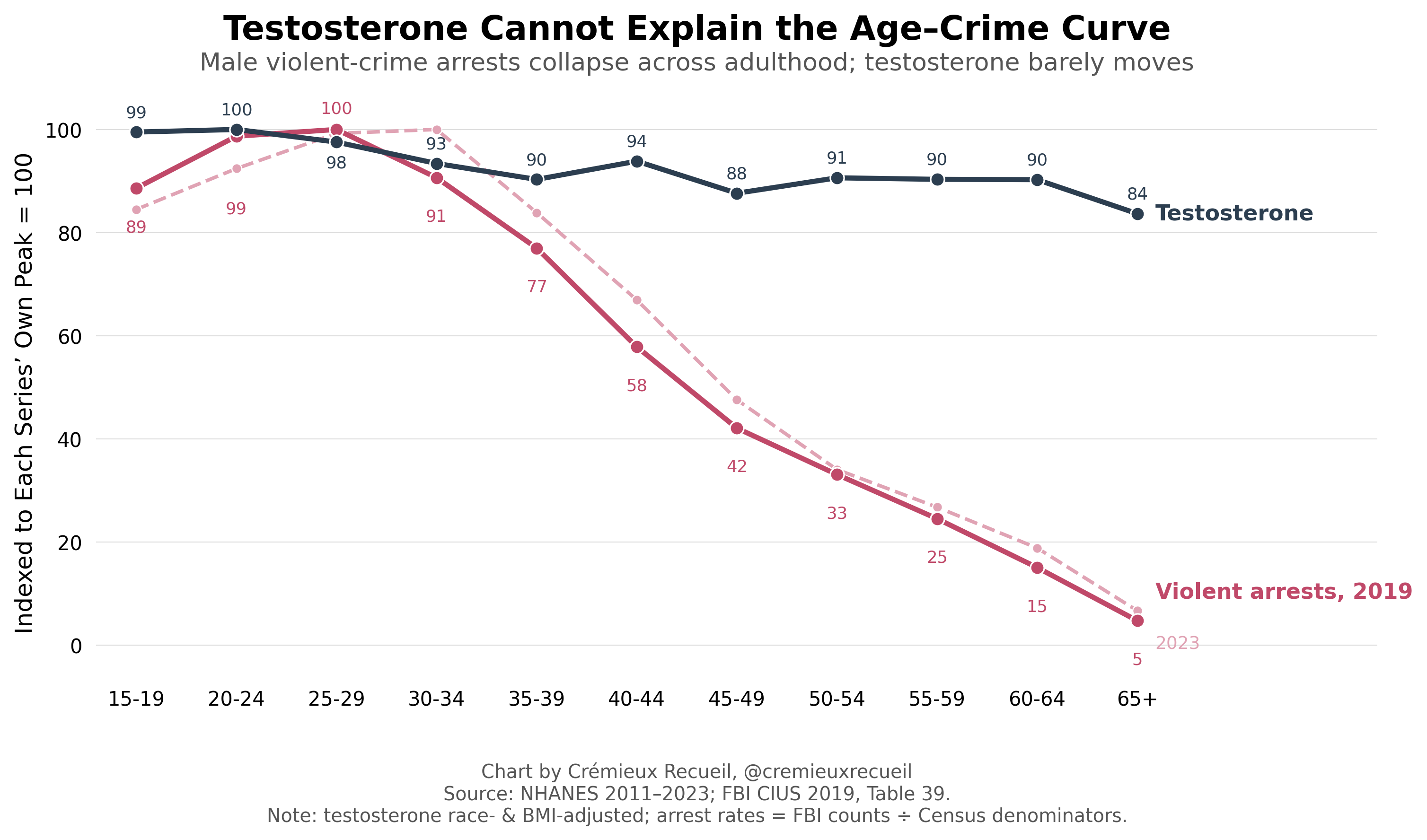
Given how little testosterone levels appear to decline with age, it would be surprising if testosterone explained the age-crime curve—the well-known relationship whereby the propensity to crime jumps up after puberty and into early adulthood and declines into middle age and beyond. In fact, they do not line up:2
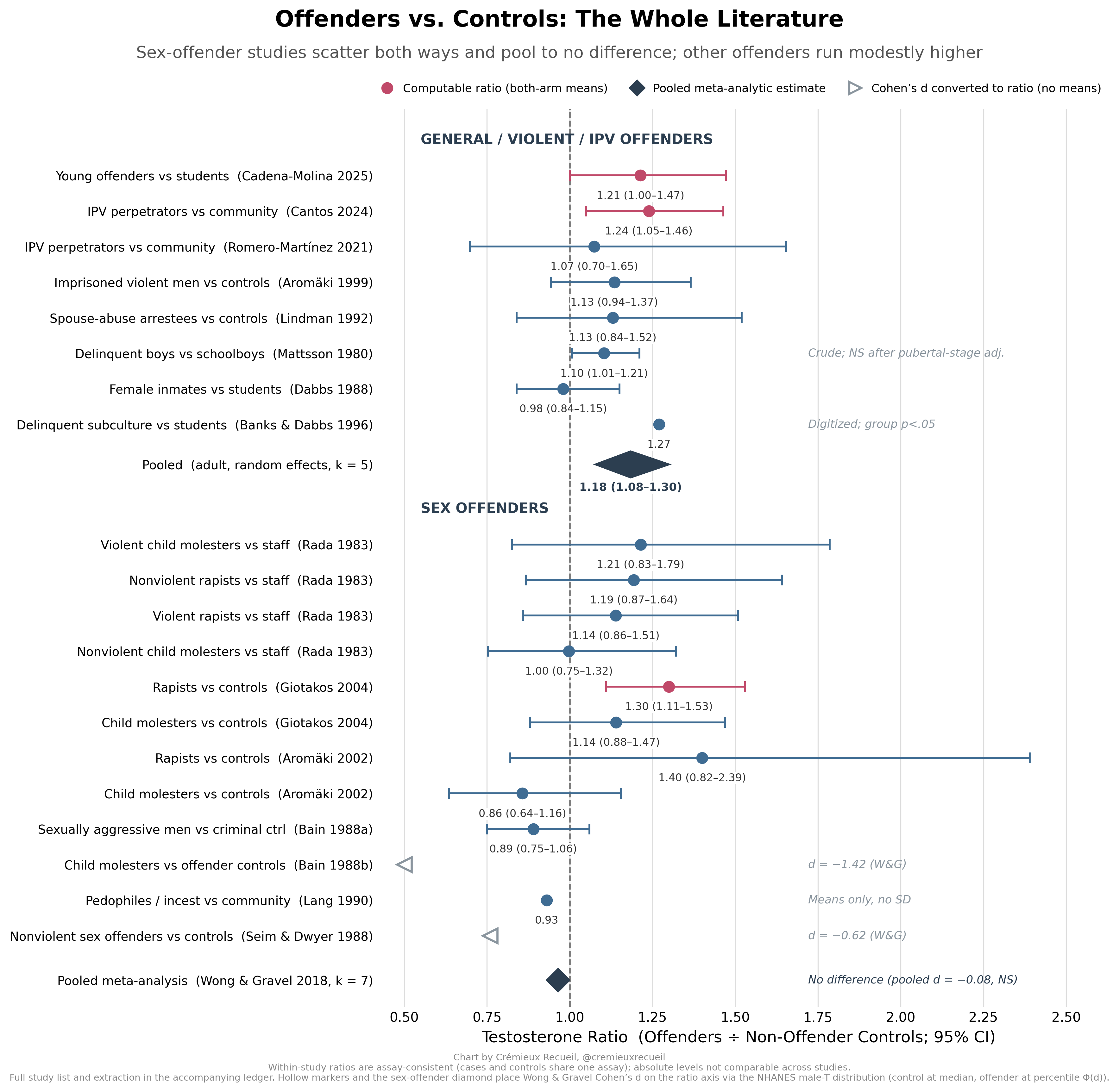
An even simpler method to understand the relationship between testosterone and crime is to simply compare members of the general population to criminals. If we take a look across the whole literature, we get two pictures: violent criminals have about 18% higher testosterone levels than members of the general population (i.e., ~71st-percentile testosterone levels) and sex offenders have completely normal testosterone levels.
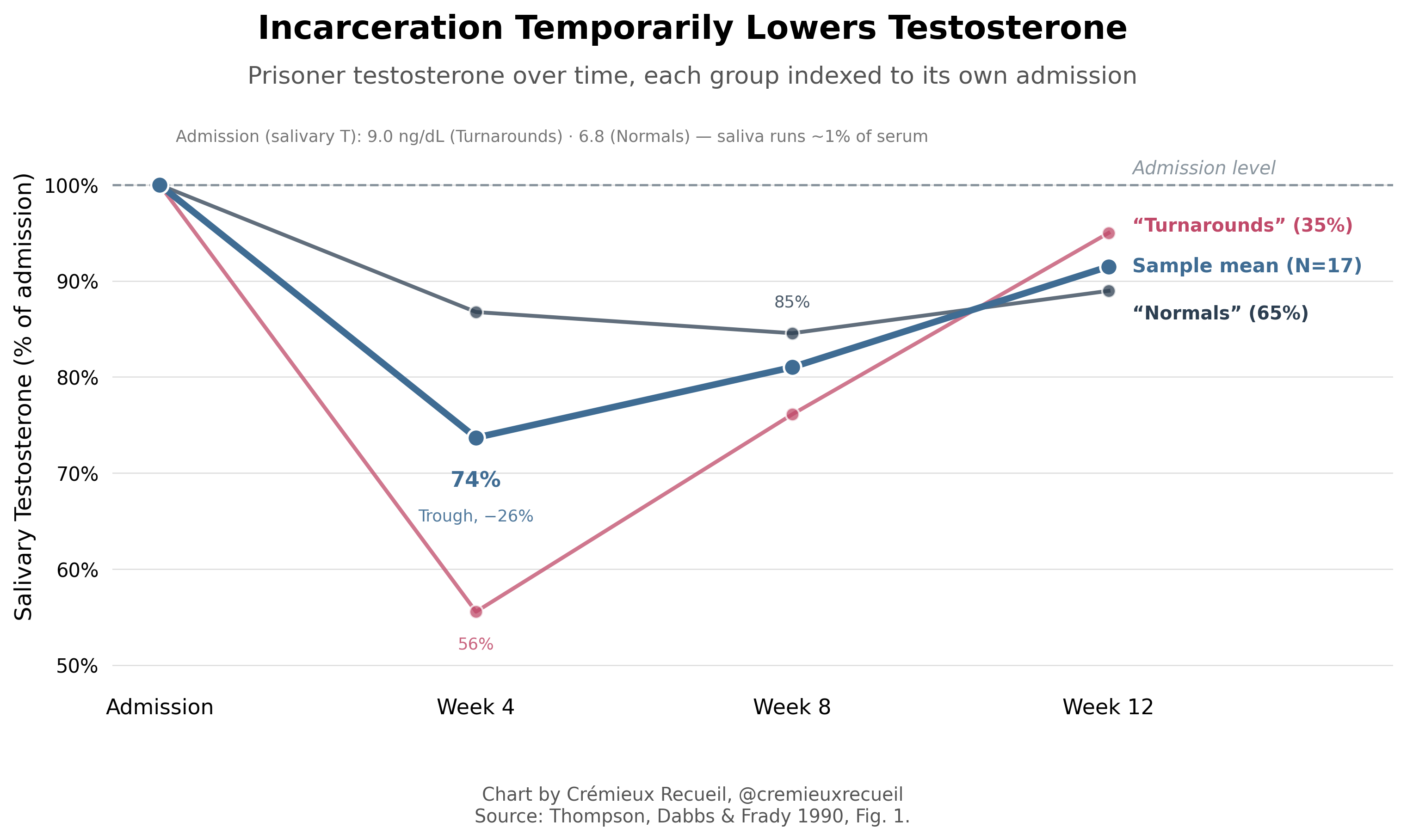
One possible issue with this comparison is that incarceration—where testing generally takes place—could lead to reduced testosterone levels due to the diet, exercise, and social conditions of prison. This is not a major worry. There’s one study of the effects of incarceration on testosterone levels, and even though it used salivary testosterone measurements—which are more context- and obesity-, aging-, and insulin-sensitive than serum estimates—it found that changes after admission largely reverted after three months. Most prisoners tested in the literature are not new, so whatever underestimation happens due to incarceration lowering testosterone is not a very large problem.
But is this even interesting? Is testosterone correlated with criminal behavior in the general population? What about among prisoners? Looking at the whole literature including the various meta-analyses that have been done, the correlation between testosterone and criminal violence is just not strong. The correlations are dragged up by old, imprecise estimates from select samples; even then, they’re small, around 0.10.
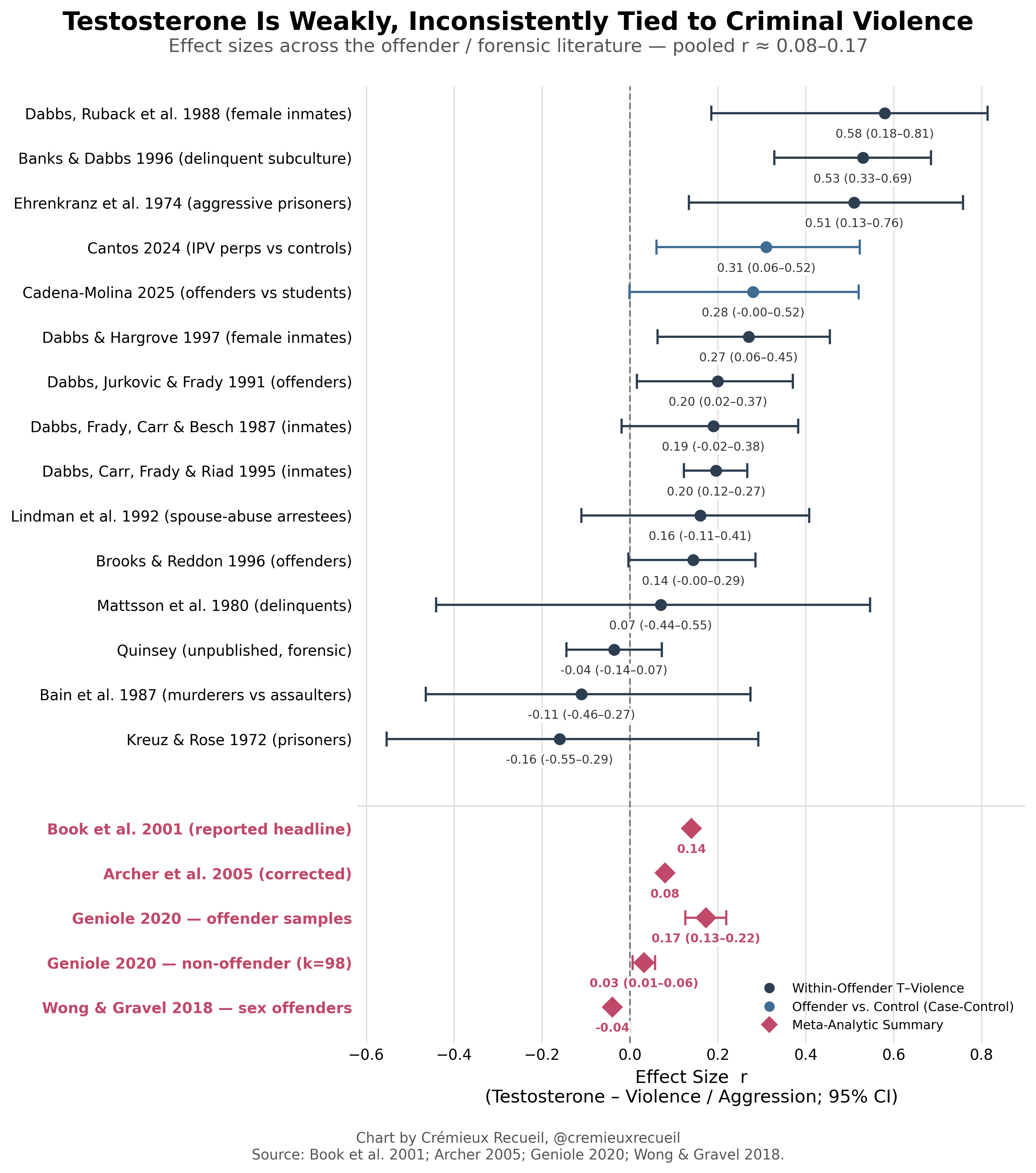
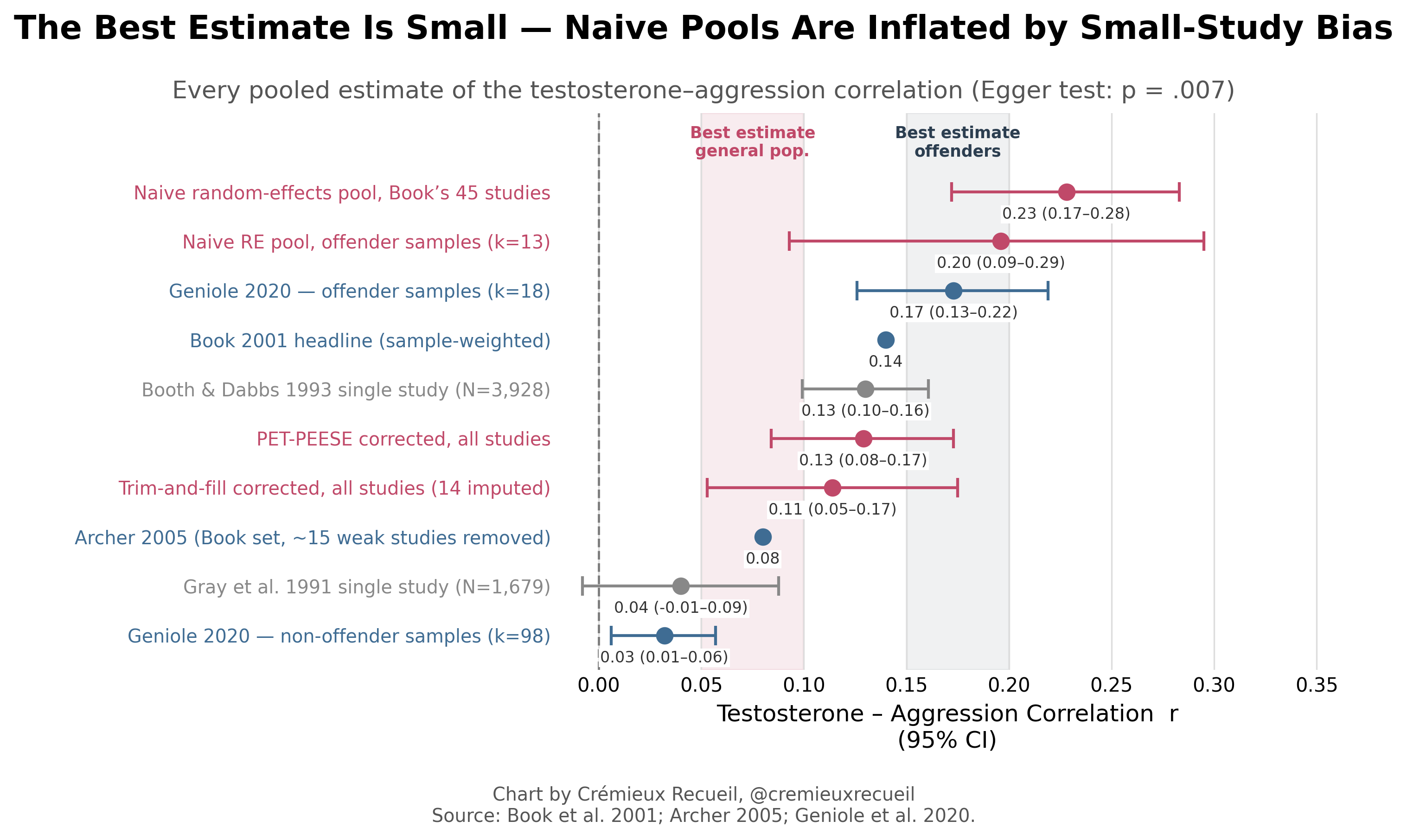
Notice: I alluded to the fact that the meta-analytic estimates are dragged upwards by publication bias. If we correct for this, the correlations are very small indeed. Summarizing it, the correlation between aggressive behavior and testosterone is about 0.05 to 0.10 among the general population, and it appears to be a bit higher among offenders, at about 0.15 to 0.20—still quite a small correlation, especially given the stereotypes associated with testosterone.
Even this is overstating things. The extent to which criminals have higher testosterone levels is not that great, and it’s easily explicable by confounders. For example, they could be in status competitions or competing for sex more, they could have different diets, their violent surroundings could lead to higher testosterone, etc. The E-value—a measure of how large a confounder would need to be to overturn a result—for the prisoner-general population difference is small, at about 1.65, where anything below 2 is considered fragile. This could be easily be overturned by controlling for differences in substance use, the use of age-mismatched controls, smoking, and so on.
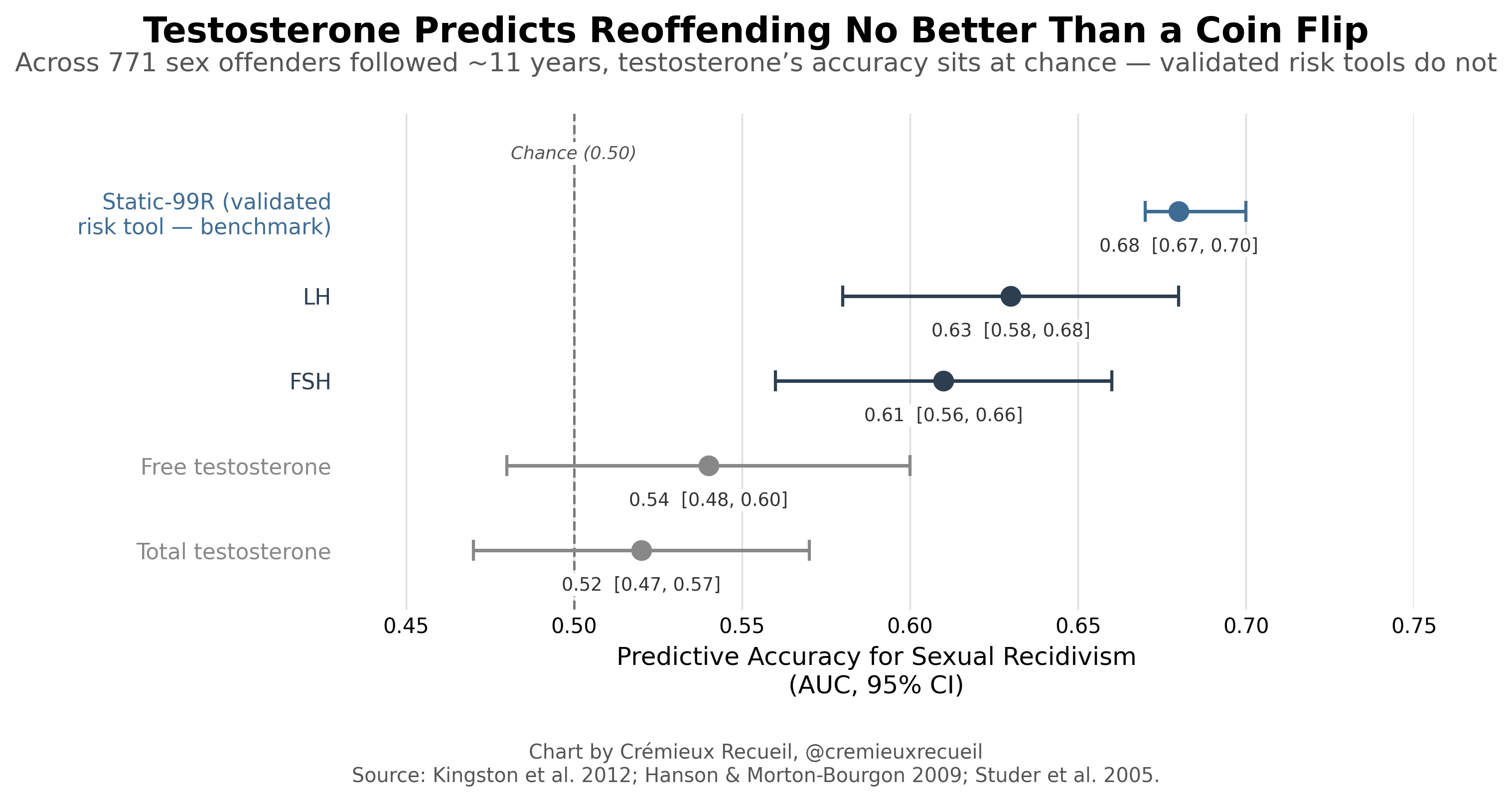
Another way to get at criminality’s relationship with testosterone is to look at recidivism. For the purposes of predicting sexual reoffending at least, testosterone seems to fail. It doesn’t make models any better than chance. This helps shore up our inferences about criminals, because this is about post-conviction behavior, and even this is unduly optimistic since the AUC is from the testing data.
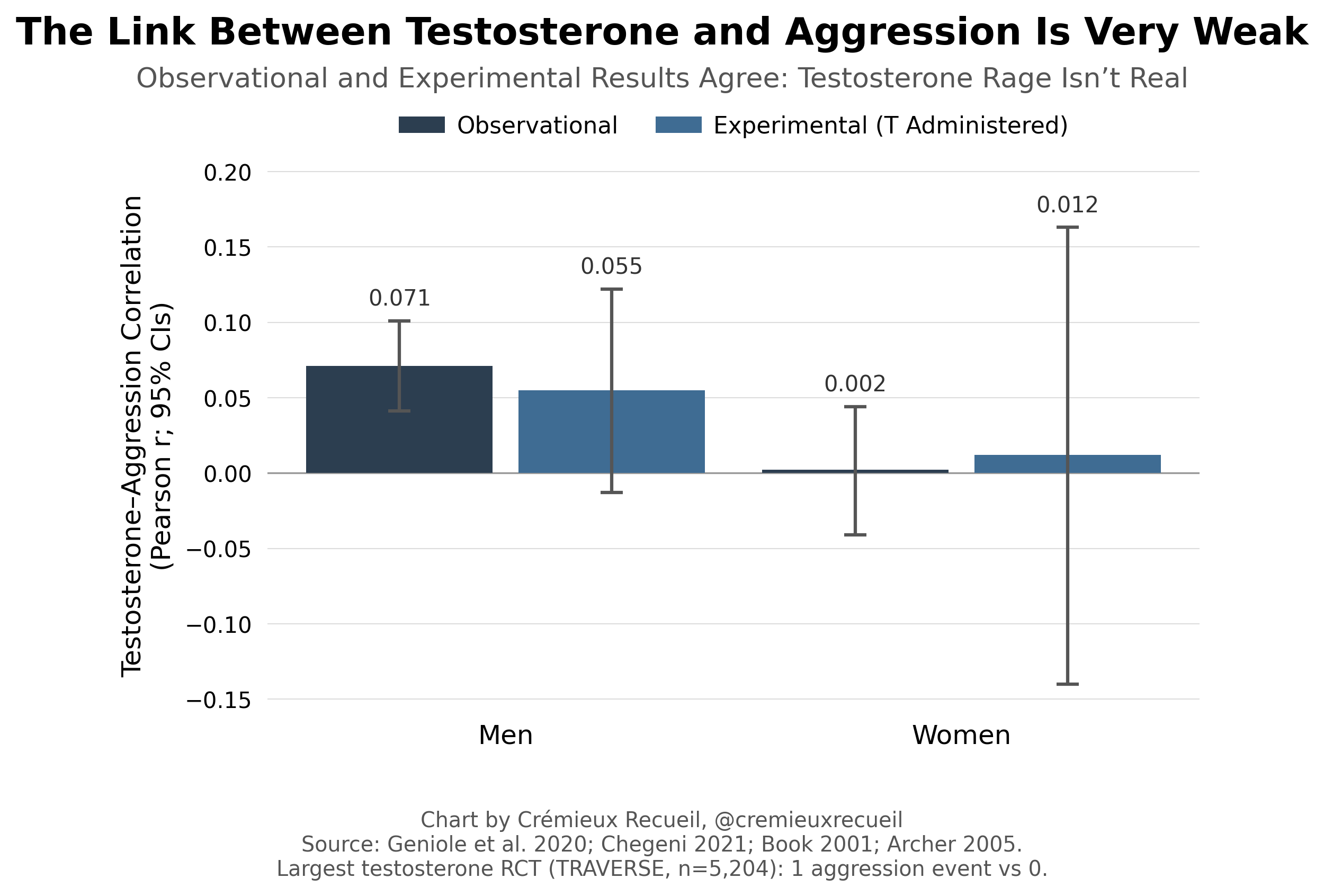
These correlations are useful, but there is more, better evidence, too: there are lots of testosterone administration experiments! The ones that look at aggression turn up results that are remarkably similar to the general population correlations. That is, there’s not that much evidence of effects on aggression. Moreover, we also have some experiments on testosterone administration where the object wasn’t to measure aggression, but instead to assess impacts on health. In those studies—notably, TRAVERSE—, aggression incidents were recorded as side effects. They didn’t happen.
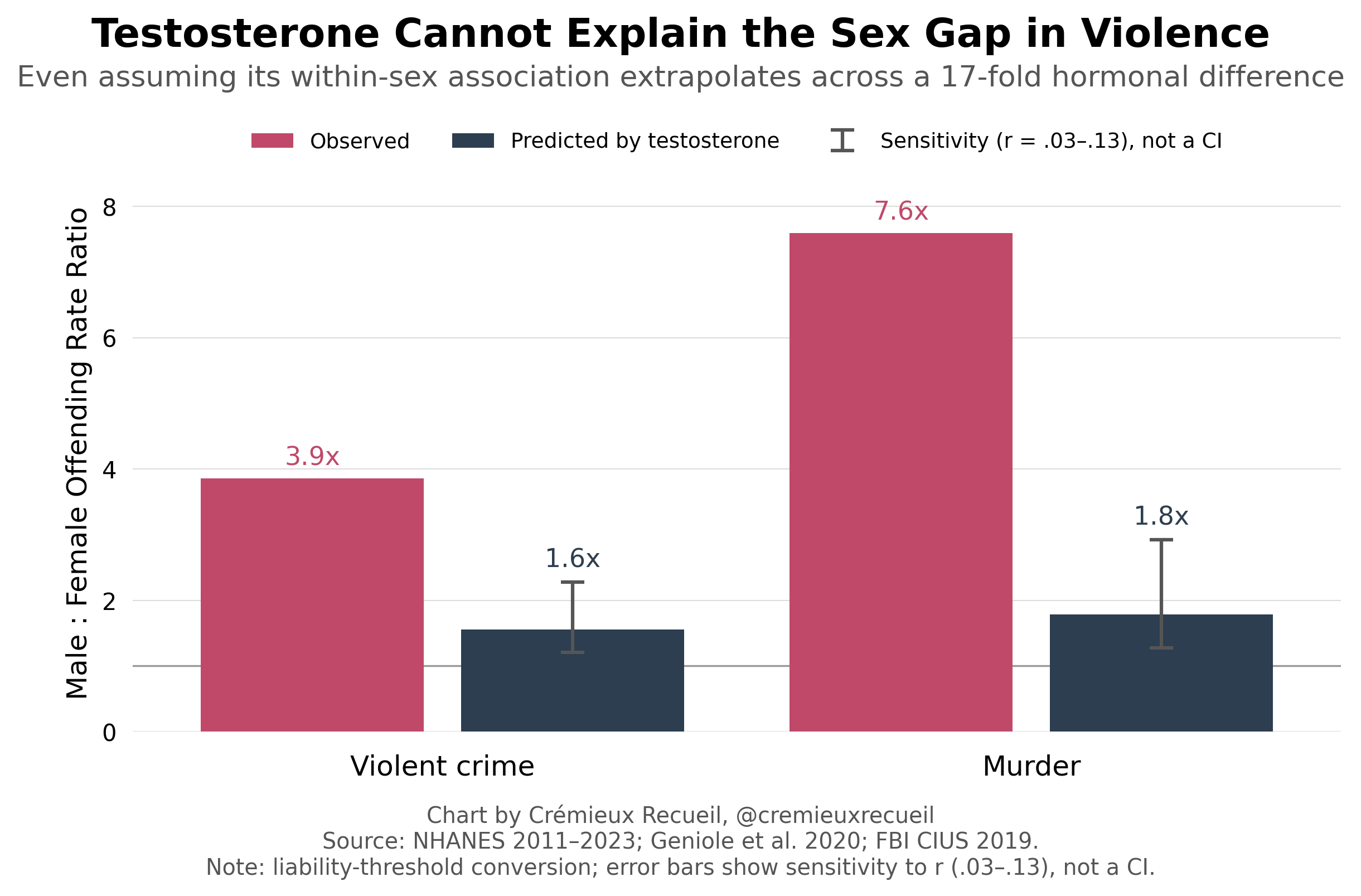
Let’s say you were to apply these numbers to explaining why men are more violent than women. Could it be done? Linear extrapolation suggests ‘no’—the gap in violent behavior is far too large to be explained by testosterone levels.
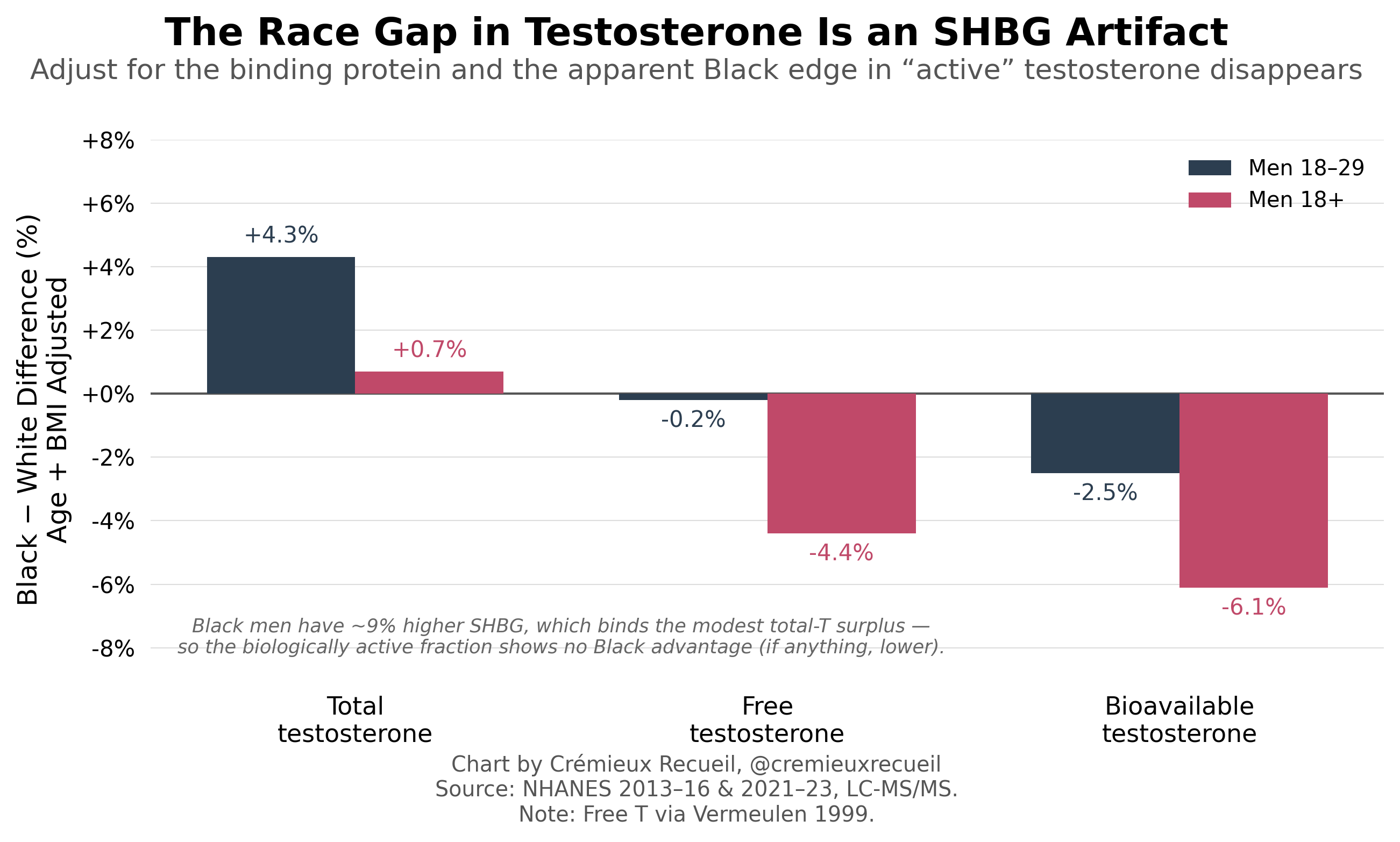
What about race? Could differences in testosterone levels explain why Black men are more violent than White men, for example? The answer to that is also no, for three reasons: total testosterone levels are highly similar with only a slight Black edge; free testosterone levels are highly similar with a slight White edge—the behaviorally-affective type, appearing contrary to predictions; and, the Black-White violent behavior gap is far larger than this could explain, much like the gap between the sexes.
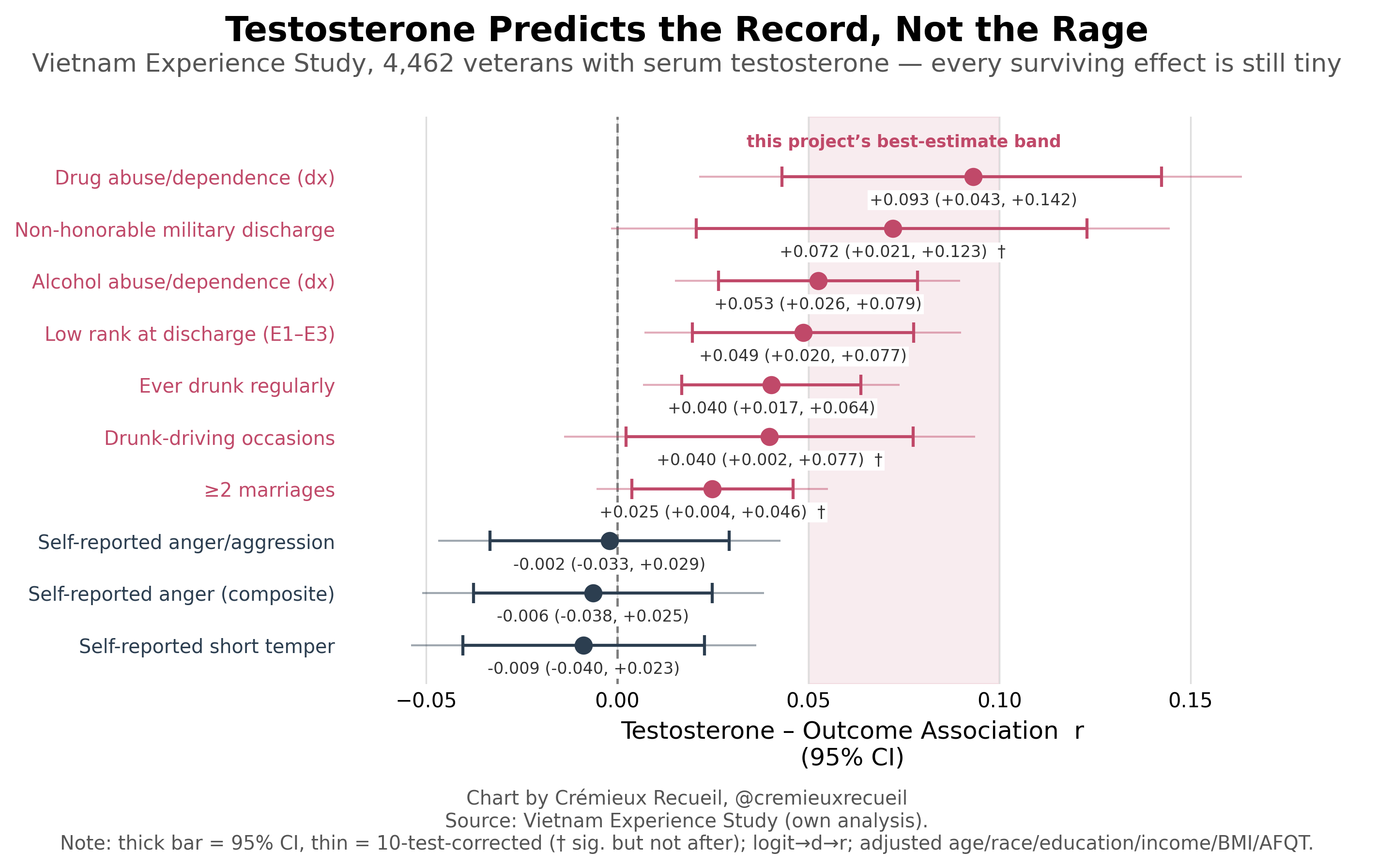
We also have cohort studies available to see how testosterone levels affect men over time. In the CDC’s Vietnam Experience Study—one of their archival datasets put together to assess the impacts of wartime exposures to combat experiences and chemicals like Agent Orange—we have serum testosterone levels followed by years of subsequent measurements of behavior and self-reports of rage and short temper. There’s no correlation with self-reported anger, and the associations with dishonorable discharge, drug abuse, drunkenness, drunk driving, and remarriage are pitifully small at most.
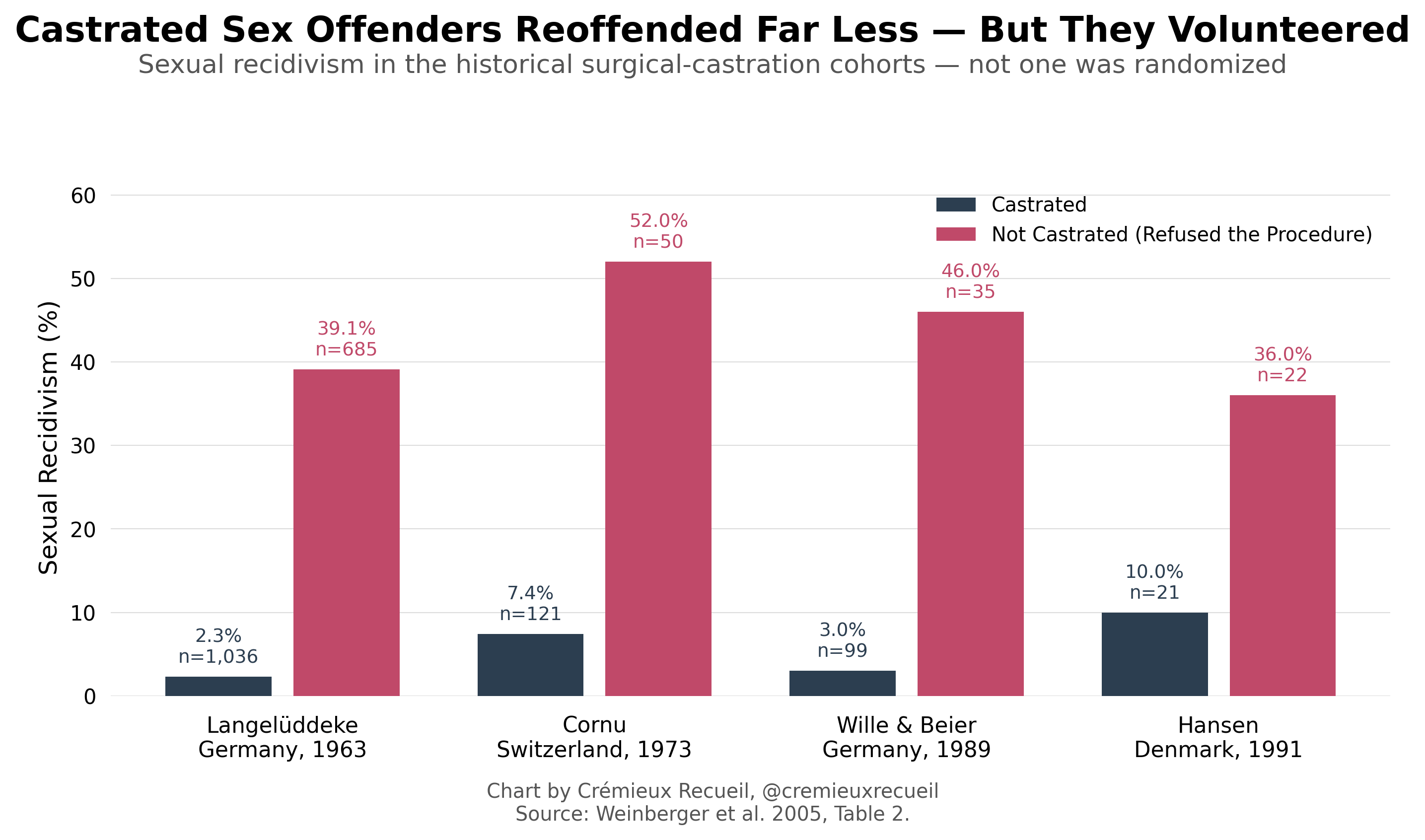
One way to get at the effects of testosterone that I’ve seen suggested is to look at the effects of castration on sex offenders. It’s well-known that sex offenders who are castrated are far less likely to re-offend. But castration in studied settings has been voluntary, opening the reuslts up to self-selection problems.
If we compared hormonal castration to other treatment methods, the possibility of a self-selection issue becomes apparent: hormonal treatments also lower testosterone, but they don’t result in nearly as large an effect. In fact, without this issue, the apparent reduction in reoffending is just not that large at all, like a Cohen’s d of 0.19.
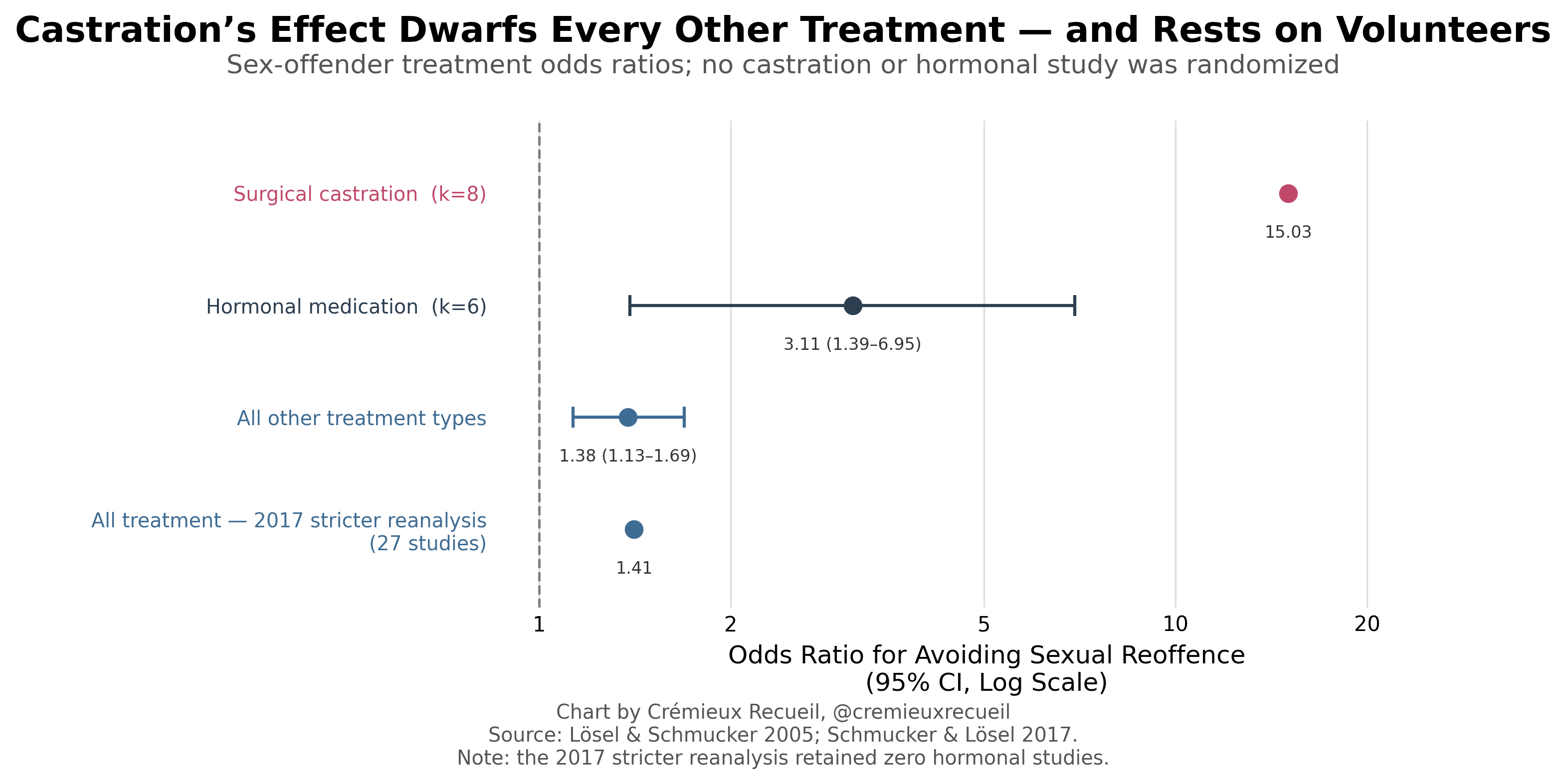
The studies on castration—chemical or surgical—are ambiguous because the reason for the reduced rates of reoffending could be due less to reduced aggression and more due to reduced desire—a separate issue. No one contests that testosterone makes people much more aroused or that it helps with motivation. But those are distinct from aggression and could be independently related to certain types of criminal offending. And, to make this less ambiguous, recall that sex offenders’ testosterone levels are not unusually high or low at baseline.3
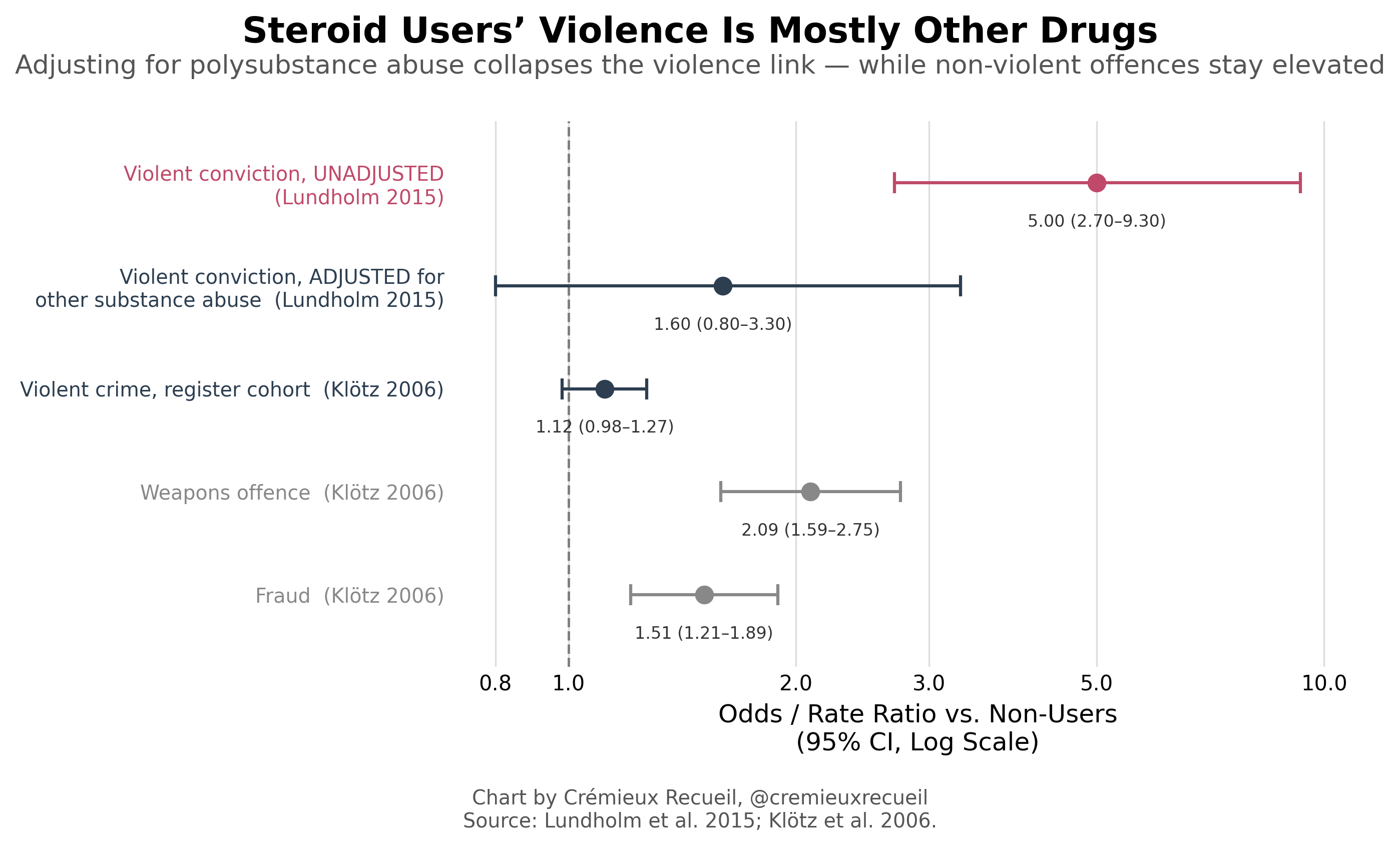
There is a group that has unusually high testosterone levels, and it’s bodybuilders! Anabolic steroid users, most of whom bodybuild, do have elevated rates of criminal offending. But this is because they’re selected: the people who take anabolic steroids are people who engage in other risky behaviors, have preexisting anger issues, etc. And in fact, despite having testosterone levels far above most criminals, they tend not to be criminals themselves.
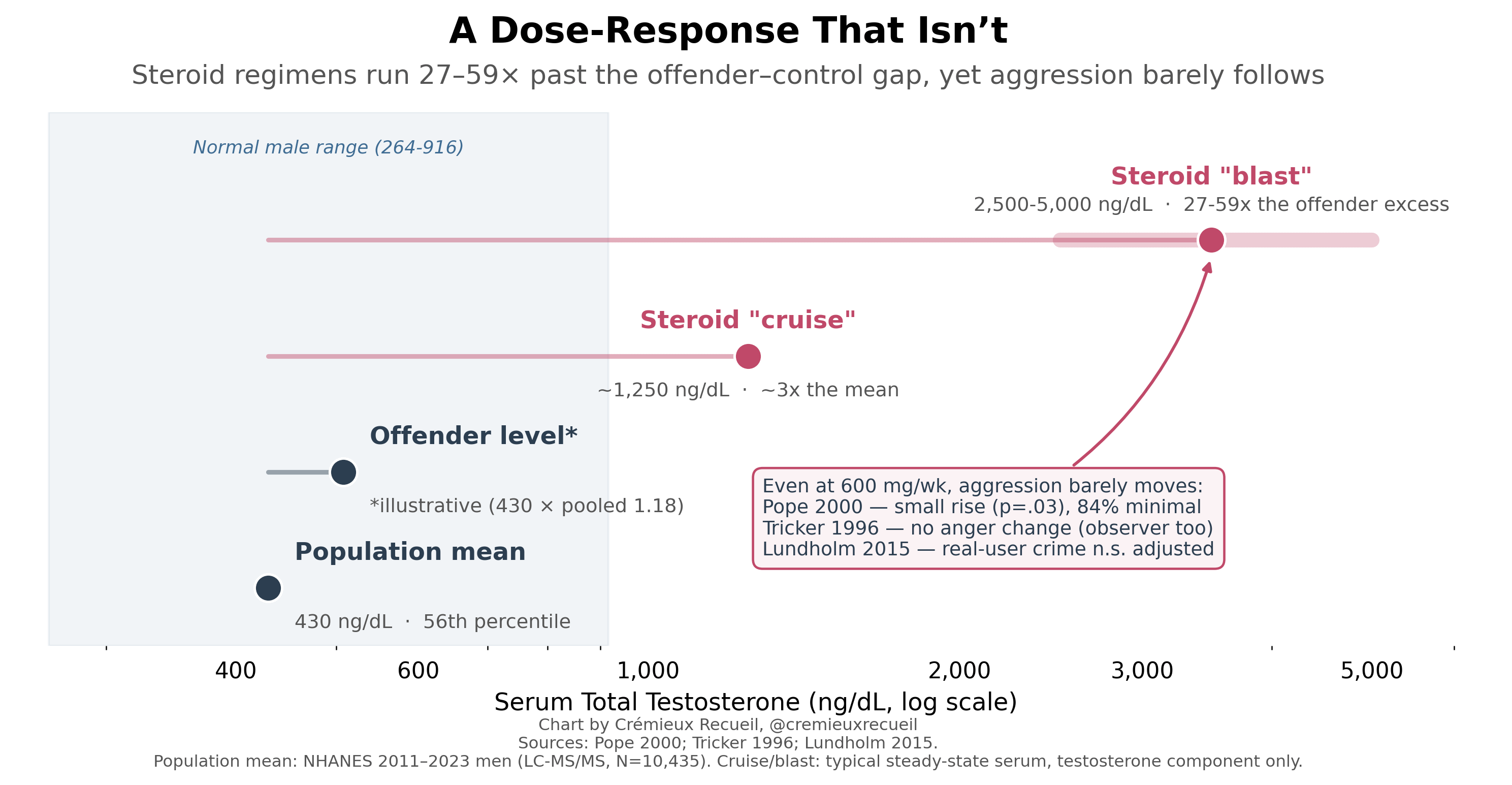
Studies that control for polysubstance use—meaning drugs used beyond anabolic steroids—find that the risk associated with steroid usage mostly evaporates. I doubt that it’s just the other drugs driving this, and I see the use of other drugs mostly as an indication of other behaviors, but nevertheless, surely residual confounding remains, making the observation of steroid users, at most, consistent with small effects.
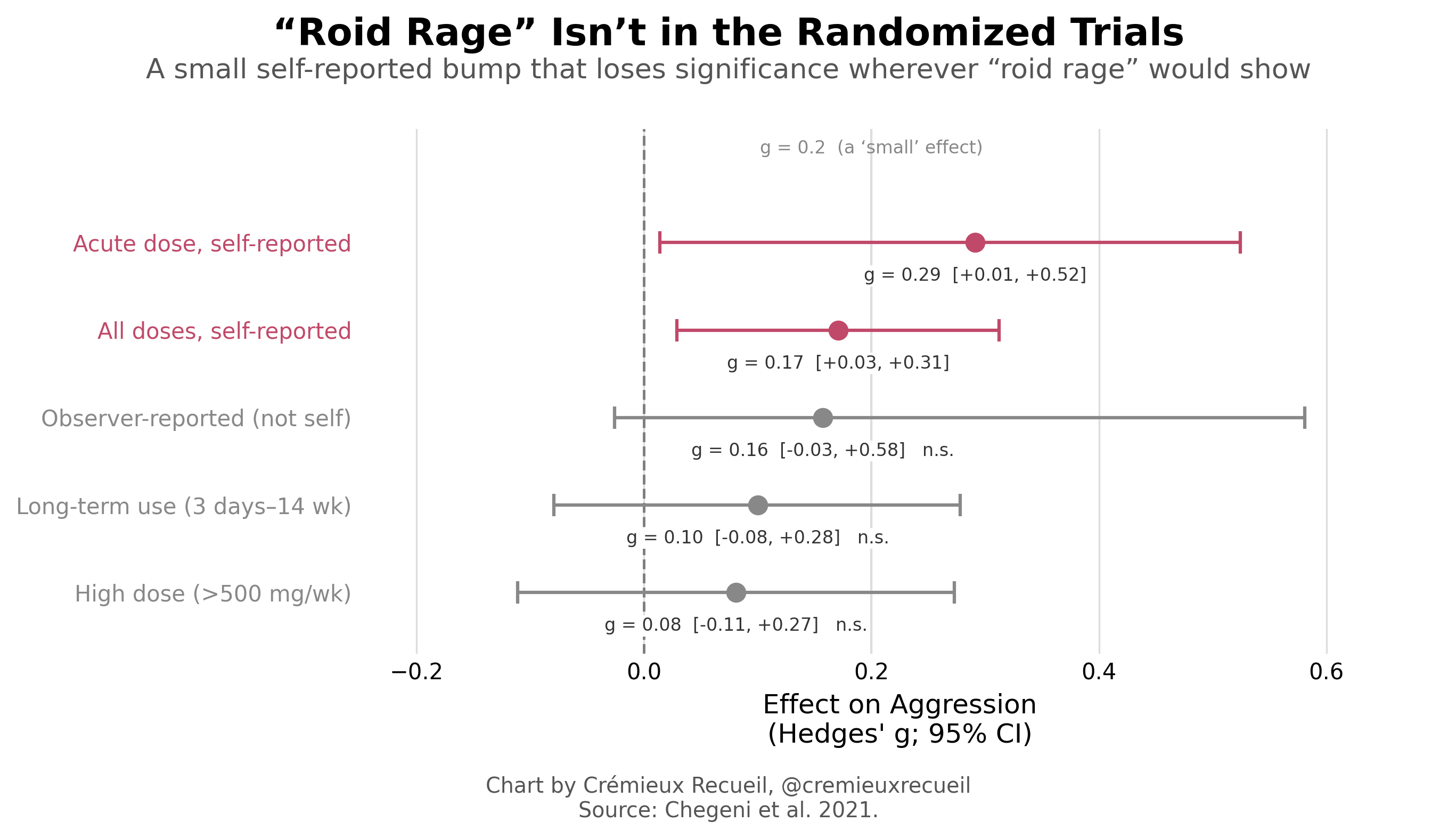
We can also make this less ambiguous by looking at trial results. In those, steroid users don’t appear to hulk out and fly into a rage that observers detect. The self-reported bump is also small, and it could just be expectancy, meaning that people who take steroids expect to be angrier, so they report being a bit angrier. Or, they could even be confused about their emotions, mistaking motivation for aggression. Regardless, there’s just very little evidence of strong ‘roid rage’ effects.
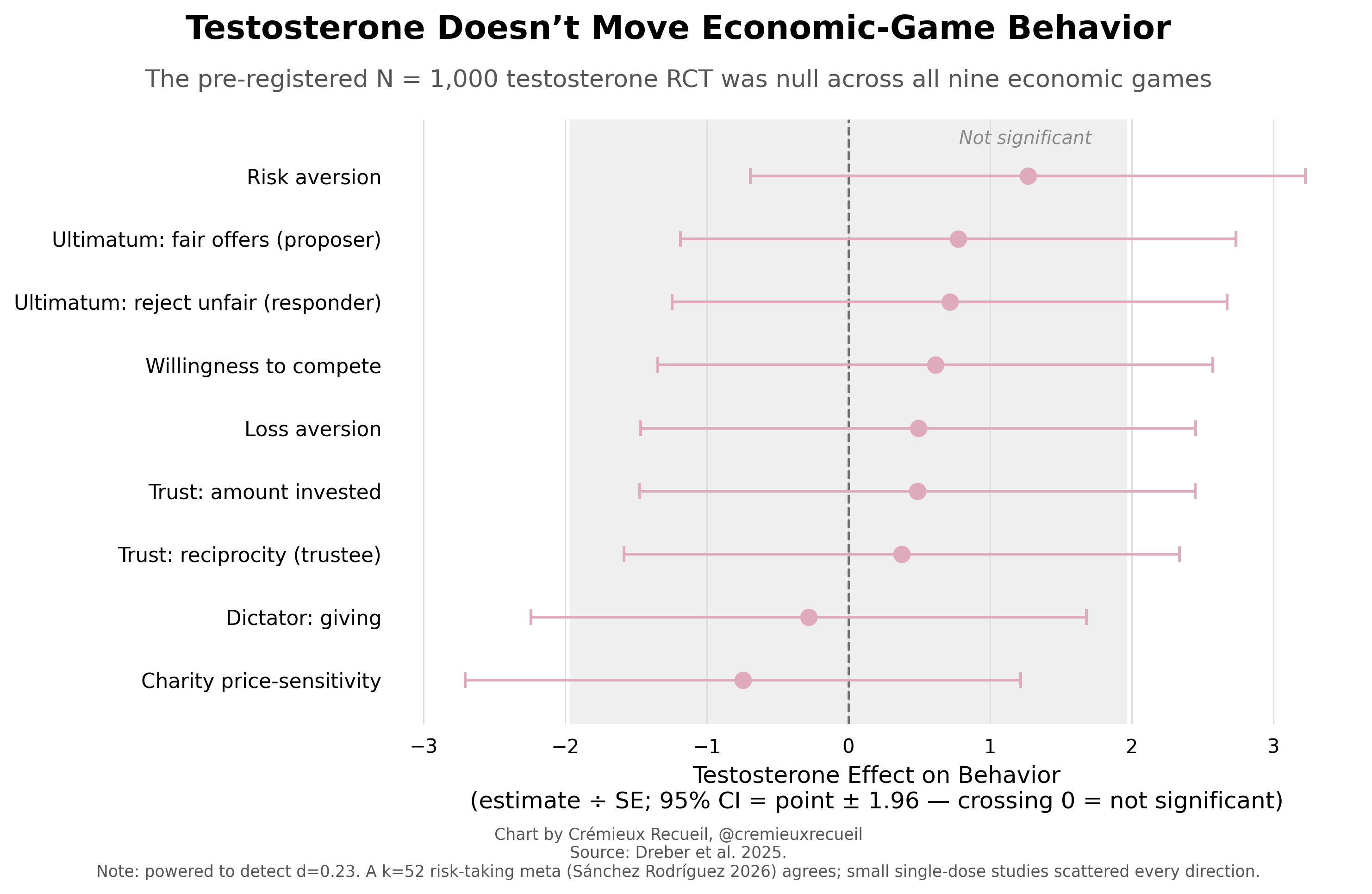
What about games? In the setting of games, we can see if testosterone administration or baseline levels predict aggressive behavior, risk-taking, teamwork, competitiveness, and so on. With acute administrations, basically nothing shows up in economic games. This matches another meta-analysis I covered recently, and a true (near?) null aligns with the observation that the various small studies on this topic have effects in all directions for outcomes like cooperation, reciprocity, generosity, and so on.
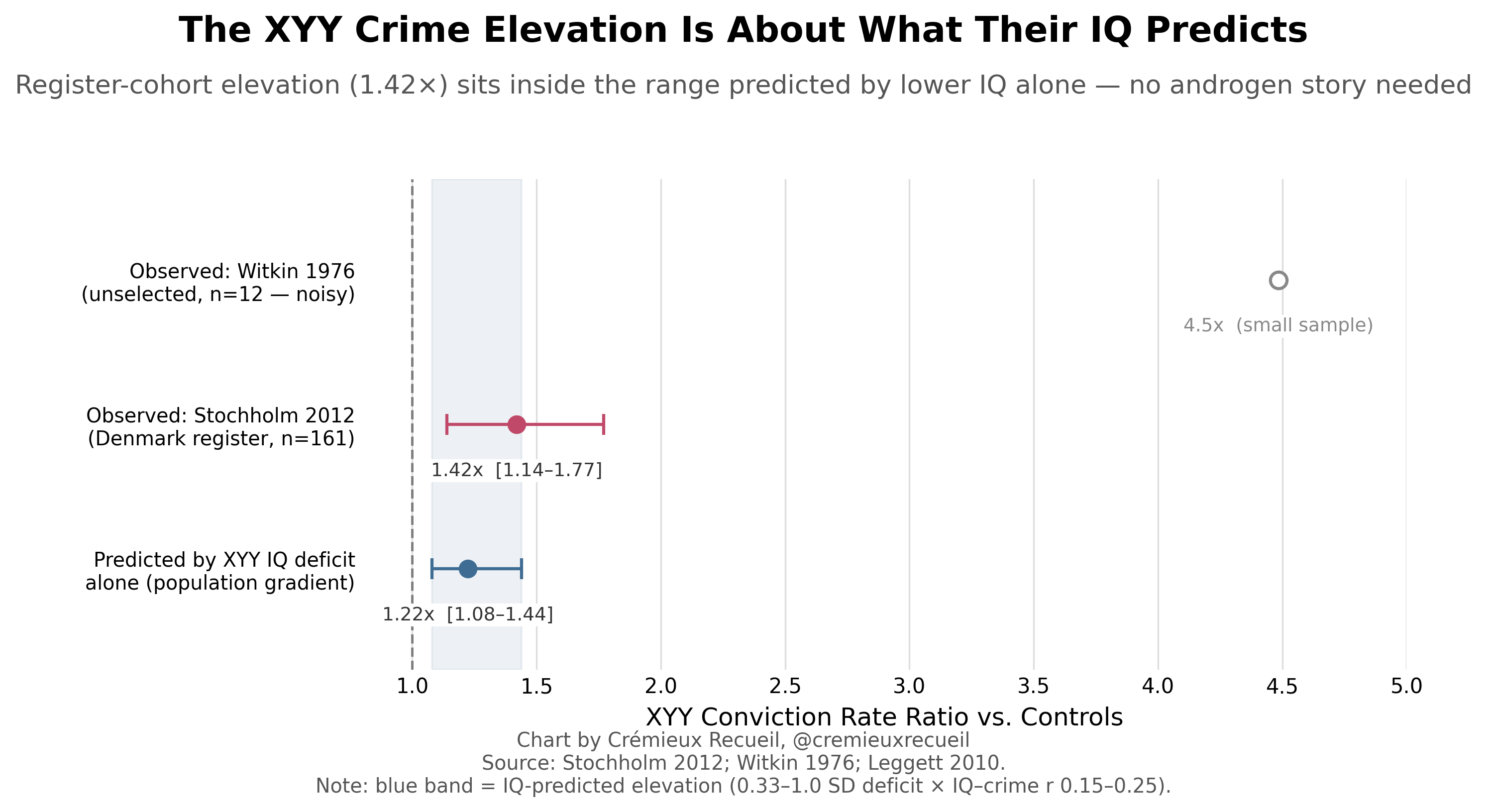
What about so-called ‘supermales’, men with two Y chromosomes? They are disposed to higher levels of criminality, but curiously, this is not due to testosterone. Their levels are actually not meaningfully elevated, and their heightened propensity for crime is exactly what’s predicted from their much lower than average IQs!
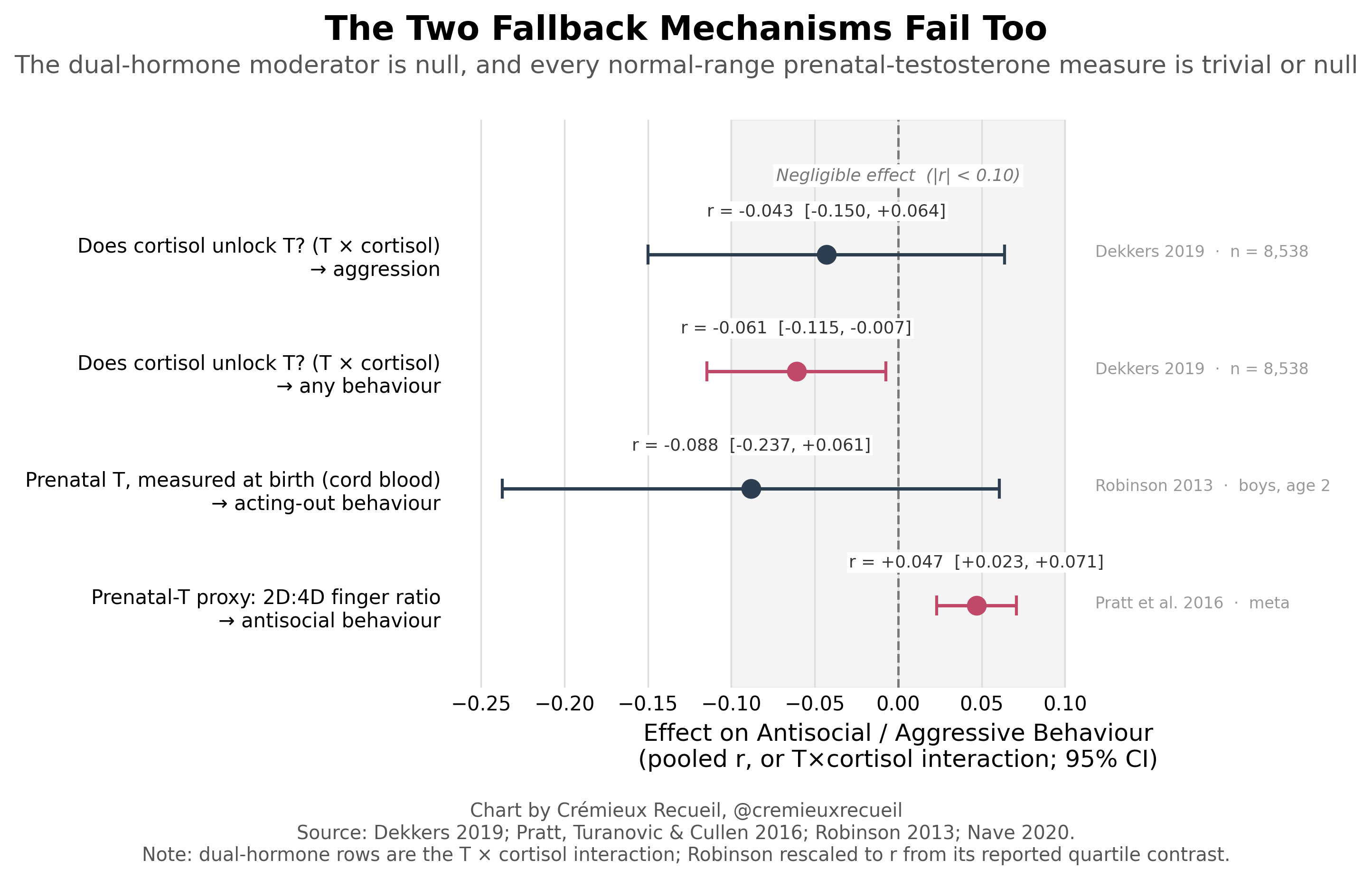
I think I’ve basically covered everything now, but let’s look at yet another route through which androgens might affect the propensity to be aggressive, do crime, etc. That is, prenatal exposures and the so-called ‘dual-hormone hypothesis’, whereby testosterone only affects aggression when cortisol is low. We should have a low prior on both things mattering for a few reasons. For one, prenatal testosterone doesn’t track adult testosterone very well for either sex. For two, cortisol is highly unreliable, so for this to be true and recorded as such in a meaningfully-sized sample would be incredible. For three, the dual-hormone hypothesis concerns an interaction for a small effect. We’re hoping for a suppressor effect, and those are rare in general. These fail:
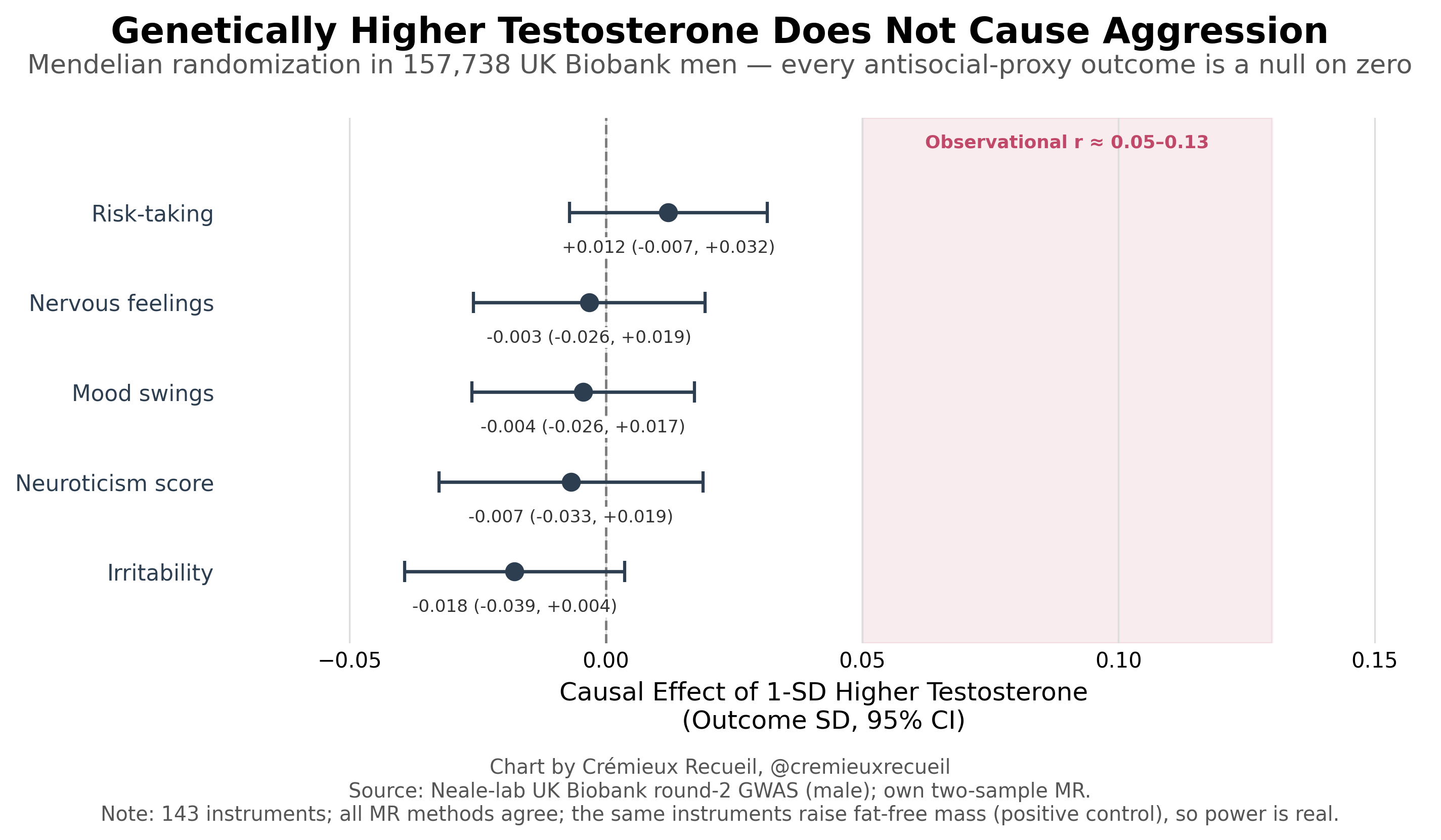
Even natural experiments like (Complete) Androgen Insensitivity Syndrome, Twin-Testosterone Transfer, and Congenital Adrenal Hyperplasia all also fail to support the idea that testosterone is strongly involved in aggressive behavior. We can also go beyond those natural experiments and look at a much more permanent, lifelong testosterone effect via genes known to be associated with testosterone. That is, we can use Mendelian randomization. When we do this in the U.K. Biobank, what comes up is that genetically-predicted testosterone levels aren’t related to risk-taking, nervousness, mood swings, neuroticism, or irritability. Bupkes! Long-term bupkes!4
Testosterone is the ‘male hormone’. It’s stereotypically associated with everything to do with men: risk-taking and derring-do, aggression and violence, willpower and strength, balding and boners, and so much more. But much of this is not because testosterone does or causes those things, but rather, because it is the male hormone.
Men produce lots of testosterone; it masculinizes the body, it invigorates those who take it, and it can even cure depression. It can provide motivation, it can get you off the couch, and it can clear your mind. But taking it does not make one do all the stereotypical things men do. Men make testosterone; testosterone doesn’t make men.
As to the question of why men are more violent than women, I don’t have a great answer. But I do have an idea: what if it has to do with capability? What if the reason men are so much more aggressive is because it’s instilled in people that if they can be, they ought to be? What if it’s a social interaction, where people recognize that someone is capable of violence, so they fill the role?
I referenced the following studies in this piece: Geniole 2020; Book 2001; Archer 2005; Rada 1983; Cadena-Molina 2025; Cantos 2024; Giotakos 2004; Seim & Dwyer 1988; Wong & Gravel 2018; Dabbs & Morris 1990; Mazur & Booth 2014; Weinberger 2005; Lösel & Schmucker 2005; Schmucker & Lösel 2017; Kristensen 2021; Lundholm 2015; Klötz 2006; Chegeni 2021; Pope 2000; Tricker 1996; TRAVERSE / Lincoff 2023; Huit 2026; Dekkers 2019; Nave 2020; Pratt, Turanovic & Cullen 2016; Kingston 2012; Studer 2005; Witkin 1976; Götz 1999; Schiavi 1984; Stochholm 2012; Raznahan 2023; Zhao 2022; Cannarella 2025; Leggett 2010; Pasterski 2007; Robinson 2013; Reinisch 1981; Harrison 2021; Hanson & Morton-Bourgon 2009; Thompson, Dabbs & Frady 1990; Dreber, Nave et al. 2025; Sánchez Rodríguez 2026; Eisenegger 2010.
This was a timed post. The way these work is that if it takes me more than an hour to complete the post, an applet that I made deletes everything I’ve written so far and I abandon the post. You can find my previous timed post here.
A message from my sponsor, Mechanize:
We’re hiring software engineers to build environments and evals that frontier AI labs use to train coding agents.
To get a better sense of the work we do, you can check out GBA Eval, where we had models build Game Boy Advance emulators from scratch and scored their performance.
Base pay starts at $300K/year for junior software engineers, with more for senior roles, plus equity and performance bonuses. Apply here.
Longitudinal data supports this idea.
You could save this by arguing:
Testosterone in early development has large effects on the propensity to violence and these fade with age, as the brain gets ‘properly’ wired, so to speak.
It’s acute, novel testosterone highs that make it related to violence.
The range of testosterone levels is higher at earlier ages, and it’s these very high-testosterone young men who are doing the violent crimes.
Only the first of these survives the rest of the evidence in this article, and given the Mendelian randomization evidence, it arguably doesn’t even do that. In any case, it does not survive contact with the reality that the age-crime curve is weakening and, in some regions, has entirely disappeared.
As for the animal evidence on castration reducing violence in, for example, cattle herds, this is readily explained by reducing sexual competition, which is the source of said violence. This occurs through reduced sexual desire rather than through ‘roid rage’, so to speak.
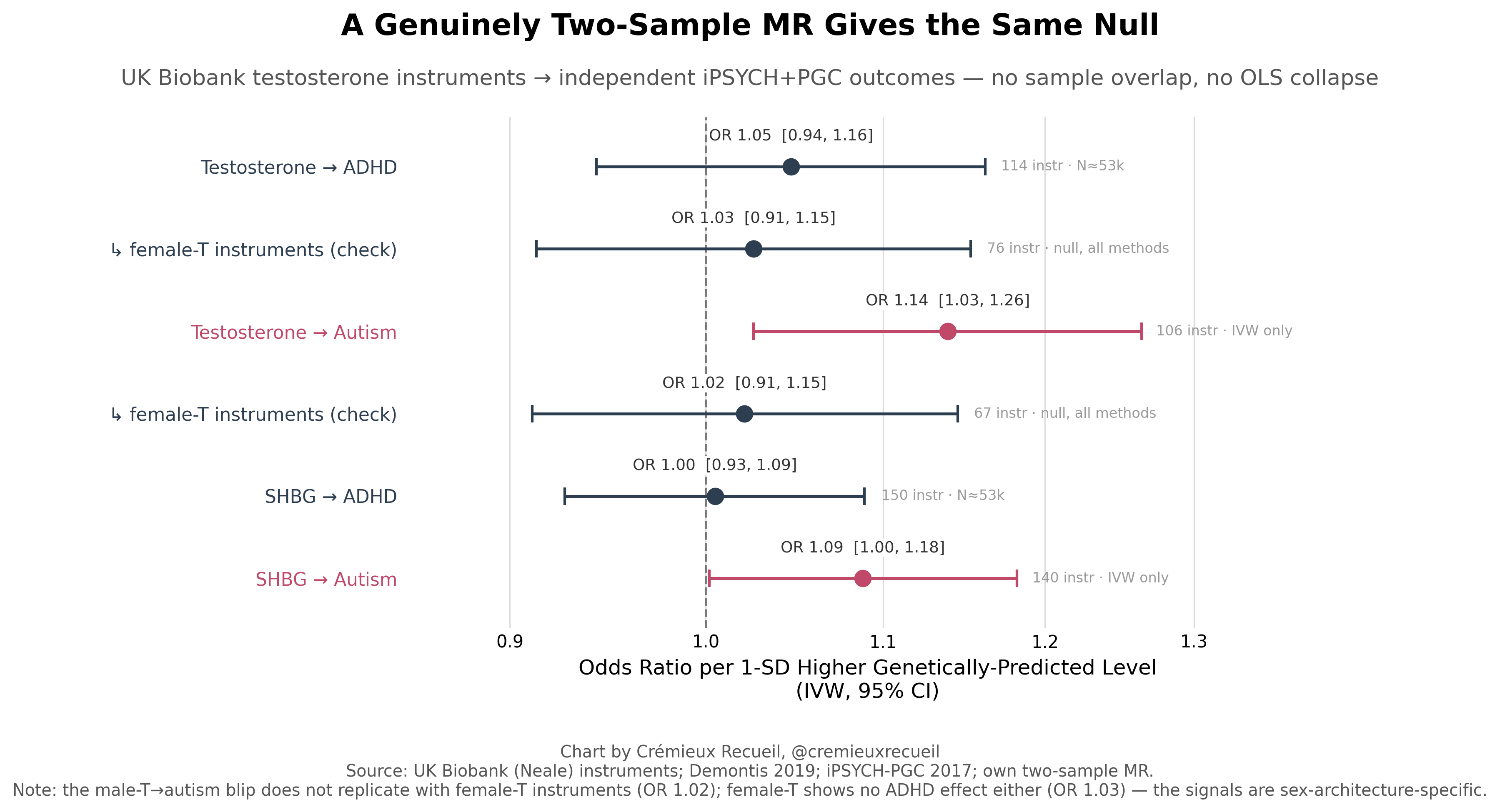
When we do the Mendelian randomization across samples using iPSYCH+PGC outcomes with the same instruments from the U.K. Biobank, we can avoid any issues with the IV becoming OLS since the samples don’t overlap, and in doing so we arrive at the result that testosterone predicts autism, but not ADHD. ADHD is a better violence predictor than autism, and there is at least one theory (the Extreme Male Brain Hypothesis) that predicts the autism result. Curiously, a female testosterone GWAS does not result in predicting autism. The architectures by sex are quite distinct, so I’m not sure what to think of this result.
Hi! Great article.
Here is my personal experience with TRT:
Yes it does make you angry, but not exactly.
When you take exogenous Test, your body converts some of it to Estrogen. In the high estrogen state it definitely can make you irritable, short tempered, etc (basically PMS). You need to be self aware enough to recognize that none of those feelings are real. If you aren't you could definitely act out in violent ways if you already have those tendencies. Easy fix though, just take an aromatase inhibitor.
People with naturally high Test? idk, can't tell you, I'm not one of them.
The unexamined assumption is that a hormone test predicts who will be violent. No large study supports that. Hormones explain a few percent of variance at group level, always moderated by trait anger, provocation, stress, sex, receptor type, and social context.
Addendum:
Low resting cortisol plus blunted cortisol reactivity predicts early onset, persistent, fearless and reward driven aggression with a small but relatively consistent effect in boys and antisocial samples. High cortisol reactivity predicts reactive aggression under provocation and stress.
Neither predicts violence at the individual level. The effect depends on time of day, hair versus saliva versus blood measurement, childhood adversity which itself blunts cortisol reactivity, and testosterone to cortisol balance. It is a risk marker for a subtype of impulsive, instrumental aggression, not a general violence hormone.
In short, the current testosterone paranoia and regulatory restriction is dogma --- bullshit scientism based on hearsay without research backing.