

This was a timed post. The way these work is that if it takes me more than one hour to complete the post, an applet that I made deletes everything I’ve written so far and I abandon the post. You can find my previous timed post here.
When looking at population cohorts that are (1) measured with consistent methods1, (2) measured with consistent sampling2, and (3) measured when they’re sampled3, there seems to be a recent trend towards increasing testosterone levels. As far as I’m aware, there’s only one cohort that meets all three criteria, and that is what it shows.


The big question this raises is Why? People are getting fatter and older, so why—and, more importantly, how?—are they also getting manlier? Let’s check some possibilities.
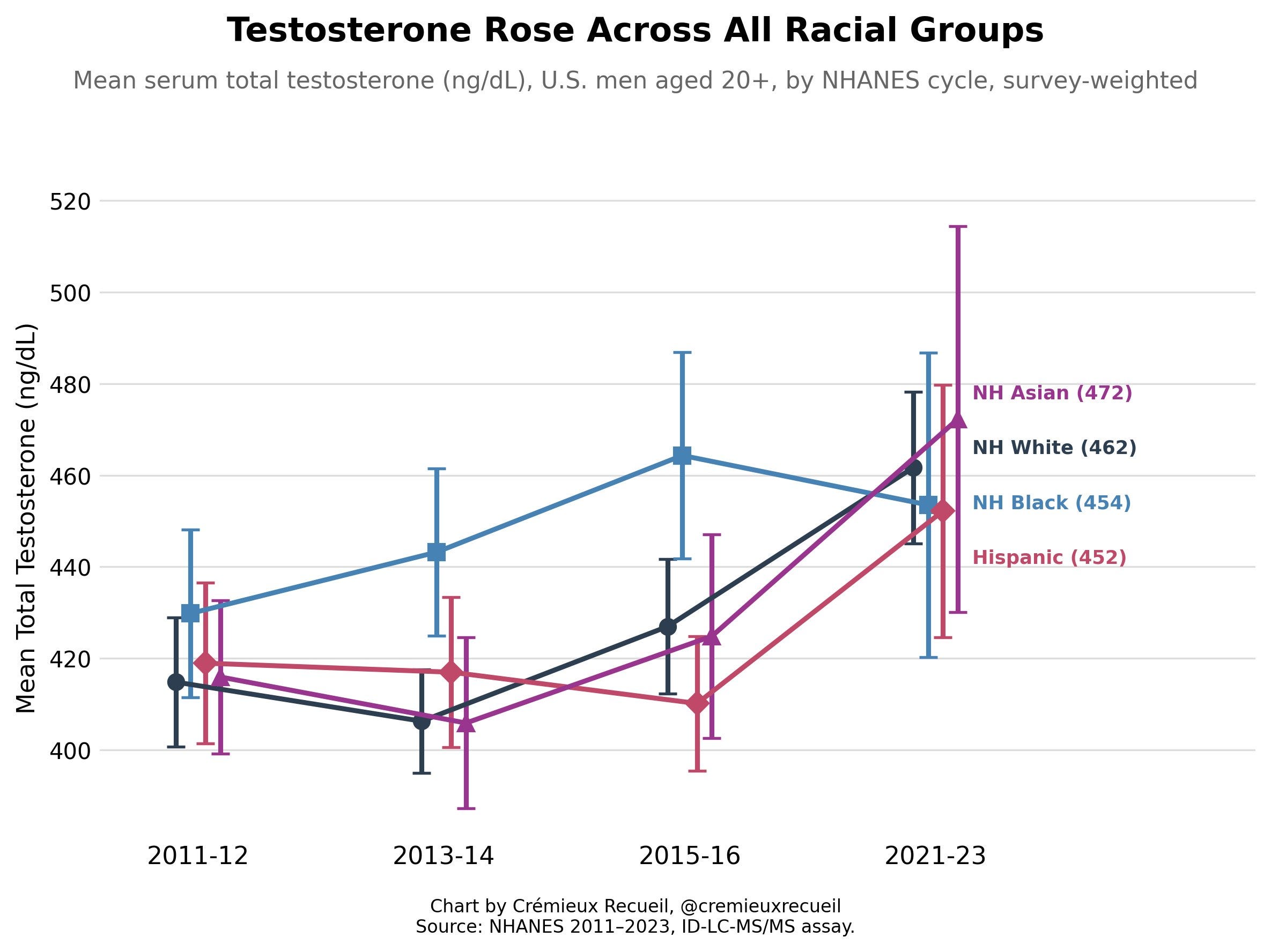
Is the rise race-specific? No, the rise appears to similarly affect Asians, Whites, and Hispanics, with Blacks showing a somewhat different trend that’s consistent with stability in the last two periods—no rise, no fall.
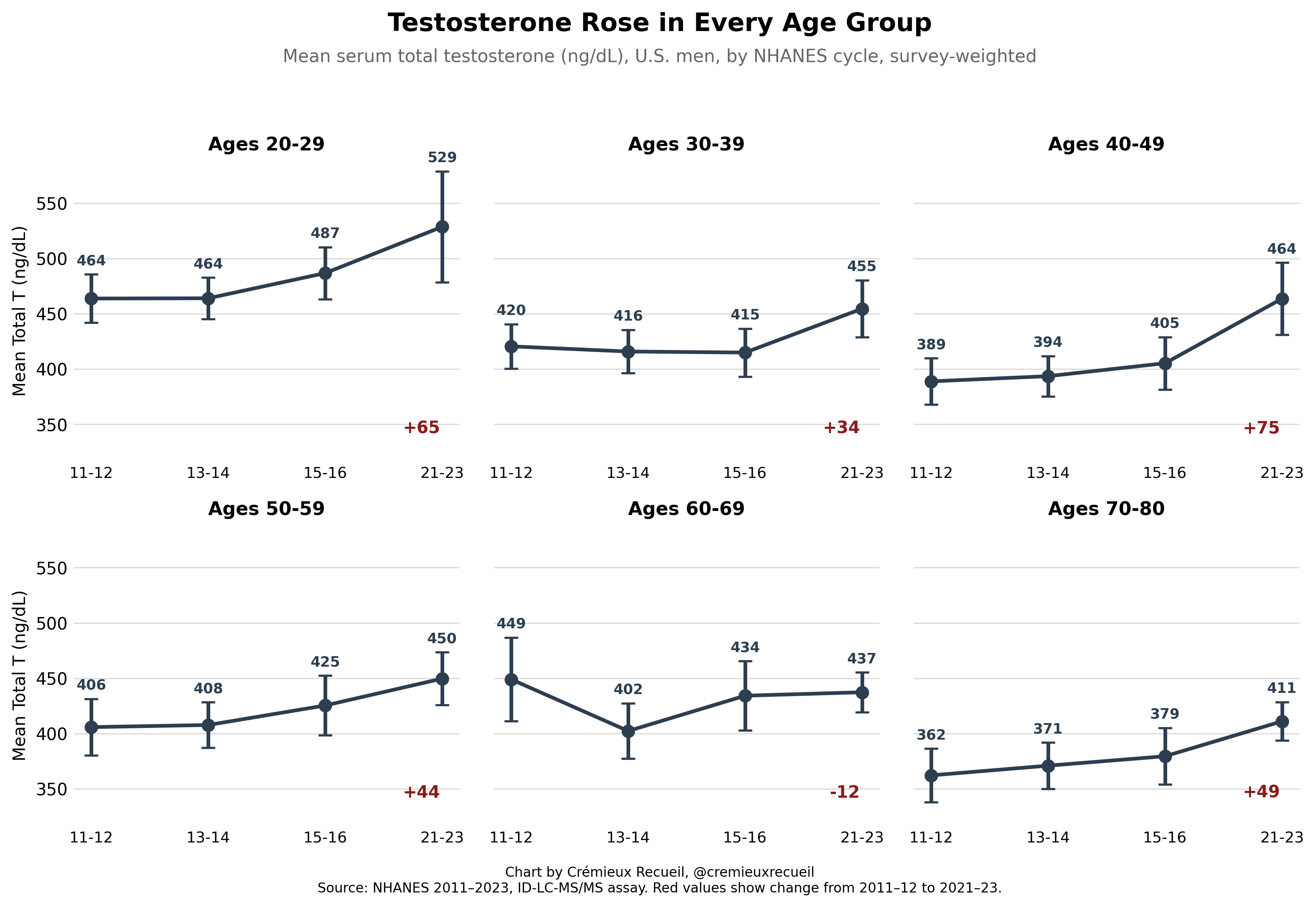
Is the rise age-specific? No, in unweighted analyses, there’s a rise at every age range, and in weighted analyses, it’s at almost every one. Every age has hormonally masculinized or stayed roughly the same.
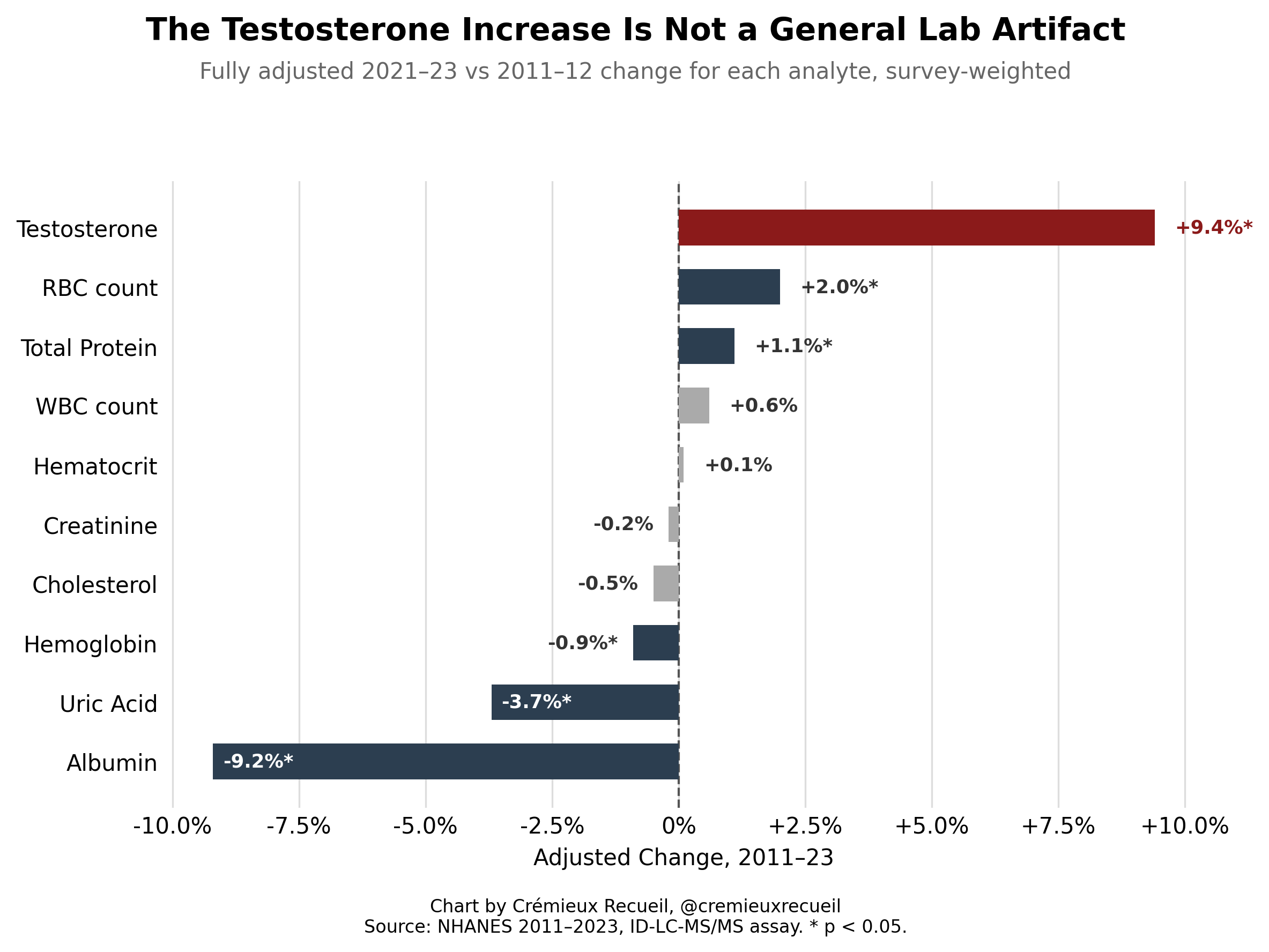
Did everything rise? By this I mean, did all of the lab tests go up? If so, then the rise could represent a general lab work artifact. Alas, this is not the explanation:
What about changes in measurement instruments or the timing of sampling? Those also don’t have an effect, as the measurement methodology is constant, and controlling for the time of day of sampling leaves the rise intact.
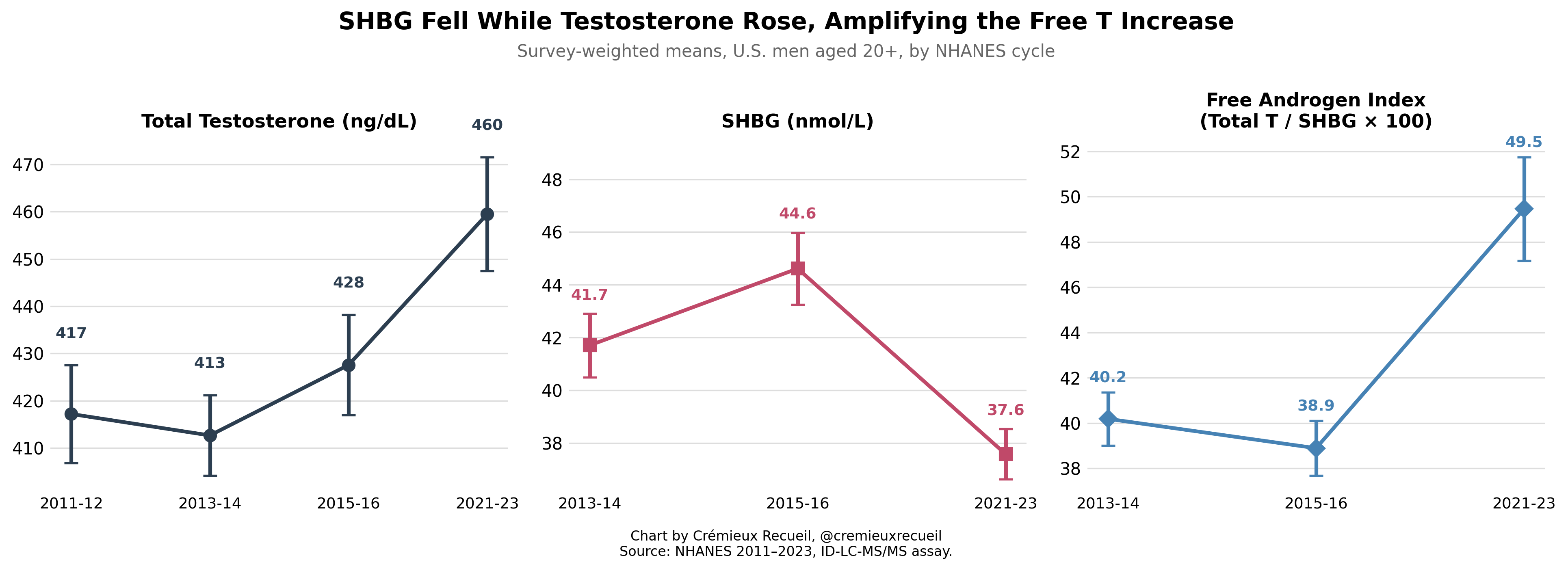
What about free testosterone levels? Those also seem to have risen. We know this because we have measures of sex hormone-binding globulin in some waves, and levels have fallen, so the free androgen index has gone up for two reasons: the increase in total testosterone and an increase in testosterone availability.
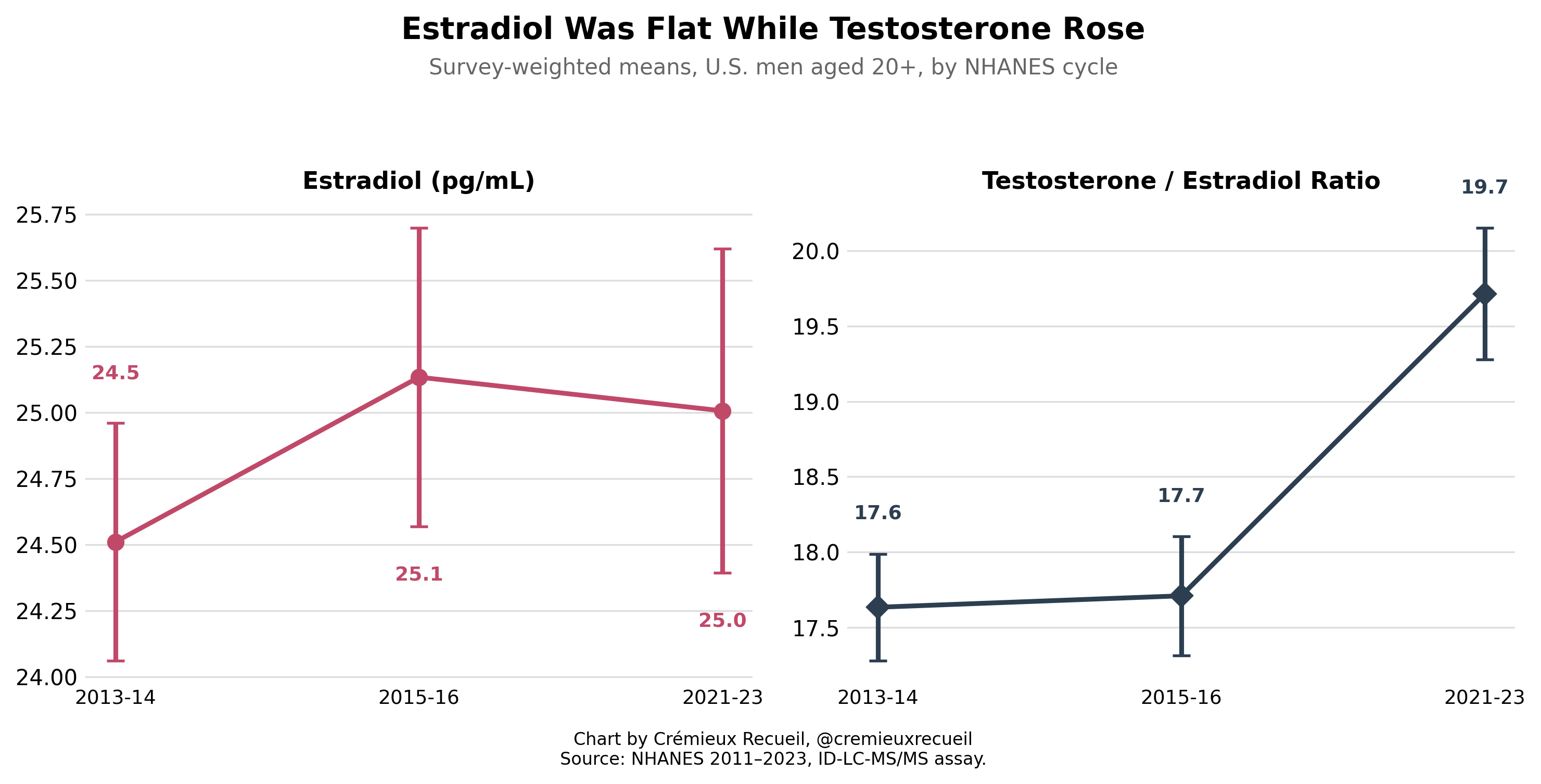
Did estradiol rise in lockstep? Curiously, estrogen levels did not also rise. They were basically flat, so the testosterone/estrogen ratio increased majorly.
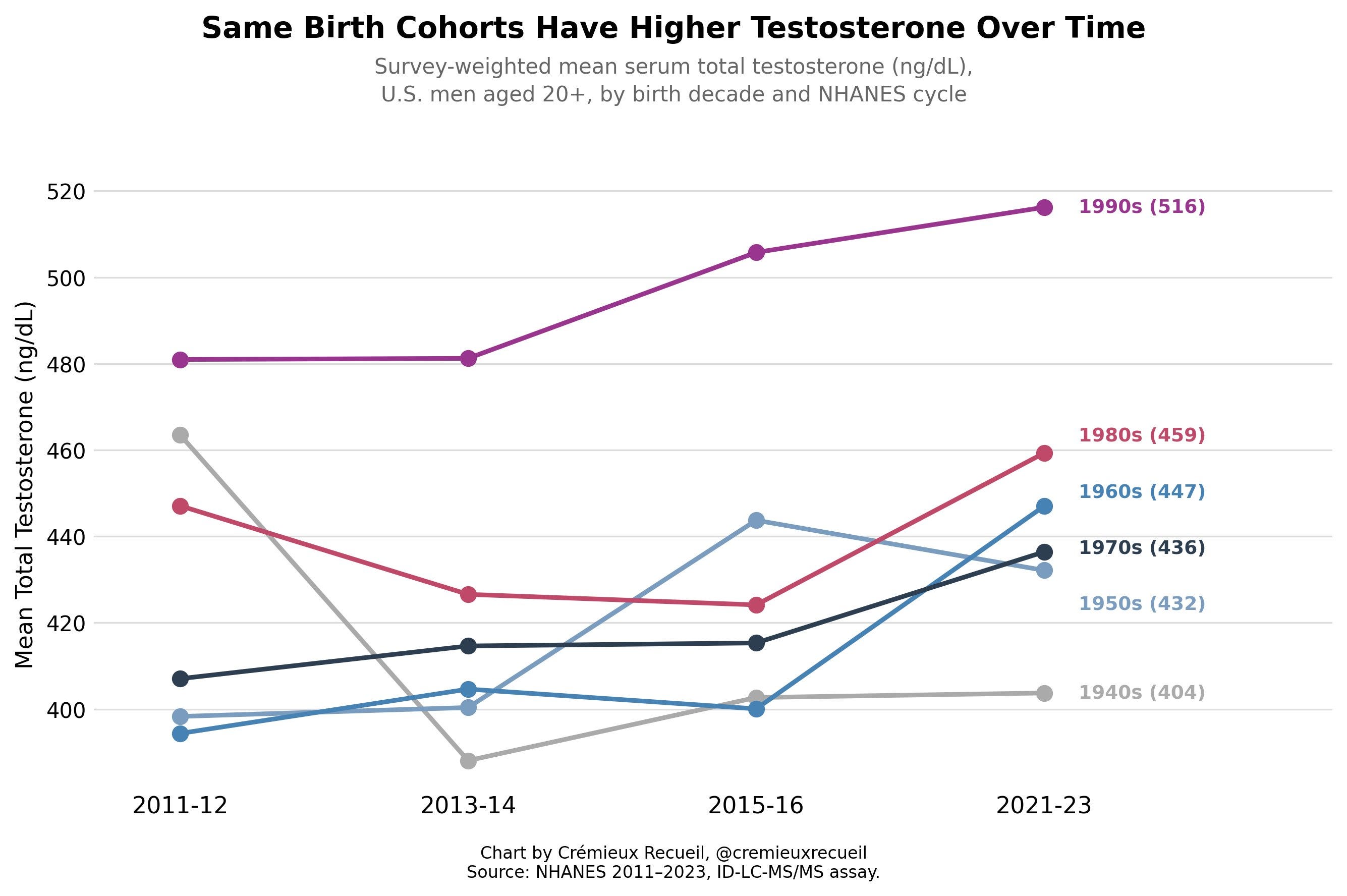
Is this a birth cohort comparison problem? We see a rise recently in most available birth cohorts in terms of decade of birth, with the exception of those born in the 1940s. So the trend is largely not about that issue.
Increased…? Decreased…? Based on dietary recall, protein consumption isn’t explanatory: grams per day are down 9.7% 2011-12 to 2021-23, per kilogram of body weight. Carbs are also down 14.5% in the same time span, as are total calories, by 9.2%. And all of this is demographically consistent. Moreover, physical activity doesn’t seem to have increased, although that’s hard to say for sure since the physical activity questionnaire was redesigned during this time series. However, the sedentary time measure was consistent and changed from 382 to 371 minutes per day, which isn’t a lot of change. Triclosan levels fell; BPA, parabens, benzophenone-3, all fourteen of the phthalate metabolites in the data, PFAS/PFCs, urinary arsenic, mercury, and iodine, urinary VOCs, perchlorate/nitrate/thiocyanate—all of these things were also irrelevant in the waves they were measured, so it’s unlikely they mattered between waves. PBCDs and blood VOCs, blood lead and cadmium, all of that was a bit odd as well, since those went down and were positively related to testosterone within waves.
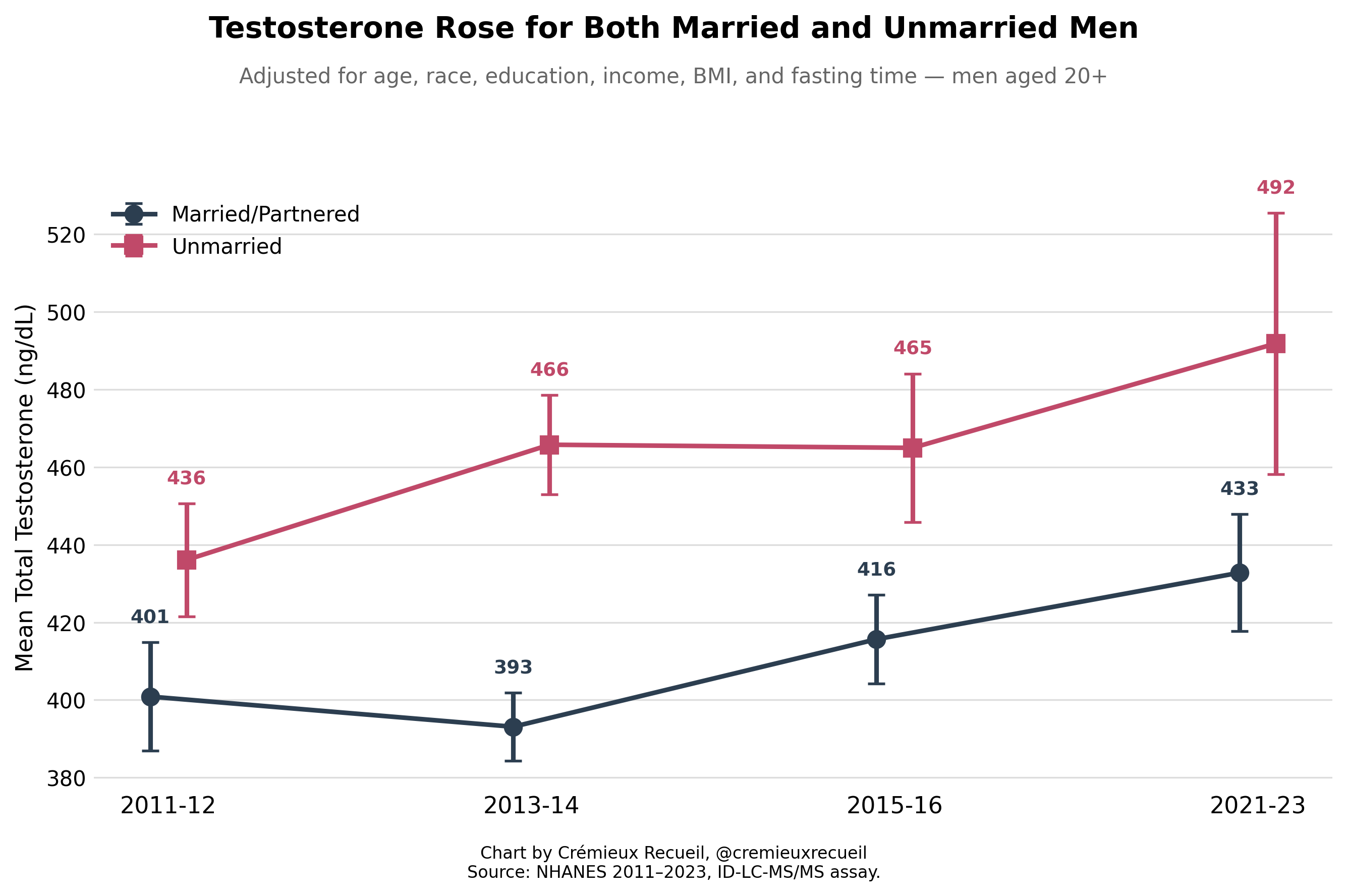
Marriage! Married men tend to have somewhat lower testosterone levels than unmarried men and marriage rates have fallen, but the trend is present in both sets, so that’s unlikely to explain the full trend.
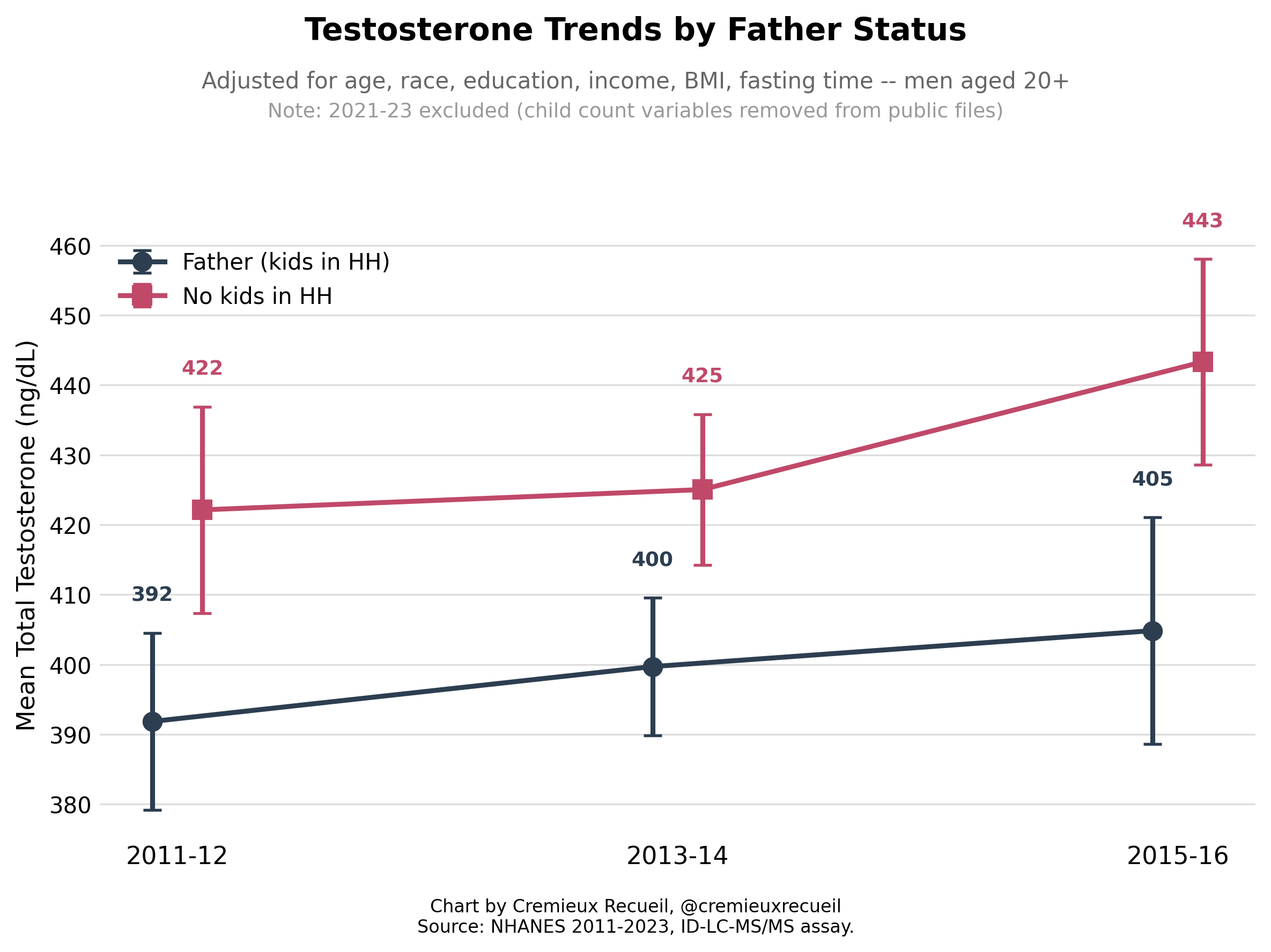
A related possibility is the decline of fatherhood, as childlessness rates are up and having kids is related to lower testosterone. But alas, this also isn’t likely to be explanatory:
Could it be the rise of testosterone replacement therapy? (TRT) This actually seems like a real possibility, until you notice that, for example, there’s a rise at the median and the mean, across most of the distribution, lopping off extremes doesn’t do much (and that’s where TRT-related gains would be concentrated), and the gains are age-stratified in the wrong way, being smaller at ages where you would expect more TRT usage.
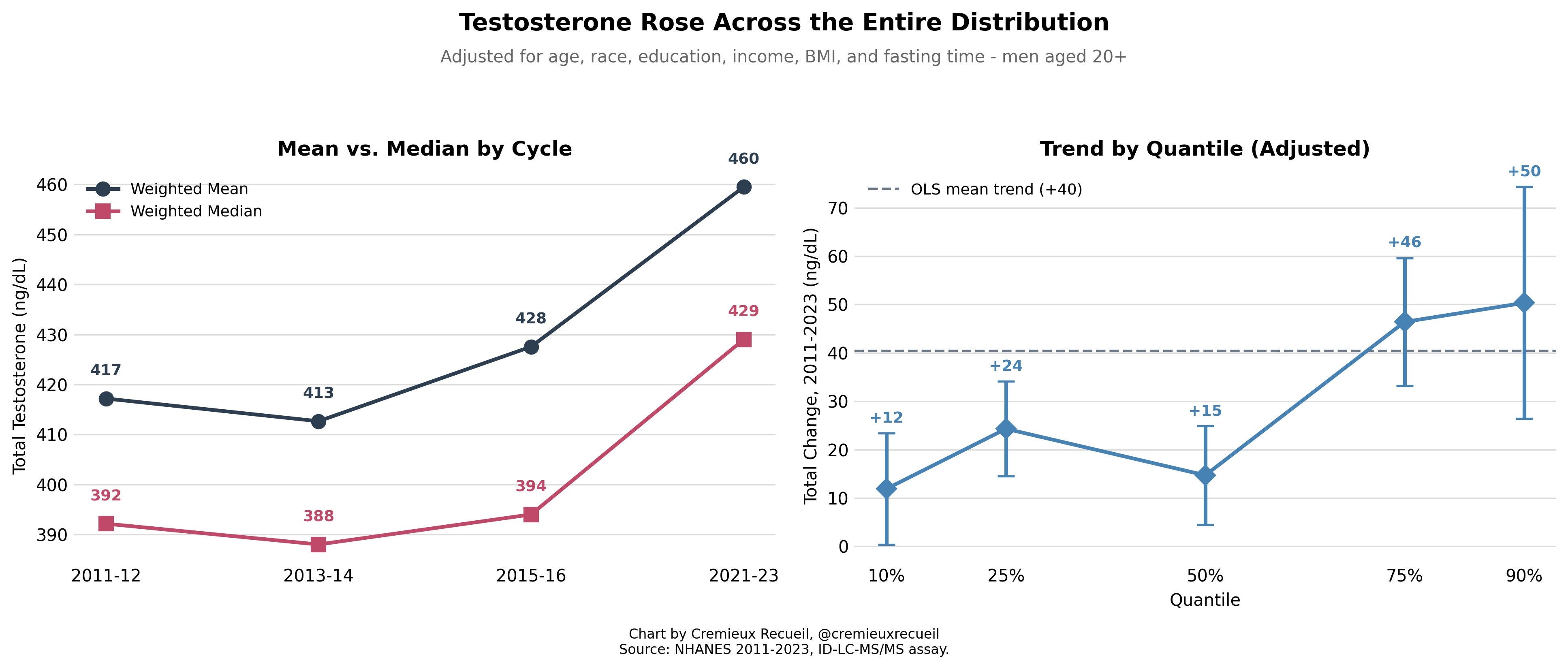
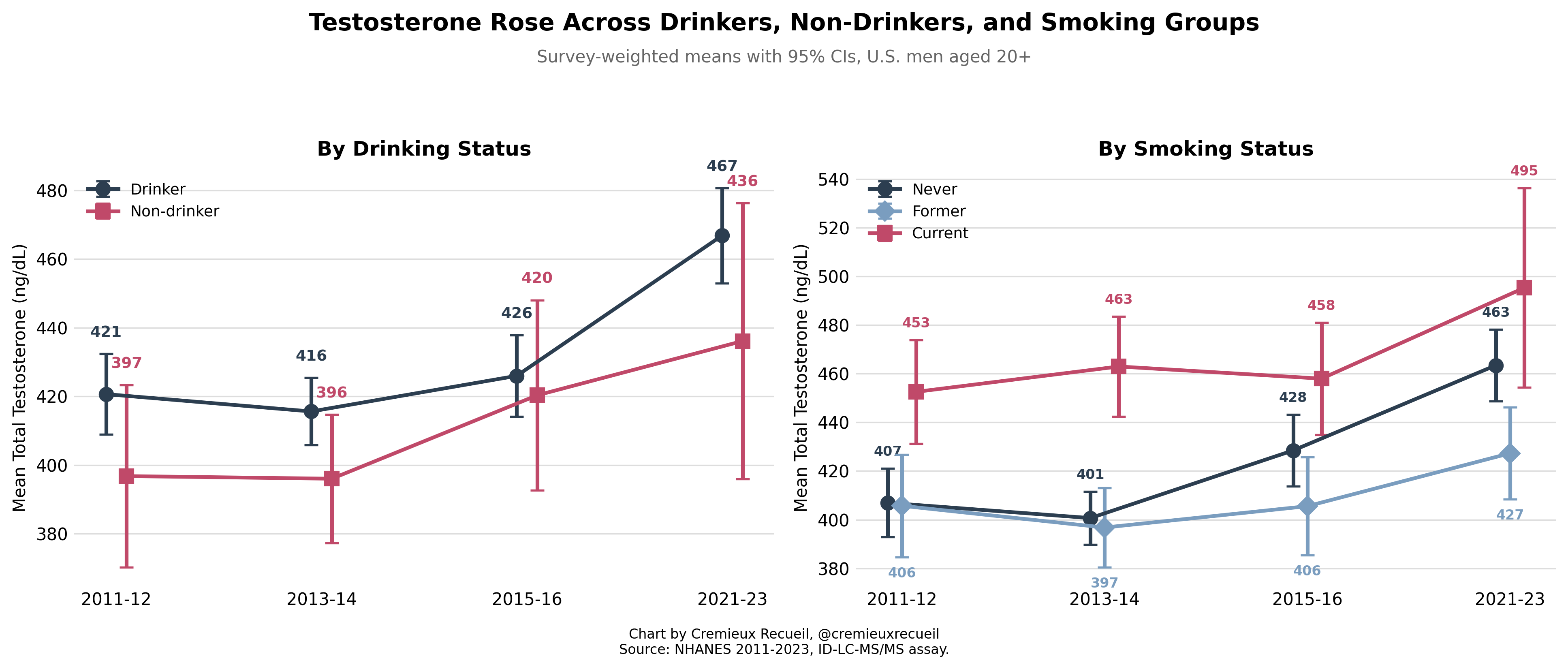
What about the decline of drinking and smoking? Oddly, drinking and smoking are related to higher testosterone. If I had to guess, experimentally, cutting those things would be good for testosterone, but at least cross-sectionally, their fall doesn’t seem to be a relevant factor.
Diets? Dining habits? GLP-1s? Ultraprocessed food? None of that seems relevant. Nor does marijuana usage, cholesterol levels, waist circumference, sex, PCOS, DHT conversion, blood pressure, sleep, or anything else that I could control for (and that list is long).
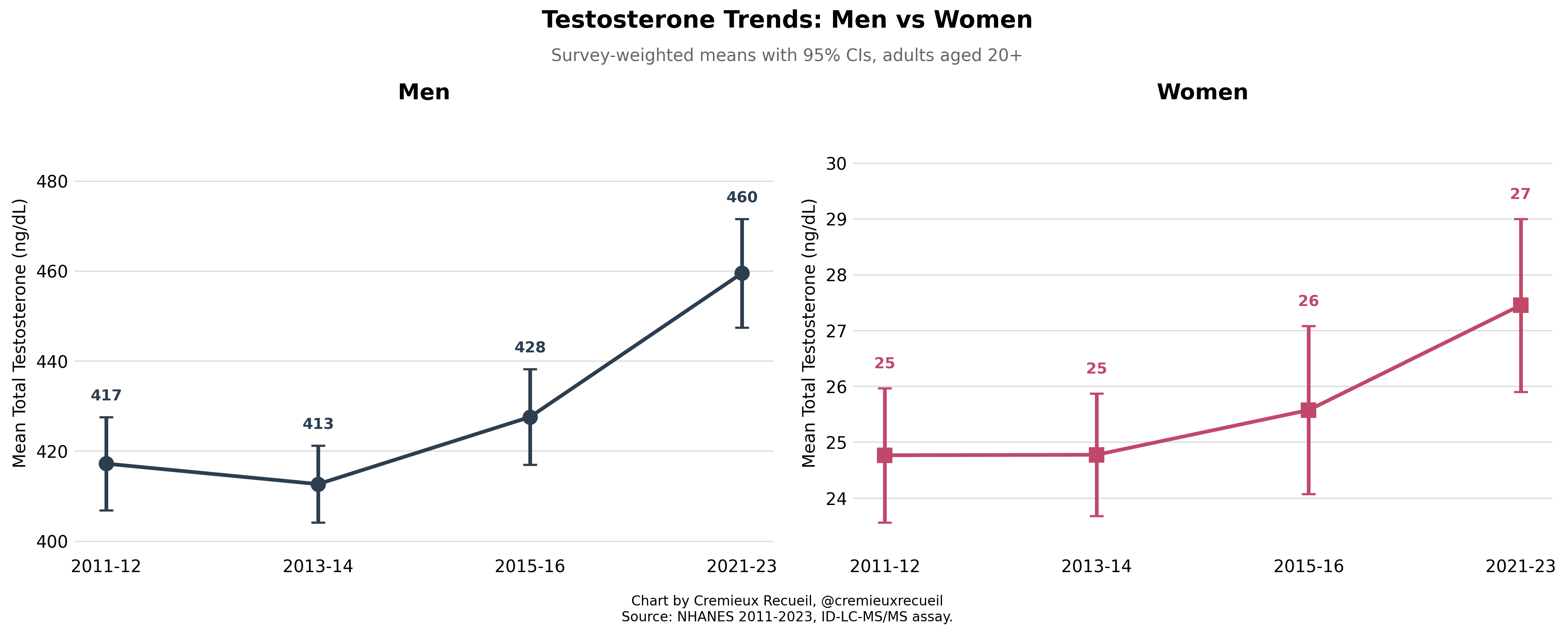
Ultimately, I don’t think I have a good explanation for the increase in testosterone recently. It’s clear that levels have gone up in recent years, but it’s far from clear why. Personally, my top explanation—which I cannot directly support—is that there’s sampling error, and something broke in the COVID era that made it so that lots of survey results have changed in odd ways.
The Testosterone Validation Loop
People often seek somatic proof for social anxieties—they want something that validates their perceptions of trends in society. One major example is feminization.
Plenty of people believe that today’s men are softer than they used to be. And they might be, but that doesn’t mean testosterone is to blame. Nonetheless, to support the idea that men today are feminized, people will point to testosterone levels, allege they’ve fallen—and, due to common methodological issues, it’s easy to make it appear as though they have—and use that decline to support their belief that men are more feminine than they used to be. Moral, political, and aesthetic judgments have been validated by something measurable, natural, and scientific.
This is a powerful thing. Biology offers things social claims lack: objectivity, causality, and inevitability. ‘People seem less masculine these days’ is contestable. ‘Testosterone is collapsing’ is something that sounds measurable (and it is, in theory). ‘Modernity is making men biologically weaker’ sounds causal. ‘This is what bodies are actually doing’ sounds inevitable.
People perceive a social change, they search for a bodily marker of it, the marker becomes the proof for the harder to support social claims, the social perception is used to interpret the marker, and any disconfirmation is absorbed as denial, corruption, or hidden decline. Never mind that there’s missing data to support the notion that society has been feminized on the basis of observed testosterone levels, biological legitimation is just too intuitively plausible, so the arguments seem to work. But biology shouldn’t be used this way, because it does not work that way: a biomarker like testosterone does not necessarily co-move with masculine behaviors—look across cultures and it clearly doesn’t! Look to all the available supplementation experiments and it also fails there!
More importantly, in keeping with the focus of this article, since testosterone levels are actually up, what happens to the notion of feminization anyway?
May 20, 2026 Update: A New Meta-Analysis!
Rodríguez et al. conducted a meta-analysis on the relationship between testosterone levels and risk-taking behaviors in economic games across several fields including behavioral economics and neuroendocrinology. Their meta-analytic sample size ended up being 17,340 participants across 52 studies, and their overall result was what you might now expect if you read the rest of this article: nothing.
The meta-analytic effect estimate was r = -0.0021 (p = 0.92), basically zero. Moreover, there was no evidence of any sort of publication bias.
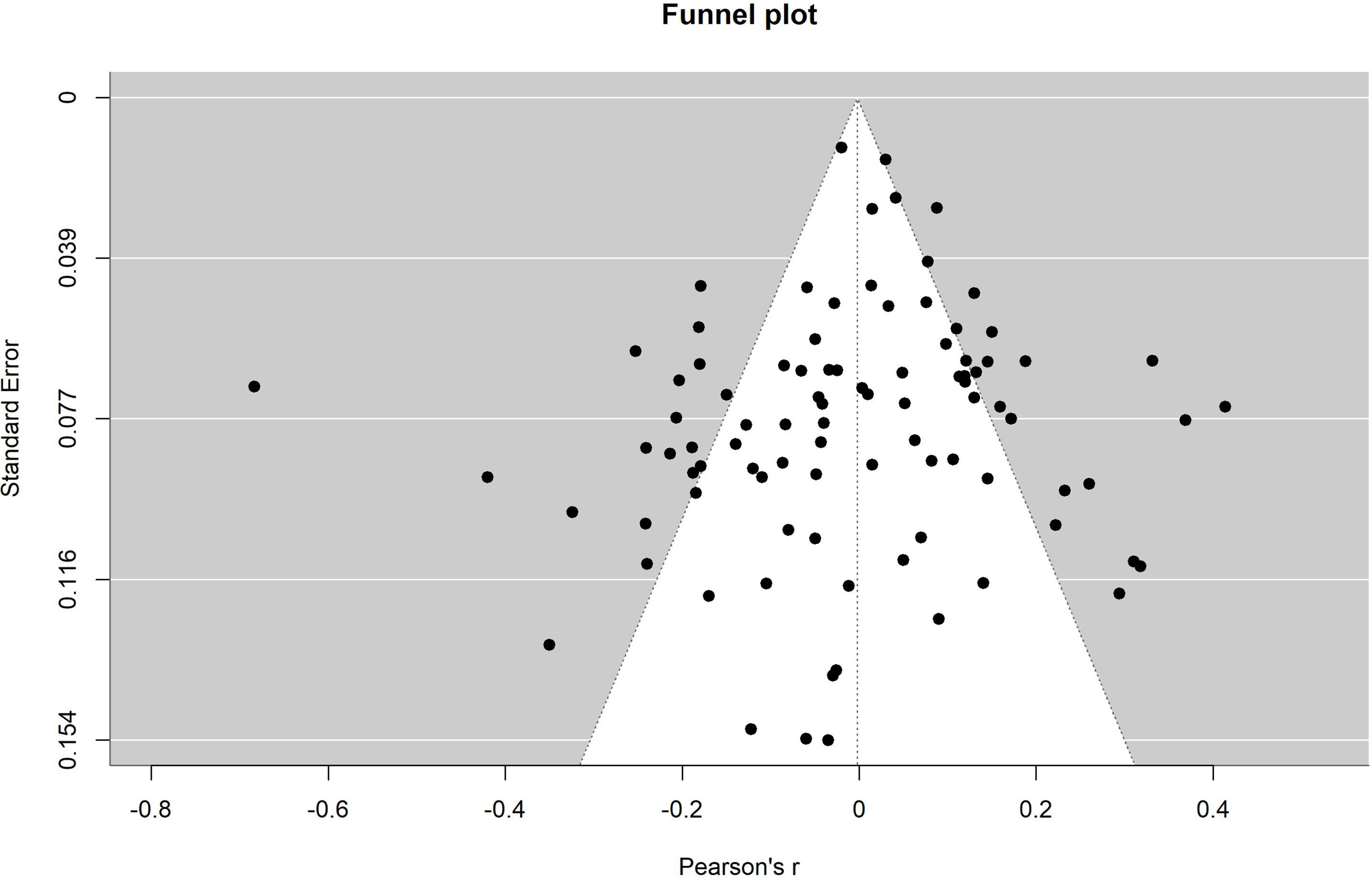
The type of risk measure was not a significant moderator of this relationship, and there were seven different measures, they just all produced similar results.4 Studies that measured testosterone from blood, fingers, and saliva all produced similar effect estimates, and those from administration found somewhat larger effect, around r = 0.1—a quite small effect size, all things considered. Sex also wasn’t a meaningful or significant moderator of differences in the effect of testosterone, so it’s not as though high or low testosterone mattered more or less for men or women. Excuse the colors:
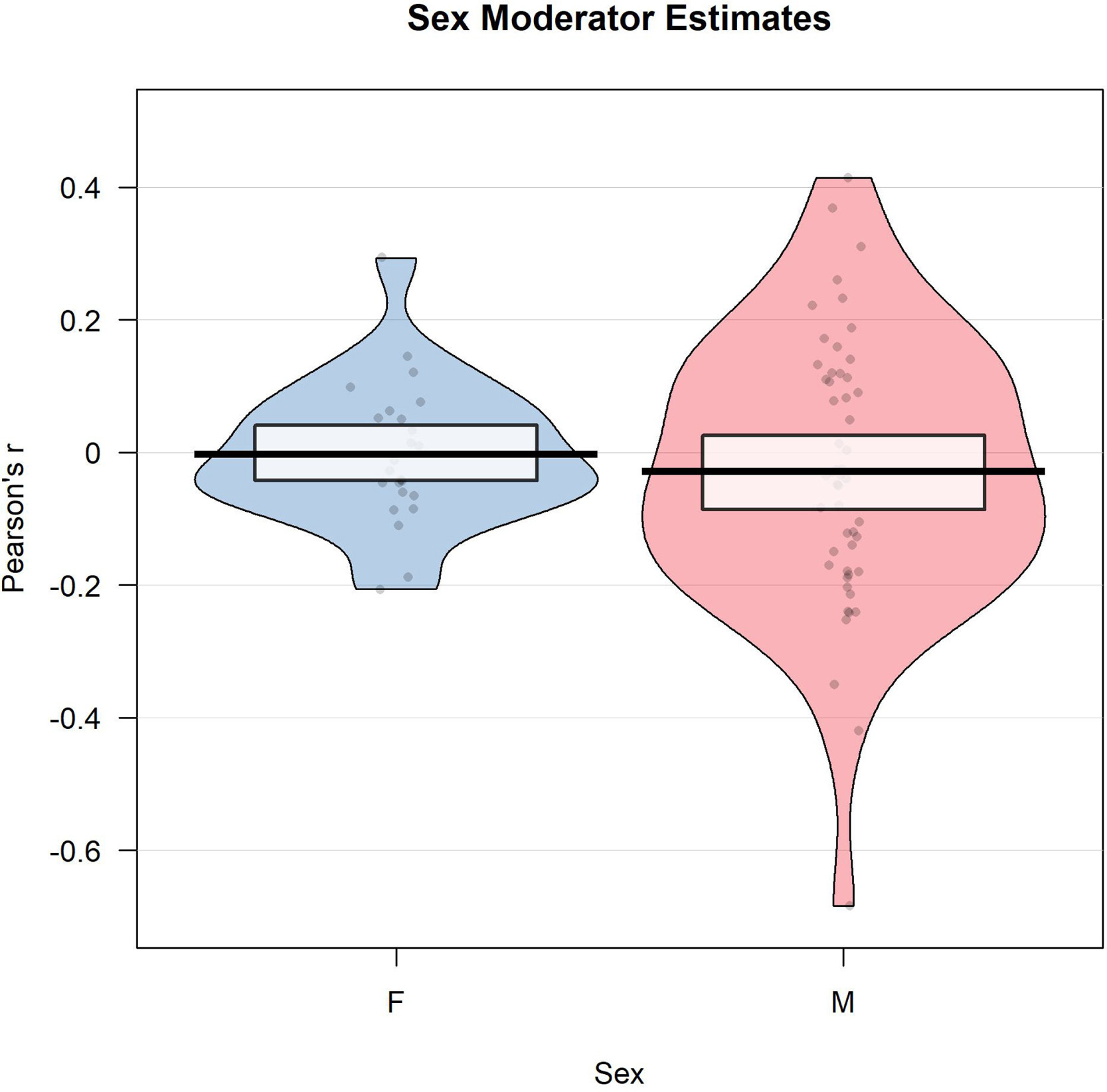
Per the authors:
[T]estosterone is unlikely to provide a general explanation to human risk preferences. Rather than a single-hormone account, the evidence points to a biopsychosocial view: what we label “risk taking” emerges from the interaction of task demands, cognitive and affective processes, and situational context, with endocrine influences (when detectable) appearing narrow and contingent rather than broad and trait-like. […]
The most defensible position at present is modest: testosterone is not a universal driver of risk preference. Where associations surface, they are best understood as products of specific constellations of task demands and endocrine measurement rather than a single hormonal lever on decision making. Research programs that embrace multiplicity (i.e., neural computation, learning history, affective state, social context, and carefully specified endocrine pathways) offer a more credible route forward than continued searches for a unitary biochemical signature.
The intuitive understanding of testosterone as masculinizing is true in a physical sense; the evidence that it reliably behaviorally masculinizes people is tenuous.
Several studies have noted a false decline due to changes in measurement.


Some samples used to indicate a negative testosterone trend also support a lack of a BMI trend, making it clear that they are obviously improperly constructed, sample-wise.


Several studies sample the past by using frozen samples from long ago. These generally end up being unrepresentative or incomparable representative in addition to being degraded.
One measure had a significant result (p = 0.011), but it was marginally significant and not significantly different from the estimates for the other risk measures.
Guess I follow the online rightoid world too much since I thought testosterone levels were going down. Thanks for setting the record straight.
What about the follicle stimulating hormone (FSH) and luteinizing hormone (LH) levels? Any data on these? From what I see so far, the relative changes in total and free testosterone are moderate even if significant. Changes in FSH and LH would be important for the regulation of sperm and testosterone production. IIRC There are lots of reports on sperm quality and numerical declines...