

Today’s post is brought to you by my sponsor, Mechanize. They’re hiring junior software engineers at $300K/year base salary.
Let’s say you want to live longer. Naturally, you start reading studies in hopes that you’ll figure out how. You quickly discover you need to do three things:
Gain weight;
Increase your cholesterol;
Raise your blood pressure.
Wait, surely this must all be backwards, right? This isn’t at all what doctors say! But, if you spend enough time online in ‘wellness’ circles, you’ll find plenty of people making exactly these claims, and often saying that doctors are wrong.
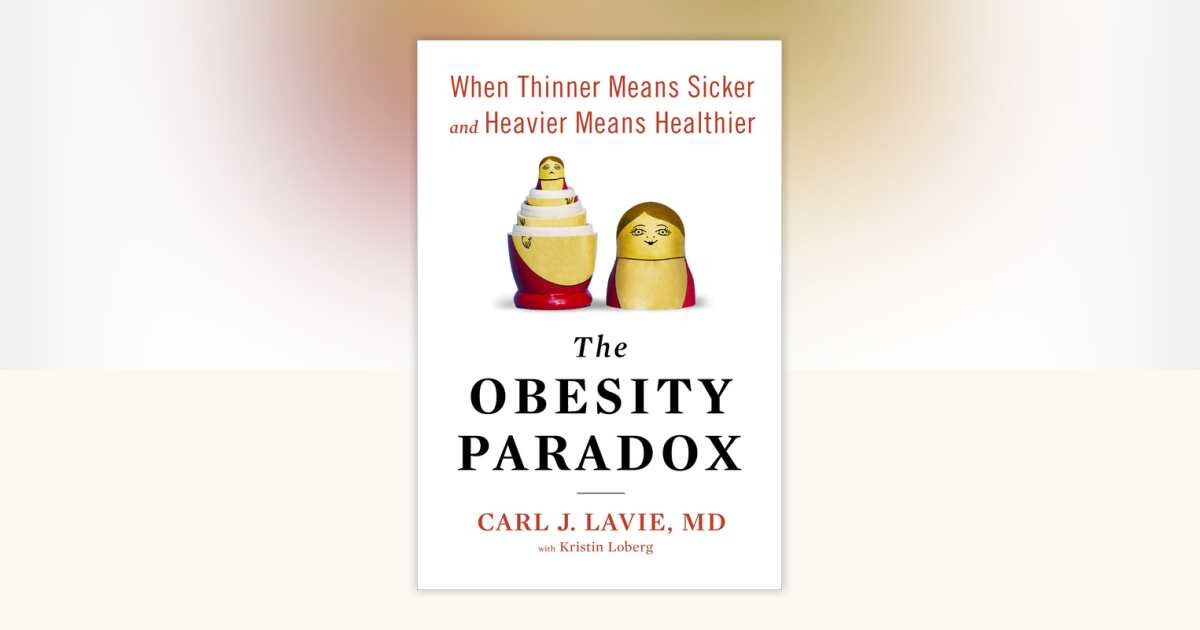
Is Cholesterol Healthy?
This is an extremely common claim to hear online because there are so many in the so-called ‘LDL skeptic’ camp. These people tend to believe that LDL cholesterol isn’t harmful—or at least that the harms are exaggerated—and that there’s a more ‘nuanced’ conclusion to be had about drugs to lower LDL like statins and PCSK9 inhibitors, as opposed to the consensus that, when it comes to cholesterol, ‘lower for longer is better’ and the drugs are good. The basic case that cholesterol is good for you is based on the observation that, in large cohort studies, higher mortality is associated with both very low and very high levels of LDL, like so:
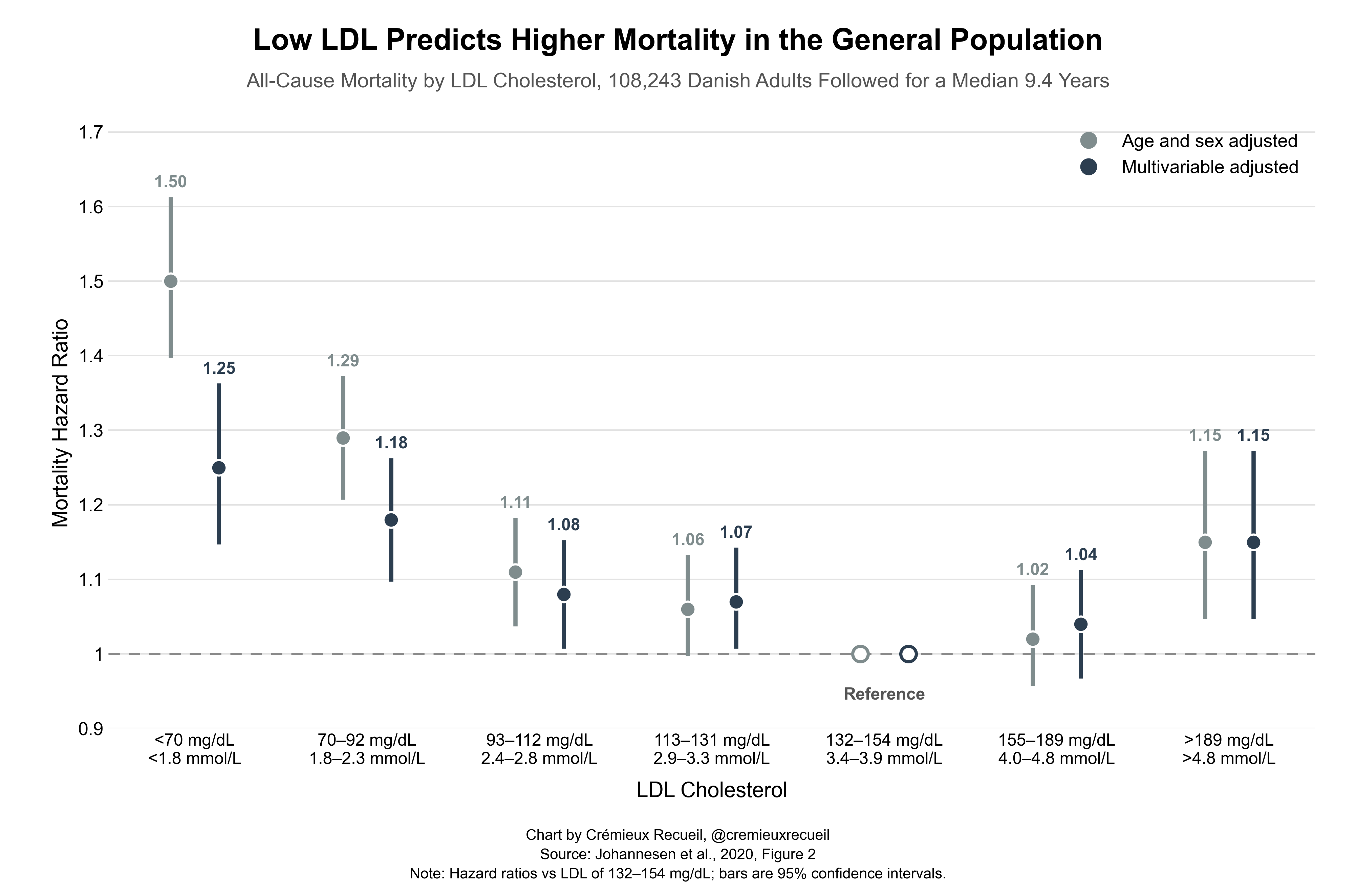
If LDL is bad for you—disposing you to clots and heart attacks—then how could this pattern emerge? The answer has to do with how LDL levels develop over time, which is something you can’t capture when you look at the general population at one point in time as in this and many similar figures. Consider what happens in lymphoma cases. In these, once the cancer has begun to develop, LDL levels begin to rapidly drop.
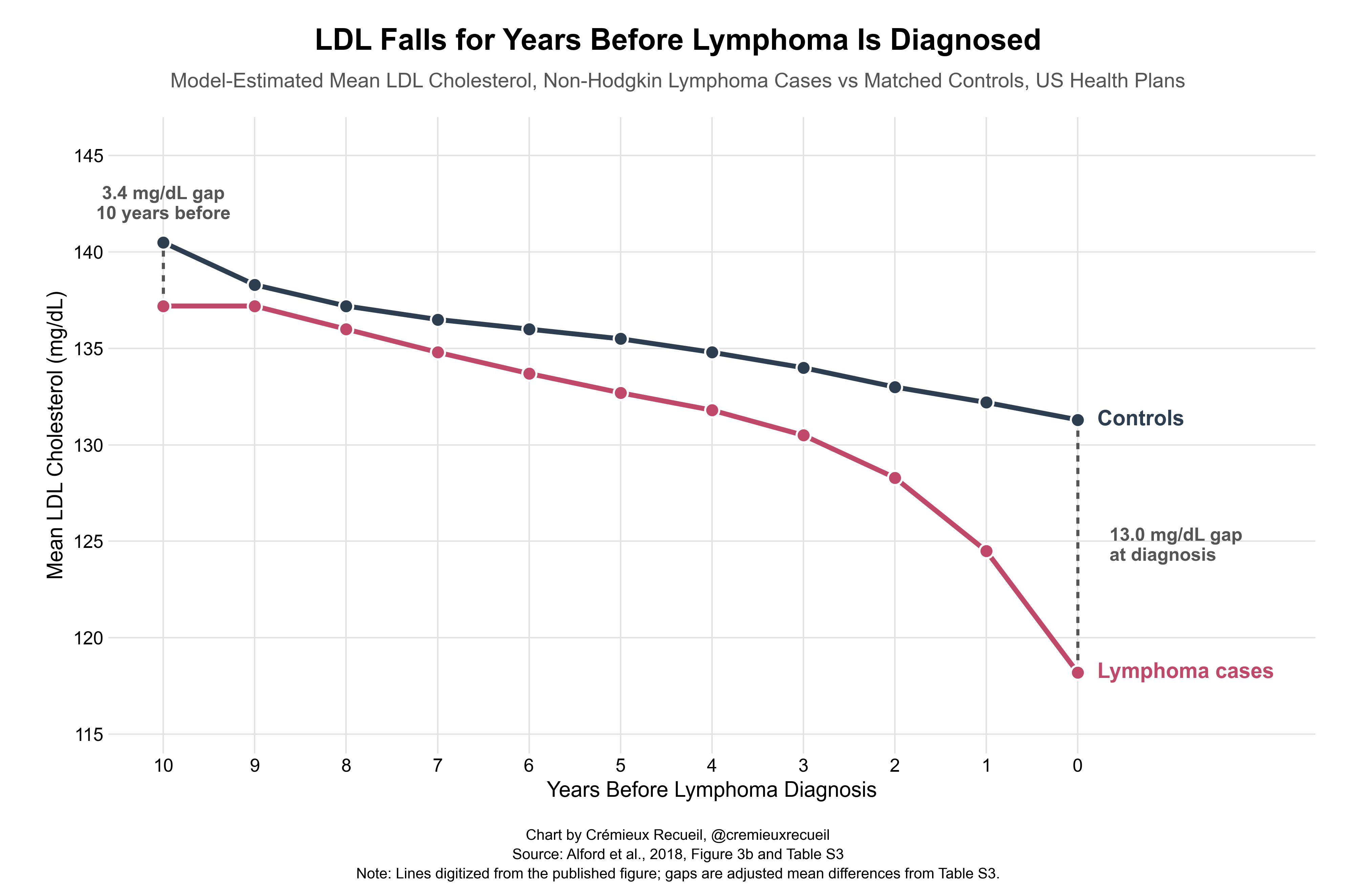
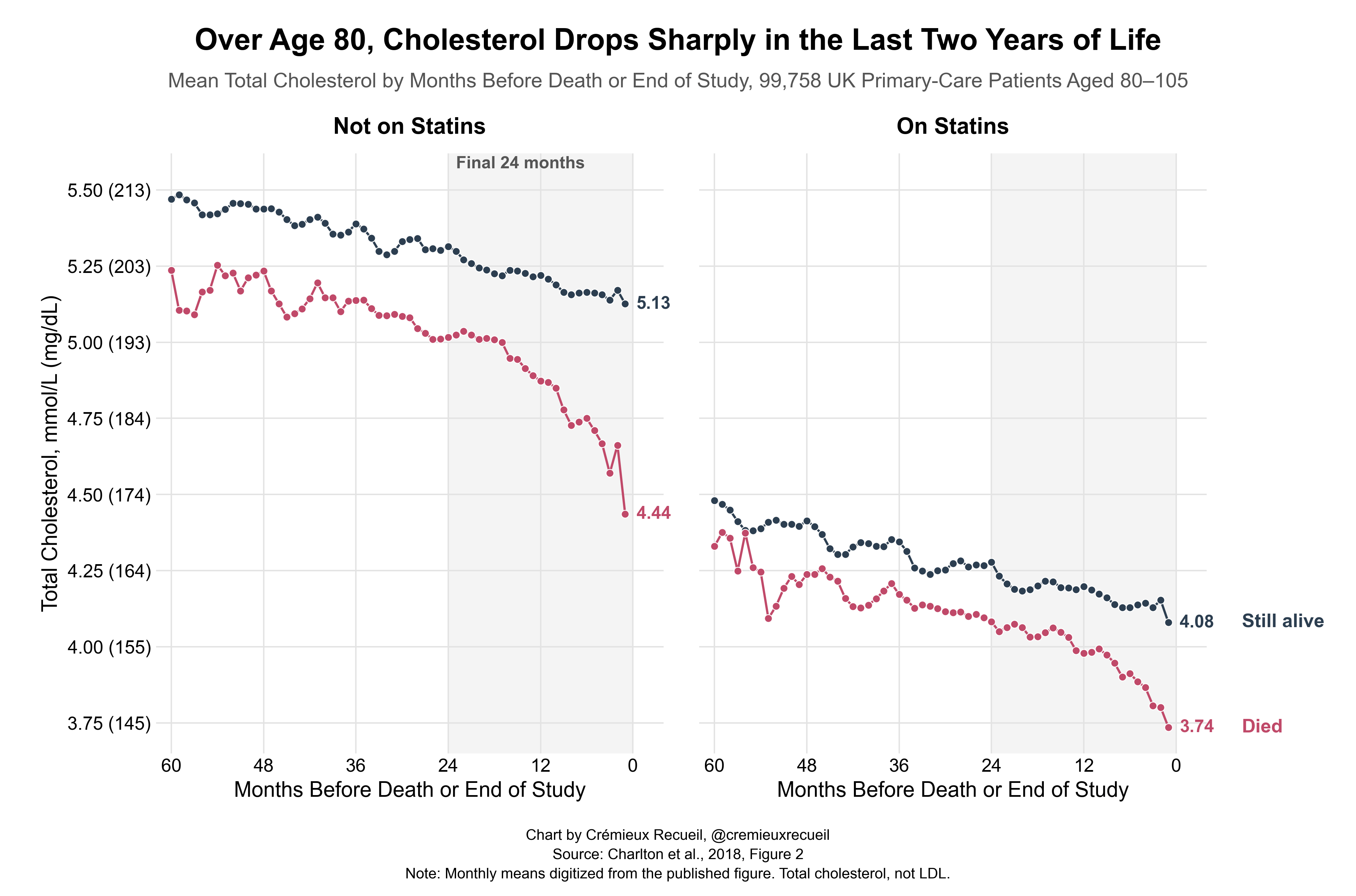
This drop related to lymphoma is clearly unrelated to the function of LDL generally. We see no signal like this in trials or among those whose LDL levels are genetically high or low.1 We see something similar when inflammation (bad) speeds up LDL clearance, when tumors take up LDL, and when more severe cirrhosis leads to greater declines in LDL, among other things. To get the broadest possible view on this phenomenon, when we look at the elderly, LDL generally goes down in the years before death:
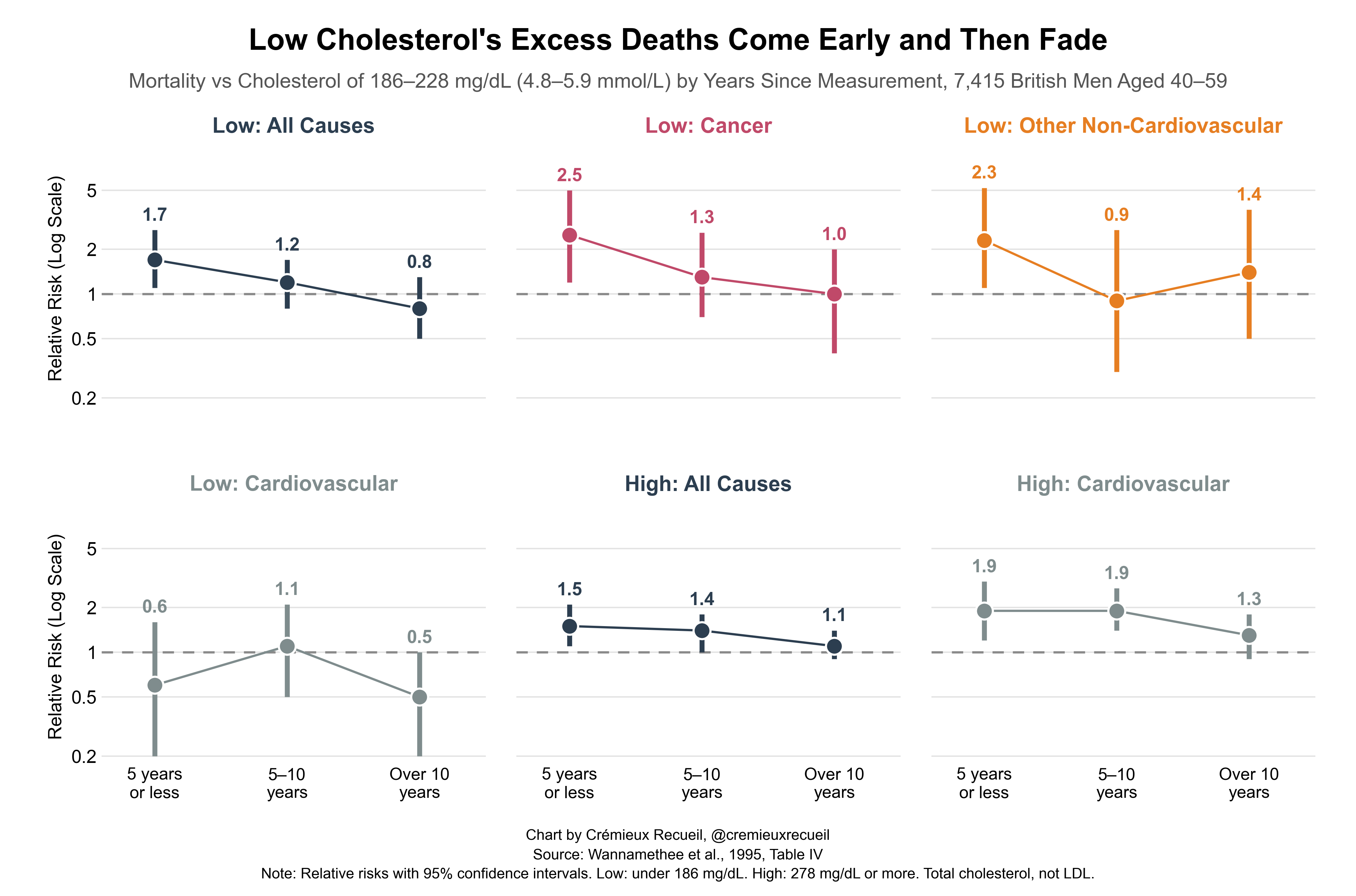
Given the timing issue, we can expect that if low LDL were itself harmful, its effects would be persistent. Contrarily, if the effect was due to LDL marking illness that’s already present, the excess risk would be concentrated shortly after measurement. The latter is exactly what we see: with a longer lag, the excess risk dissipates; on the other hand, risk grows over time for people with hypercholesterolemia; and the association between high LDL and cardiovascular risk in particular—the thing we know LDL causally contributes to—is largely maintained with lags.
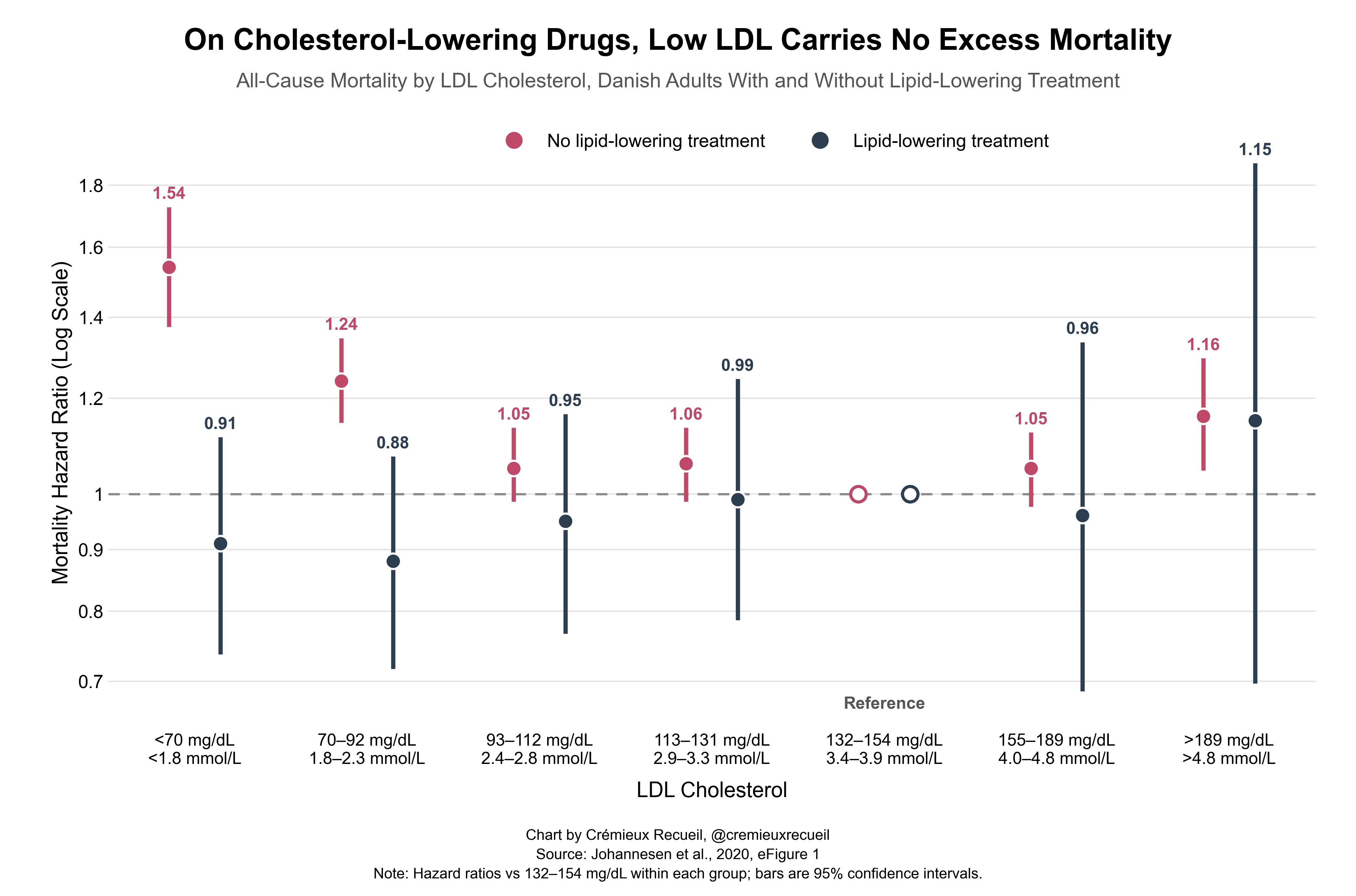
If low LDL is just proxying illness, then it should be dangerous in people who are sick and benign in people who aren’t. If low LDL is itself problematic, the reason for low LDL shouldn’t make a difference—it should just be risky. An unusually clean test of which is true is to compare the population risk curve for people on versus not on lipid-lowering therapies, since those supply an extra source of variance in lipid levels. As it turns out, the risk associated with low LDL doesn’t materialize among those whose lipid levels are likely as low as they are due to being on drugs like statins, ezetimibe, and PCSK9 inhibitors:
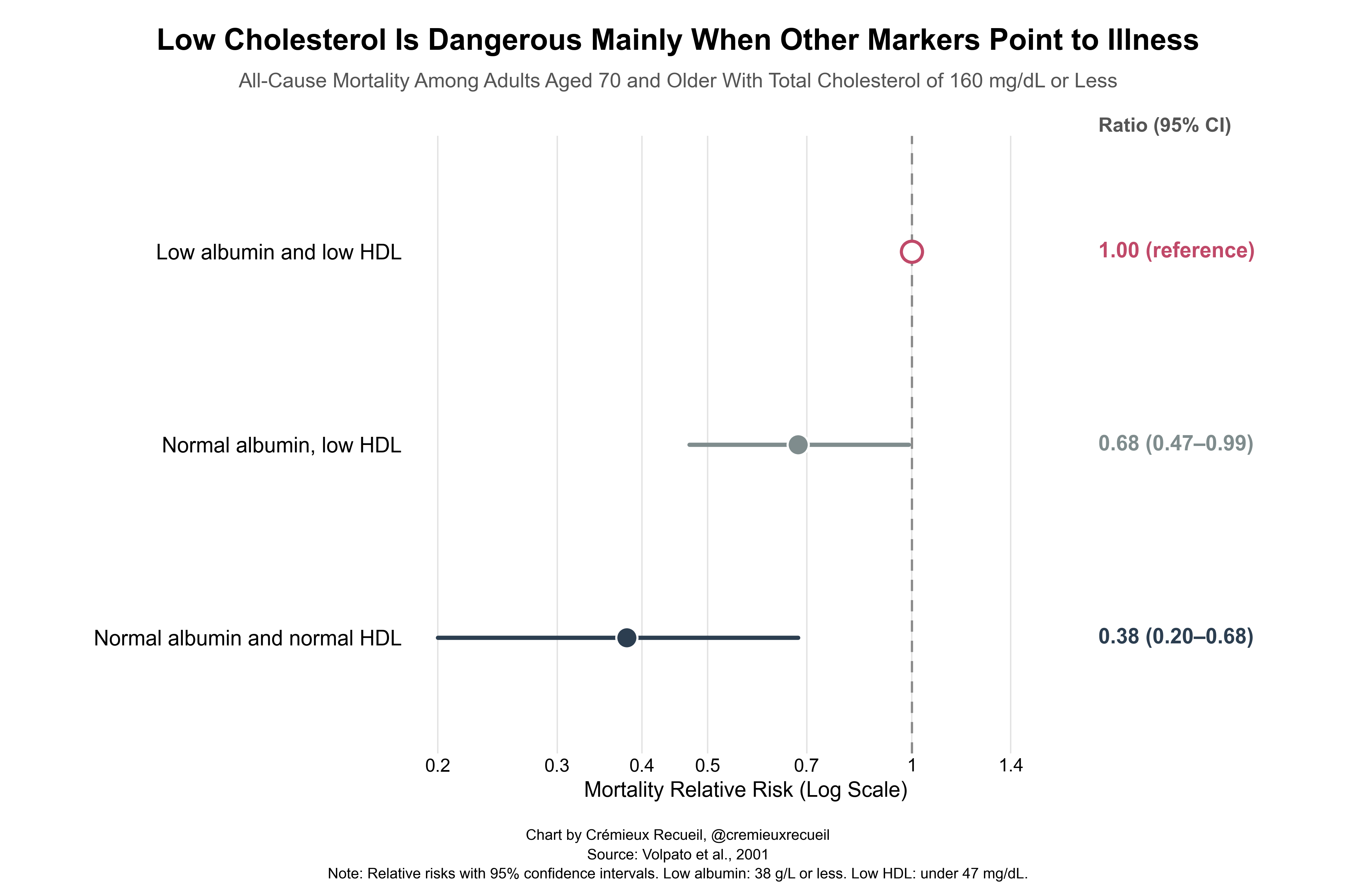
Just using illness markers themselves sorts people in the same way. Using albumin and HDL for risk stratification, we can see that low LDL in otherwise well-nourished old people isn’t risky, but rather, low cholesterol alongside other signs of illness is!
All of the facts point the same way when they’re properly understood, but the dispositive evidence comes in when we marshal genetic evidence and evidence from randomized, controlled trials.
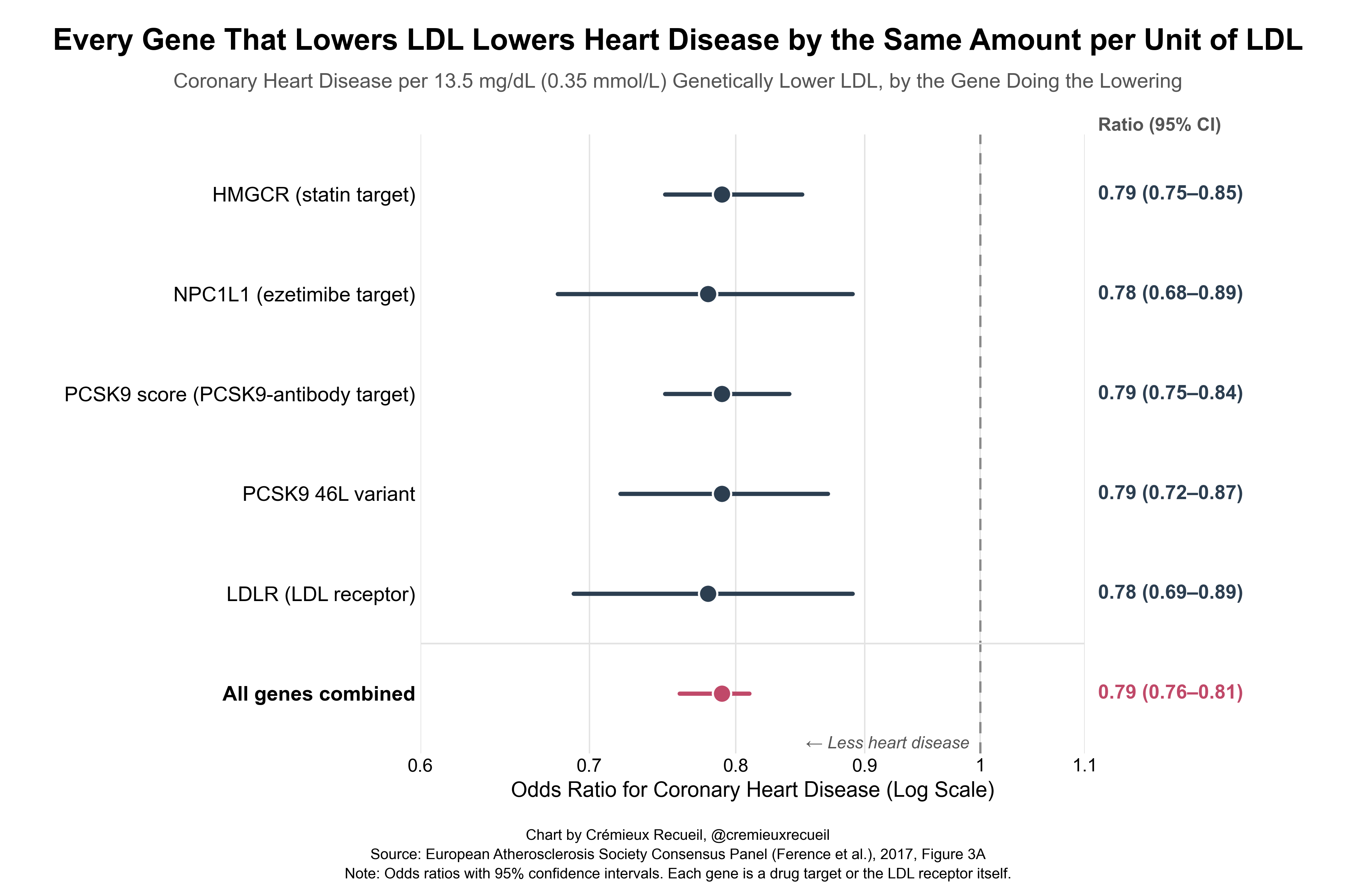
The genetic evidence is incredibly clear on the subject of cholesterol: to the extent differences genes lower LDL, they lower the risk of heart attacks and the naturally low (high) people tend to live a little (considerably) longer (shorter) lives.
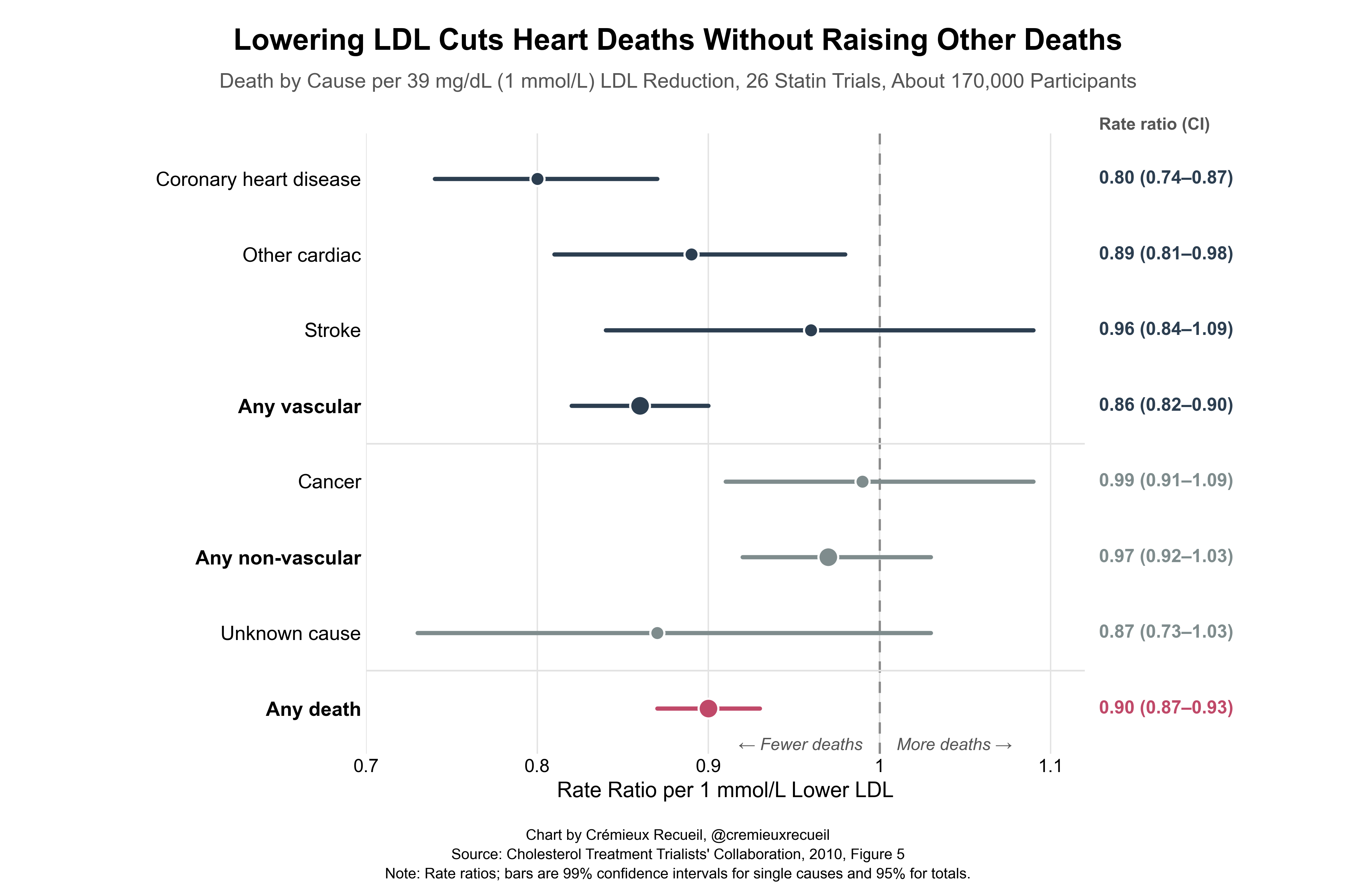
Likewise, when we look at trials, we don’t see that lowering cholesterol causes harm, we see that it saves lives. This benefit is so large that, if you start early enough, the benefits to lifespan are projected on the order of years!2
Is Being Fat Healthy?
A much less commonly argued point is that it’s good to be a little overweight, somewhere between a ‘normal’ weight and ‘obese’. In extreme cases, people have even argued in an unqualified way that higher BMIs equate to lower risk of death or even that being slightly obese beats having a normal weight. It is true that this pattern shows up in large-scale cross-sectional data:
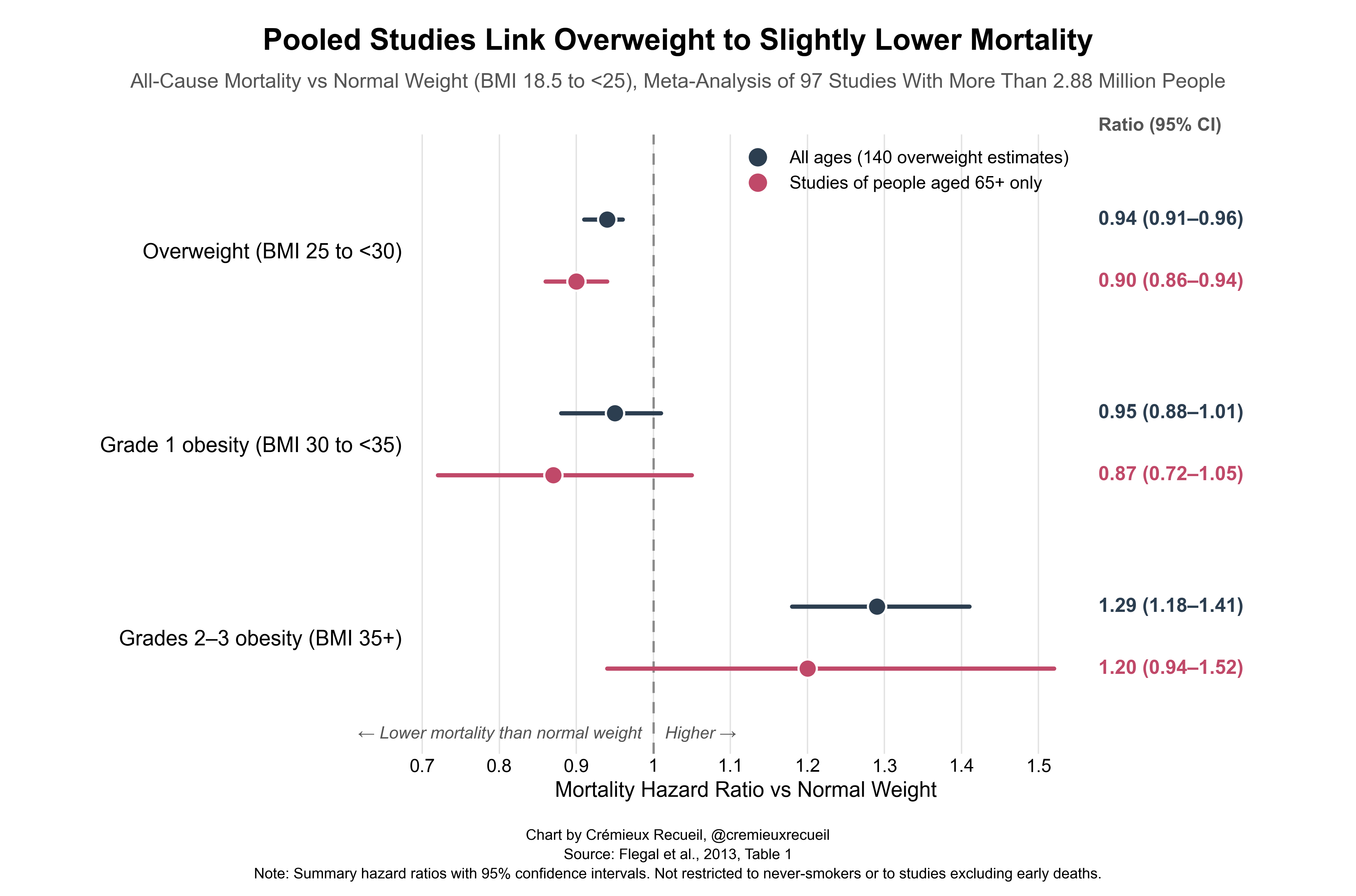
This curious finding is strengthened by the additional facts that heavier heart failure, coronary artery disease, stroke, COPD, lung cancer and renal cell cancer patients tend to survive longer than their skinnier counterparts.3 So, is it true, then, that you should be a little fat, that the U-shaped relationship between BMI and mortality reflects advice you should take? As with LDL, the answer turns out to be ‘no’.
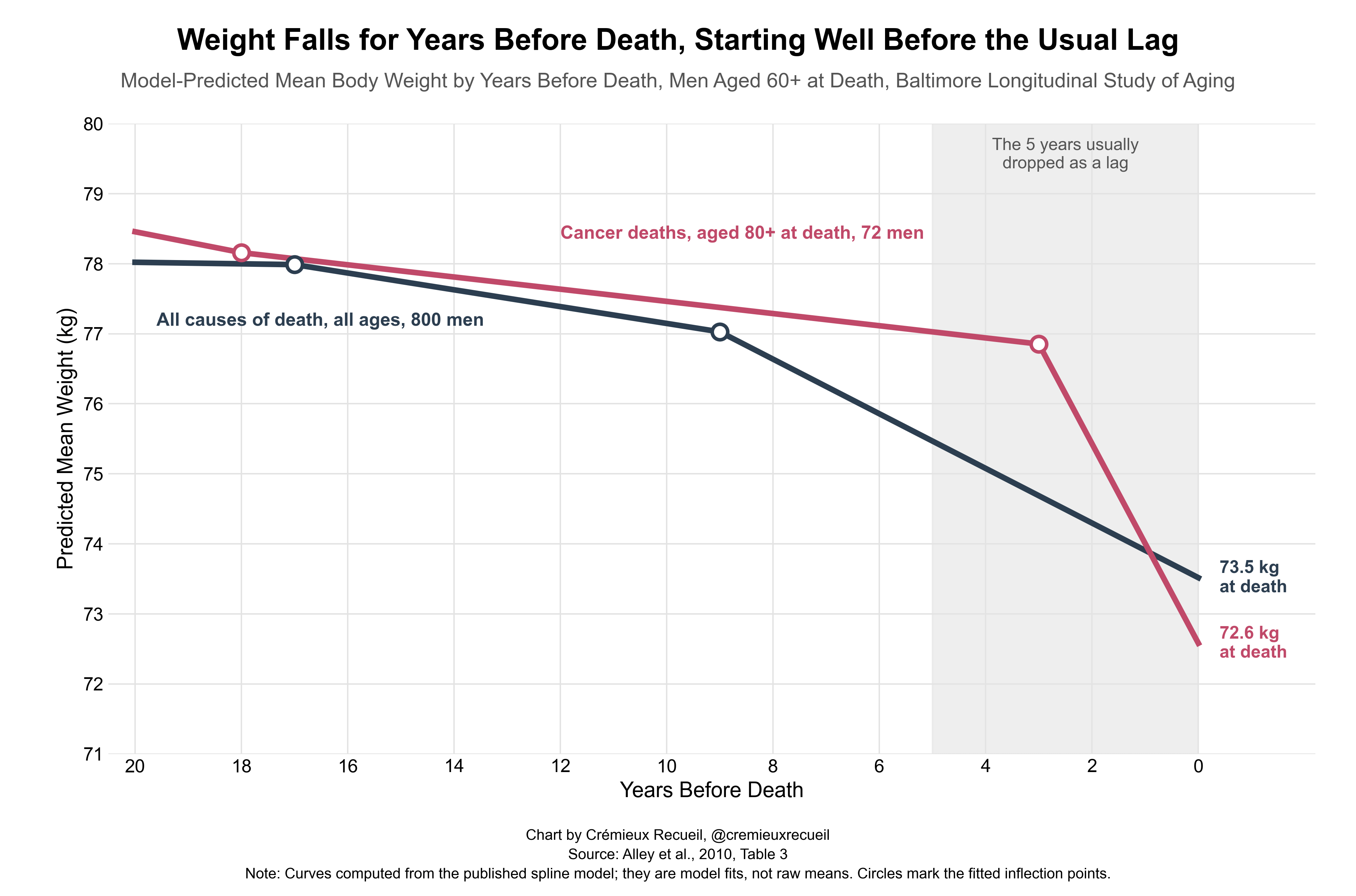
Let’s look at data from the Baltimore Longitudinal Study of Aging. In the BLSA, 800 men were weighed an average of eight times, starting an average of 19 years before they died. Their weights tended to be stable until about 17 years before death. Weights began declining slowly over the next eight years, and then they fell about 0.4 kilograms a year from nine years out. Among those men who died of cancer after 80, the drop steepened three years before they died. Once again, we can see that aging and sickness ruin our outcome, making lower weight appear riskier even though it’s actually disease at play.
The notion of using weight histories to understand weight-related risk has been explored in other studies. For example, Stokes and Preston looked at never-smokers aged 50 to 74 and found that, of those who were normal weight when surveyed, 39% had once been heavier. Those who had been overweight had three-times the prevalence of diabetes and cardiovascular disease of those who had always been normal weight. In fact, among the normal-weight, those who had never been heavier died at 6.25 per 1,000 person-years versus 10.81 for those who had been overweight and 14.62 for those who had been obese. Likewise, in the older Framingham Heart Study sample, the same ordering showed up.
But illness isn’t the only thing at issue here. Yes, it lowers weight and kills people. So does smoking, and so too can alcohol and other drugs. The normal-weight group is loaded with people who are thin or normal for unhealthy reasons!
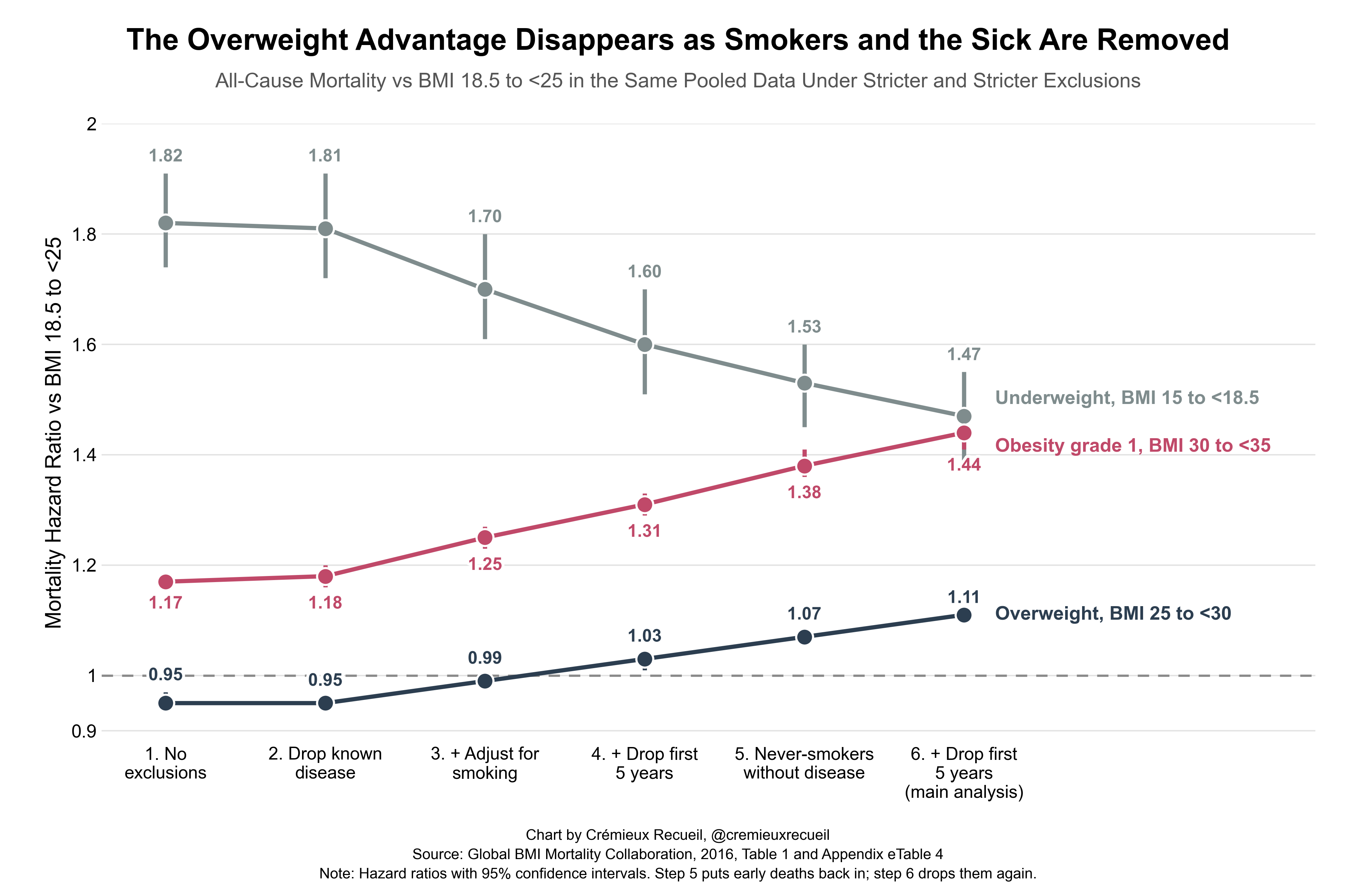
When the Global BMI Mortality Collaboration looked into this, they showed that if you look at weight with no exclusions to the sample, overweight has a 5% lower risk of mortality than normal weight. Dropping those with known diseases doesn’t do anything—they’ve probably already lost the weight by diagnosis time, so that’s understandable. Adjusting for smoking moves the risk to 0.99, and dropping the first five years of follow-up moves it to 1.03. Restricting to never-smokers without disease brings it up to 1.07, and adding a five-year lag moves it to 1.11. Across the same ordering of steps, obesity’s risk moves from 1.17 to 1.44, and underweight goes the other way, from 1.82 to 1.47, because those exclusions remove underweight-due-to-bad-reasons people from that group, too!
In a more explicit meta-analysis, Aune et al. showed that stratifying the sample by risk shifts the ‘optimal’ point of the BMI U-curve. In an unadjusted sample, it sits around a BMI of 25. Among never-smokers, 23-24; among healthy never-smokers, 22-23; and among never-smokers in studies with long (at least 20-year) follow-ups, it sits at 20-22. A BMI of 27.5—the middle of the ‘overweight’ category—is associated with a risk of 0.98 among everyone, 1.07 among never-smokers, and 1.11 in healthy never-smokers.
The Aune et al. analysis actually succinctly illustrates that confounding is definitely behind the ‘moderately high BMI is good’ findings, because its follow-up length-stratified results were so dramatic. Among everyone, a BMI of 27.5 was associated with an 11% lower risk of death at five years relative to a normal weight; no improvement with a 10-15-year follow-up; and 8% higher risk of death with a 20-25-year follow-up. The exact same weight becomes harmful rather than protective once we’ve eliminated the people who were in the lower weight category by virtue of being unhealthy!4
In fact, if you want to optimize risk stratification, one way to do that is to ask people the highest weight they’ve been. In the Nurses’ Health Study I and II and Health Professionals Follow-Up Study, the risk of ever-overweight was a 6% higher risk of death versus a 4% lower risk of death for current-overweight; in the Framingham Heart Study, risk went from -4% to +6%; in the NHANES’ samples of never-smokers, overweight risk went from +10% to +19% in one cohort and -2% to +28% in another. This holds for obesity as well, and it even holds internationally, with the additional note that the longer you’re in the pathological state of overweight/obesity, the worse the risk.
The issue with selection into normal weight becomes worse when samples are also stratified by disease. For example, if you look at people who have cardiovascular disease and are not obese, you’ve selected an odd sample of people who got an obesity-associated and somewhat obesity-caused affliction despite not being obese. This usually happens because they’re a smoker or they have some other disease. Often enough, it can be traced to the fact that they used to be obese!
In the NHANES, among adults with cardiovascular disease, 64% of the normal-weight sufferers had previously been overweight or obese, against 42% of the full cohort. A conventional, cross-sectional analysis of these data would indicate that overweight and obesity are associated with 11% lower risk of cardiovascular disease compared to having a normal weight. Restricting to never-smokers moves that to 6% higher risk; restricting to those with always-normal weight as the baseline group, the risk moves to +16%; restricting to never-smokers with an always-normal weight, it swings to a whopping 51% higher risk!5
Occasionally (very occasionally), BMI is the issue that explains what’s going on. BMI treats muscle, bone, and fat alike, and sick people tend to disproportionately lose muscle. In the PARADIGM-HF heart failure trial, higher BMI seemed to be protective: 16% lower risk for a BMI of 25-29.9, 24% lower for 30-34.9, and 29% lower for 35 or more. But, waist-to-height ratio—a measure that better reflects central adiposity—, holding BMI constant, the largest people had no greater survival. At any particular. BMI, a bigger waist just wasn’t helpful.6 Running this analysis in coronary artery disease, a bigger waist actually appeared to be harmful; in another study, fat mass predicted harm while lean mass predicted lower mortality.
These three issues—weight lost to illness, selection on disease, and muscle being mistaken for fat—show up repeatedly across tons of different conditions, leading to people repeatedly claiming there’s a paradox that there really isn’t. For example, kidney disease reduces weight before dialysis begins, and those who lose weight after starting it tend to die faster afterward; after stroke, the advantage of being heavier goes away once age, stroke severity, and a handful of other clinical risk factors are accounted for; in COPD, muscle predicts survival but fat doesn’t; in colorectal cancer, being heavier being safer disappears once weight before diagnosis is counted; in breast cancer, low muscle and high fat predict mortality. Get the idea?
All of the facts point the same way when they’re properly understood, but the dispositive evidence comes in when we marshal genetic evidence, evidence from RCTs, and familial control evidence.
The familial control evidence is fascinating. The basic idea is to instrument for a parent’s BMI by using their child’s BMI. The parent’s BMI can be dragged down by illness, but unless that illness is making them neglectful and incapable or inspiring a change in the child, their child’s BMI should be unaffected by it. In the literature’s lone example of this method, the association between BMI and all-cause mortality grows substantially from an added 5% to an added 18% using kids’ BMIs.
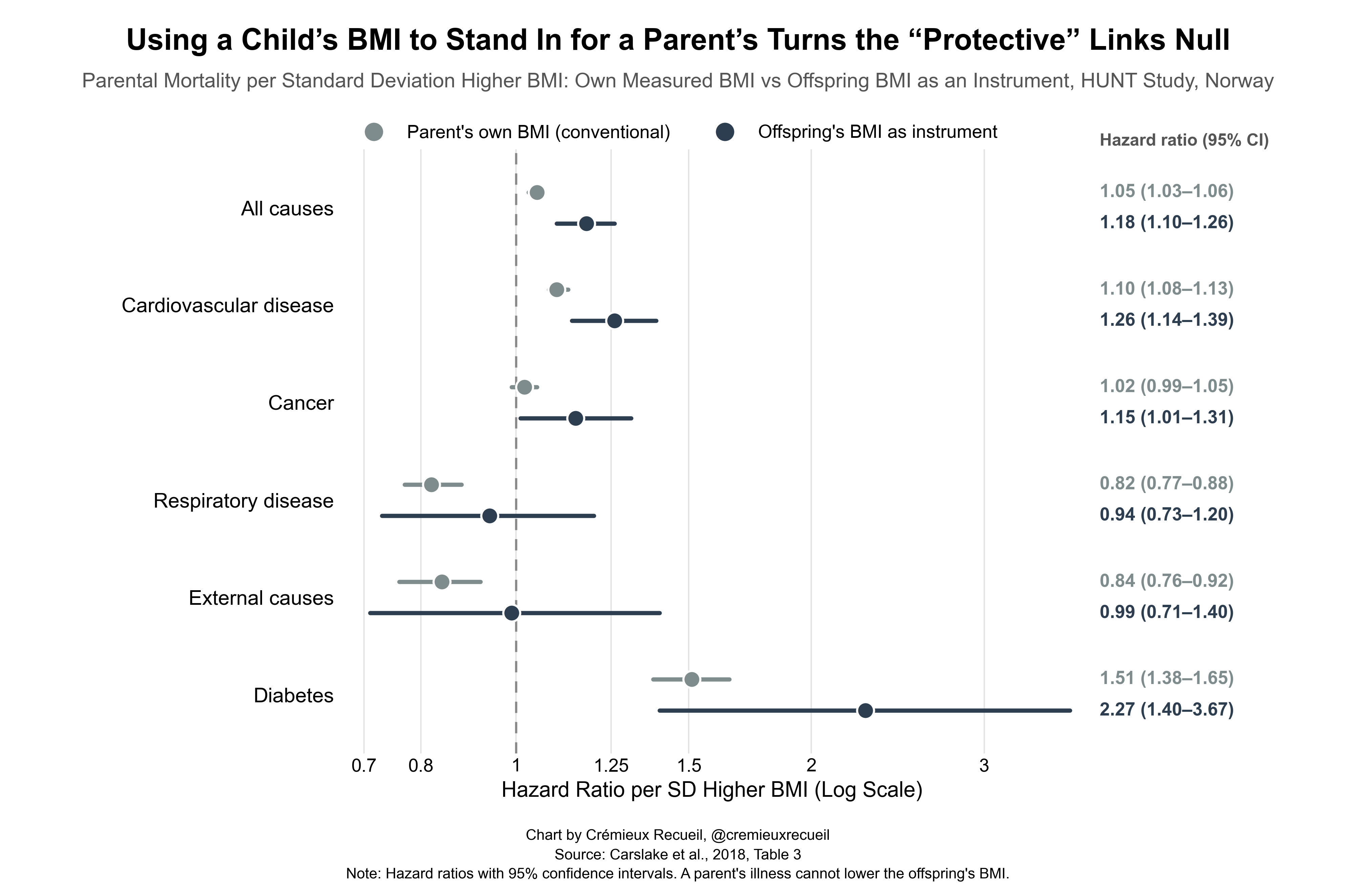
Genetically-predicted higher BMI remains as such throughout a person’s life regardless of their behaviors or present illness, and the harms of BMI are somewhat cumulative. Using it as an instrument for BMI, we see heightened risks for heart failure, coronary artery disease, atrial fibrillation, ischemic stroke, COPD death, etc. These conditions all appear to be protected by somewhat higher weight, but not with Mendelian randomization!7
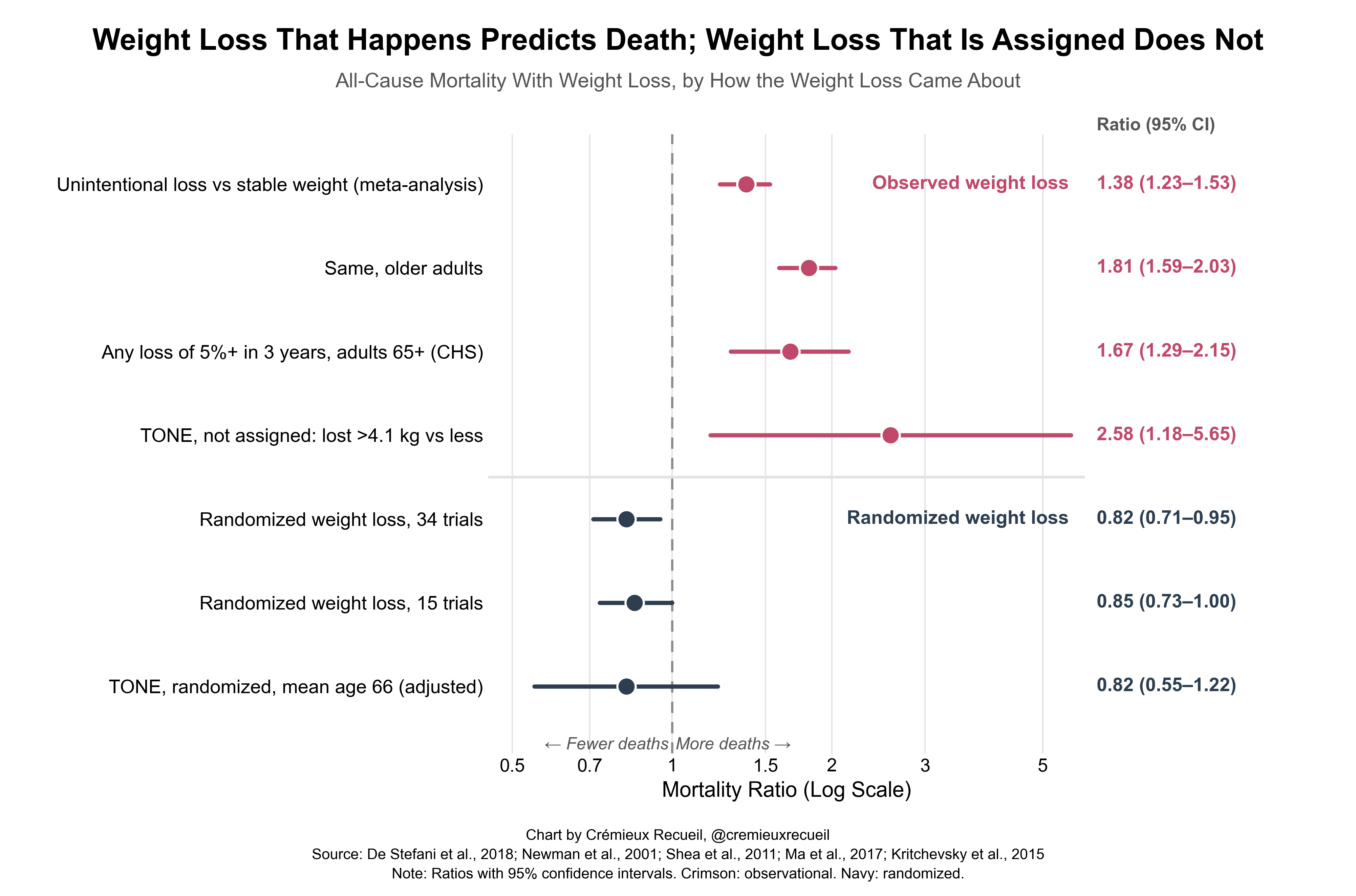
Finally, if extra weight was protective, making people lose weight should hurt their health. In observational studies, when people unintentionally lose weight, that does predict worse outcomes. But that’s because people are losing muscle, struggling to eat, or having other issues maintaining weight, whereas in trials, weight loss comes with benefits in pretty much every example.8
These sorts of problems with observational data are everywhere. They’re exactly why we need careful causal reasoning before advising patients or informing the public about health information. But, unfortunately, it is very easy to fail to think about the things you’re learning and, as a result, to end up with faux paradoxes. Much more below.
A message from my sponsor, Mechanize:
We’re hiring software engineers to build environments and evals that frontier AI labs use to train coding agents.
To get a better sense of the work we do, you can check out GBA Eval, where we had models build Game Boy Advance emulators from scratch and scored their performance.
Base pay starts at $300K/year for junior software engineers, with more for senior roles, plus equity and performance bonuses. Apply here.
Subscriber Content
Blood Pressure
More Paradoxes
Truisms Supporting Observations Used to Lie
Biomarker Paradoxes Undermine Longevity Research
