

Today’s post is brought to you by my sponsor, Mechanize. They’re hiring junior software engineers at $300K/year base salary.

London once shut down 70% of its police stations as part of its austerity measures. The reason this policy was implemented made some sense: a 2010 report claimed that cutting down on the number of police stations while maintaining their staffing and redistributing the officers across the remaining precincts could save money while achieving similar crime-fighting results. Was it right?
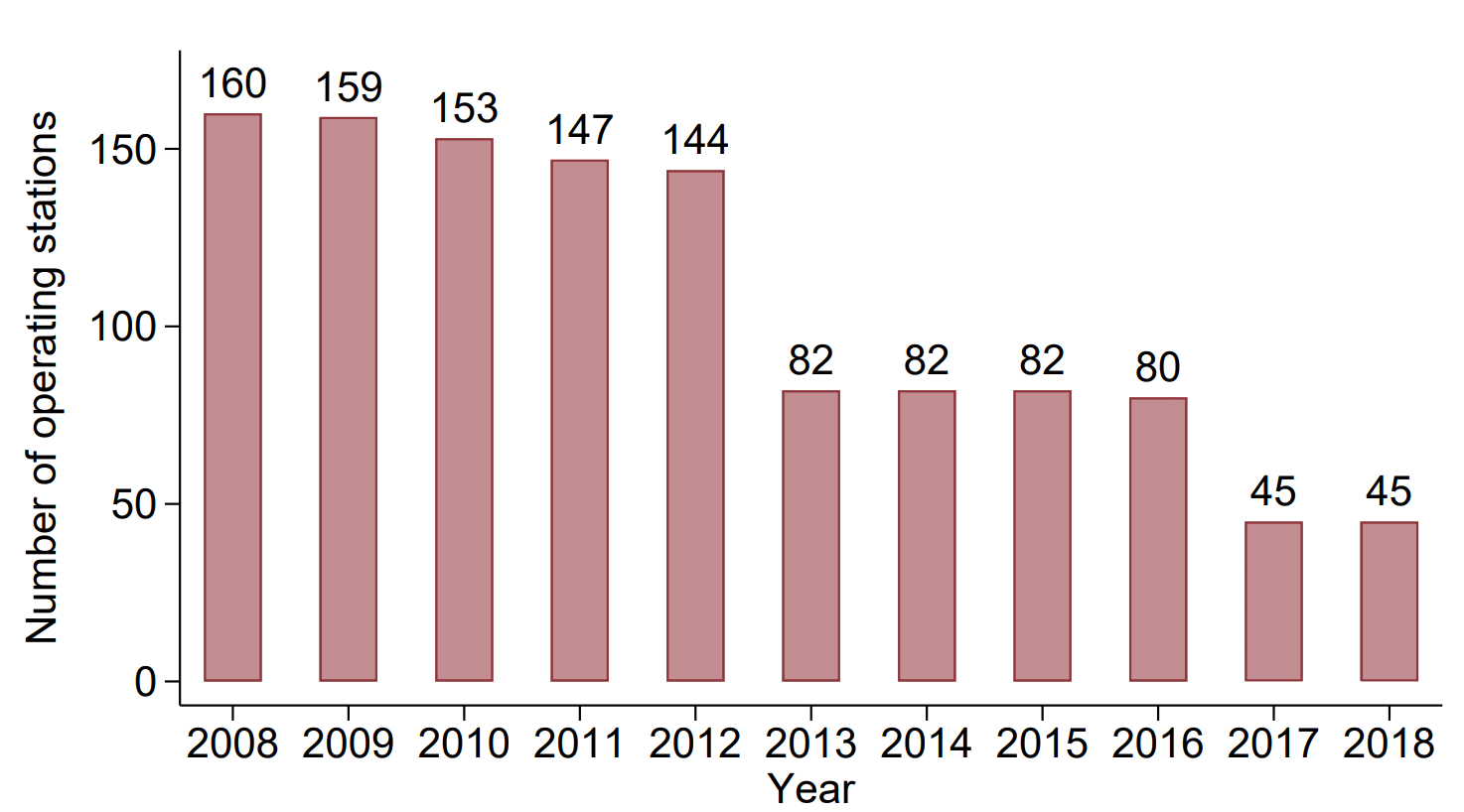
The policy went into effect in 2013 and the number of police stations cratered from 144 to 82, with more cuts to follow in 2016 and 2017.
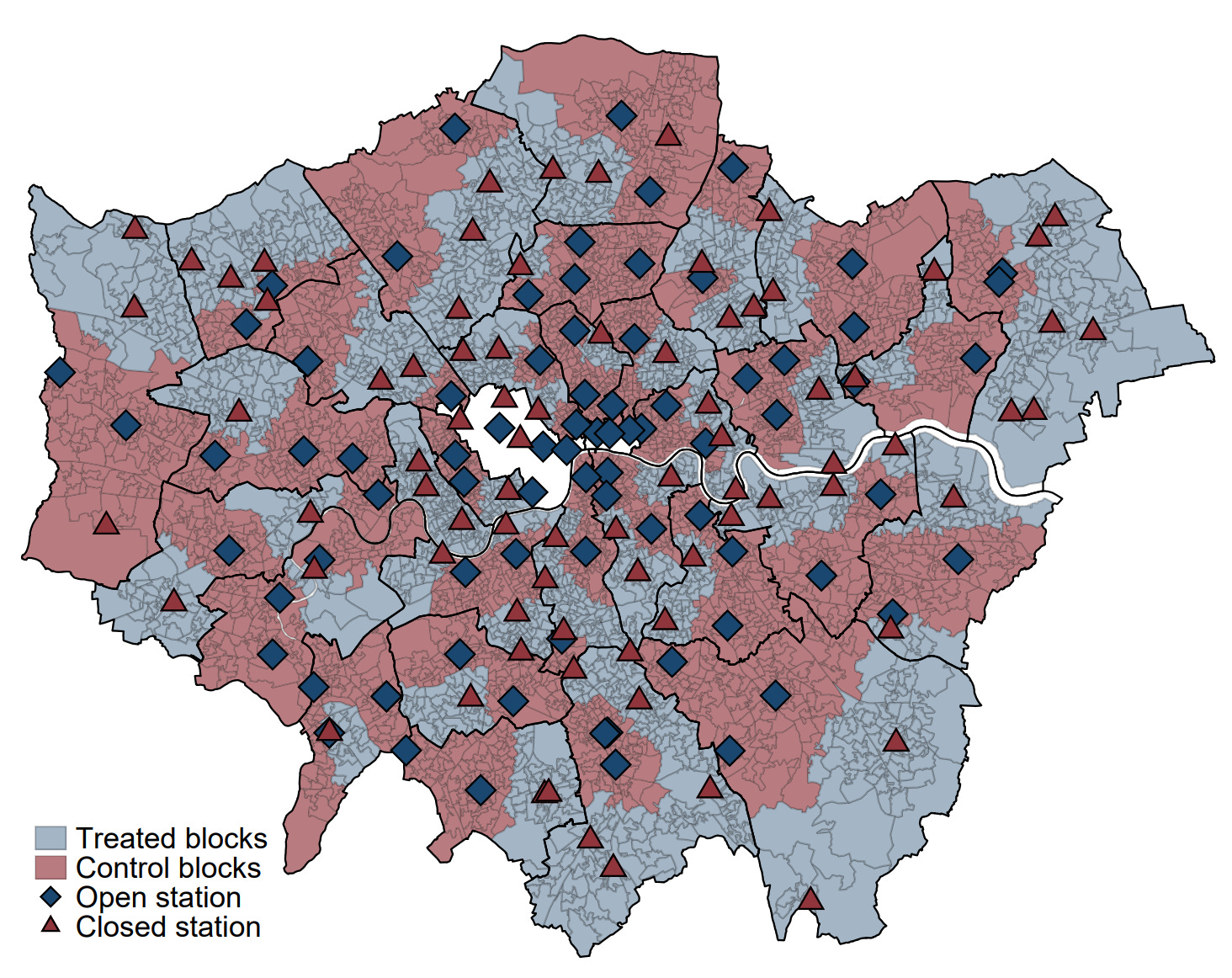
The police stations that the mayor’s office decided to shut down were fairly geographically equally distributed throughout London, and they were chosen with respect to local crime trends. This decision makes it plausible that the remaining stations could have been sufficient to make up for the absence of the shut-down ones.
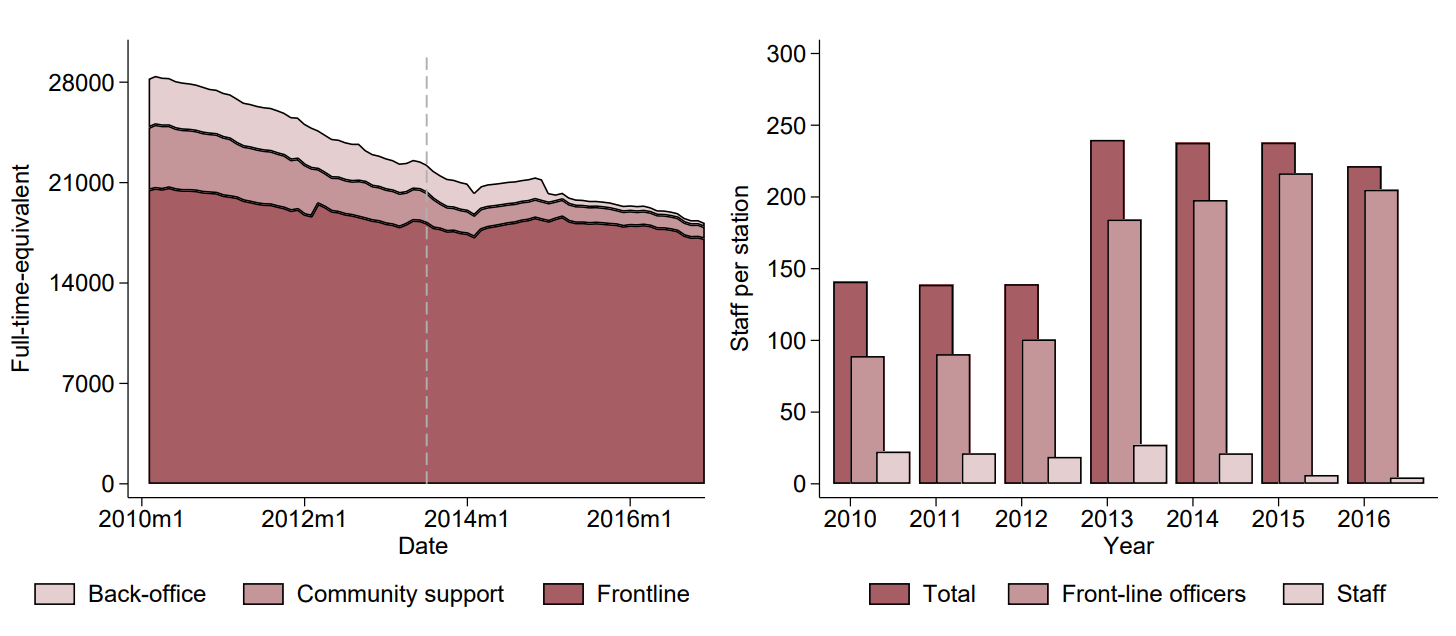
The cuts also came with reductions in staffing, but the mayor’s office made every effort to ensure that the cuts were to less important roles, not to frontline officer numbers. London ended up with fewer back-office paper-pushers and no change in the numbers of beat cops, making this an ideal experiment on the effects of police locations.
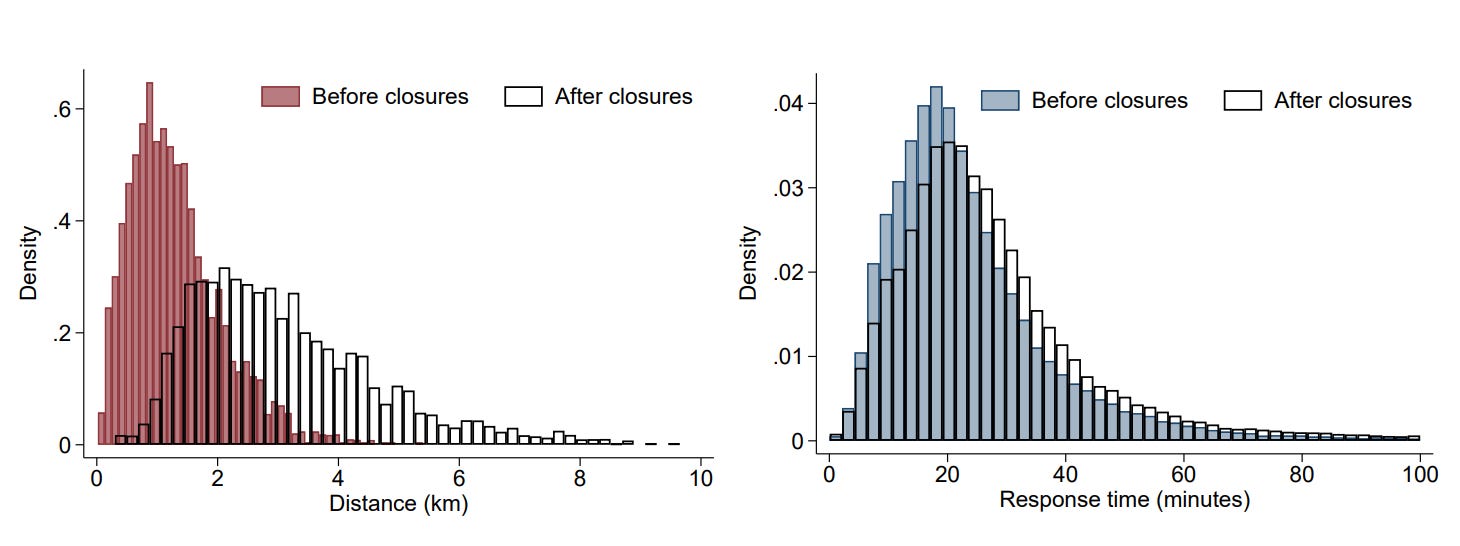
The typical distance to police stations increased substantially for much of London—as you’d expect—, but more interestingly, the time to respond to emergency calls also increased. This is not good: emergency calls needs to be addressed immediately.
The result of all of this was devastating and swift: crime went up! Reduced police presence resulted in a substantial increase in violent crime that was particularly concentrated near stations that were shut down. Moreover, the greater the post-closure distance to a police station, the greater the negative effect on clearance rates. Or, in other words, police effectiveness declines with distance, and they’re less able to solve crimes they’re further away from around the time they happen. Additionally, because there are diminishing returns to having additional police in an area, crime went up in total.
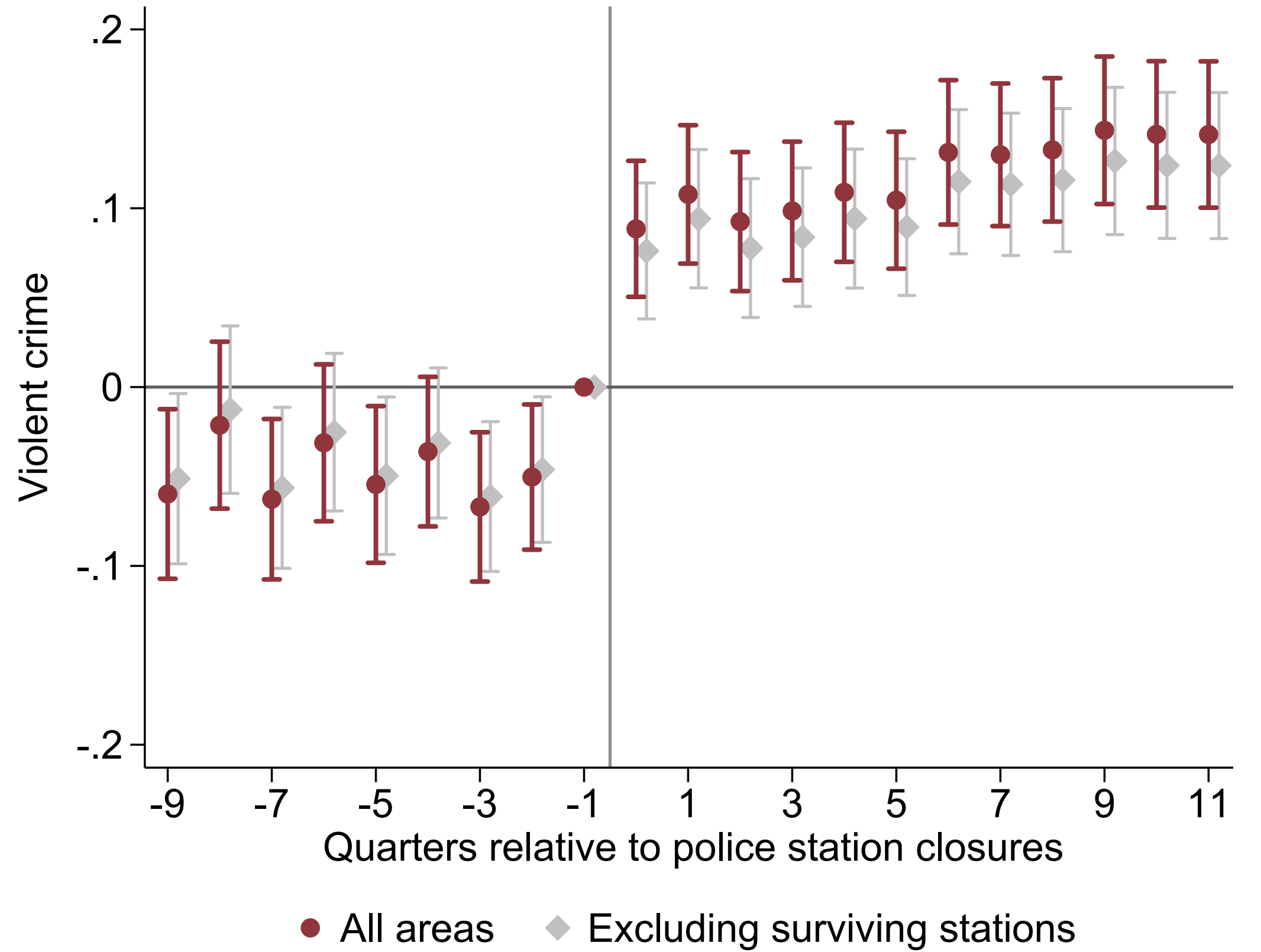
This study is not the first nor is it even among the first entries into the subject of police distance on crime; I focused on it because it is an unusually clean example of many of the literature’s most consistent findings. In two words: policing matters. In more words, policing matters, but it’s contingent on someone actually doing the policing. When police are not nearby, there is no effect of their former presence, or at least, it fades rapidly.
Take three wildly different examples. The first is fisheries patrols in The Gambia. When they’re present, illegal fishing vessel numbers go way down, but when they go away, the illegal fishermen make their return. The second is police strikes in Brazil. When police stopped policing, the number of homicides skyrocketed by 110 to 250%. The third is COPS grants—grants given to states and cities in order to hire more police officers. As you’d expect from the other studies, “police added to the force by COPS generated statistically significant reductions in auto thefts, burglaries, robberies, and aggravated assaults.”1
All of this is to say, those who’ve paid attention realize having police nearby cuts crime.
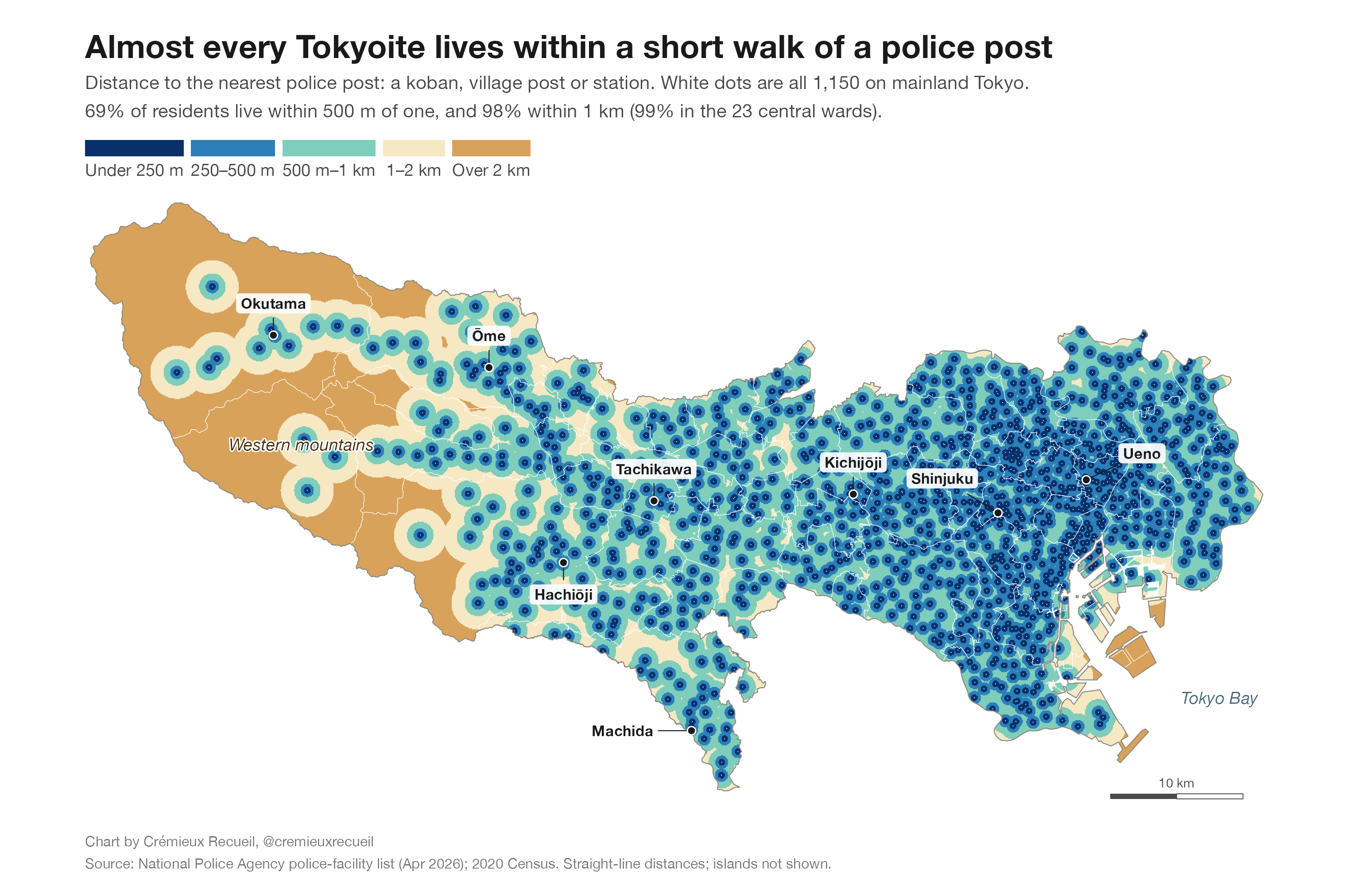
Have you ever been to Tokyo? If you have, you might’ve noticed that there are a lot of tiny police stations. Tokyo has major prefectural police headquarters, 102 full-service police stations with detectives, holding cells, traffic and licensing information, and administrative duties, and so on, but the main police presence that most people will feel comes from the koban—small posts featuring a few officers on rotating shifts—and the chūzaisho—one-officer residential posts.
Tokyo’s density of ordinary police stations is similar to New York City’s. Tokyo has 102 stations for 14 million people and New York has 78 precinct houses for 8.8—0.7 and 0.9 per 100,000, slightly favoring New York, in fact. What makes Japan unique is the distribution of police into the koban layer. Each station runs about eight or nine koban across its district, so officers are available every few hundred meters instead of only at headquarters buildings and on their patrol paths. Japanese are used to having it almost guaranteed that police are always nearby and always available at a moment’s notice.
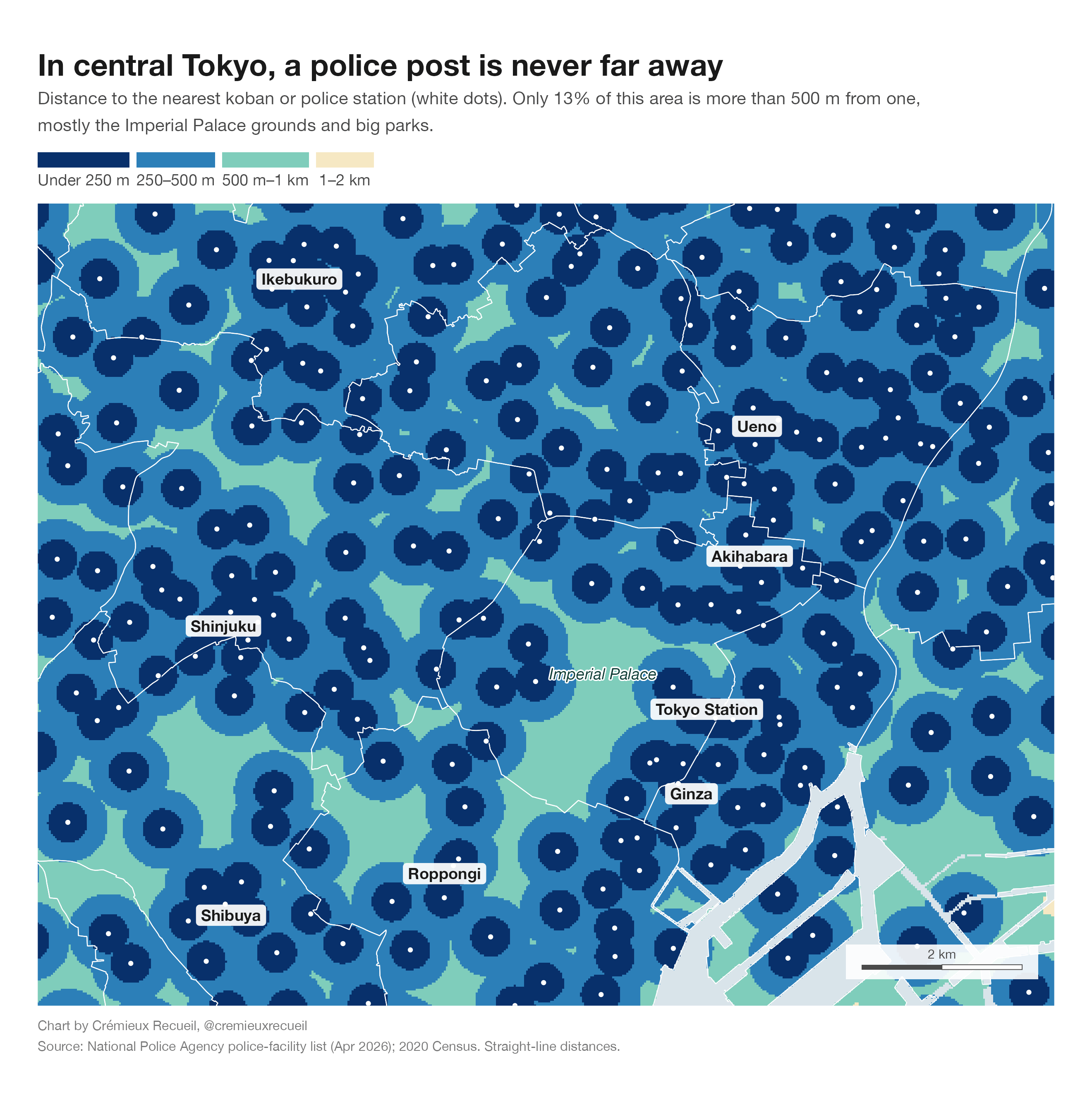
In central Tokyo—the area you’ll find most of the city population and the overwhelming majority of the tourists—, the density of koban is so great that no one is ever more than one good yell away from an officer who’s out and about. And the gaps? They’re mostly to do with parks and otherwise well-patrolled, highly-populated areas, distinct from the koban system. Tokyo puts police everywhere!

But surely, you might be saying, running this many little neighborhood police stations must be massively expensive, right? The physical infrastructure costs something to build and the land is worth a lot, being scattered all around Tokyo. These are both true, and Tokyo is blessed to have such lax zoning that these are non-issues. Setting that aside and focusing in on the actual labor costs, the koban system ekes out a win.

The koban system is much cheaper per resident in the latest available years of data (2025 for Tokyo, 2020 for New York City, a year difference disadvantaging Tokyo due to inflation; $340 vs. $780 per resident, operating expenses only; NYC pensions and benefits increase the gap), even accounting for Japan’s much lower general price level. This could be due to a lot of different things, including just having to face less and less severe crime than New York does. But, it makes sense in theory and it has empirical support as well: spreading officers out means gaining the proximity modifier to the effect of their numbers. You can increase officer counts or maintain them, but if they’re not near where people are and where crimes happen, they’ll be less effective. A system like the koban system is almost-certainly going to be more effective by a considerable enough degree that it could outweigh a potential added cost from non-centralized staffing.
Perhaps this or something like it could be adopted abroad. It could be used in America, El Salvador, London, or any other of a number of countries that are currently either beset by crime, figuring out how to maintain crime levels, or looking for ways to return to formerly lower crime levels without spending too much. Because, when it comes to policing, it’s not just cop numbers, it’s where they’re at, too.
This was a timed post. The way these work is that if it takes me more than an hour to complete the post, an applet that I made deletes everything I’ve written so far and I abandon the post. You can find my previous timed post here.
A message from my sponsor, Mechanize:
We’re hiring software engineers to build environments and evals that frontier AI labs use to train coding agents.
To get a better sense of the work we do, you can check out GBA Eval, where we had models build Game Boy Advance emulators from scratch and scored their performance.
Base pay starts at $300K/year for junior software engineers, with more for senior roles, plus equity and performance bonuses. Apply here.
Of course, there are sometimes contradictions. For example, I found that the National Guard surge in D.C. reduced homicides temporarily. Even though some of the Guard remain, their reduced presence has proven insufficient to keep deaths suppressed.


Morning Cremieux
I think you’ve perhaps mixed up London with the City of London?
This really agrees with the lesson I took from this book. 'Crack House' grass roots policing and cime prevention is way better for 'the people' than the 'king pin' theory. https://a.co/d/0ao84QcC