

Today’s post is brought to you by my sponsor, Mechanize. They’re hiring junior software engineers at $300K/year base salary.
Read this post if you haven’t already. It provides some background to this piece:

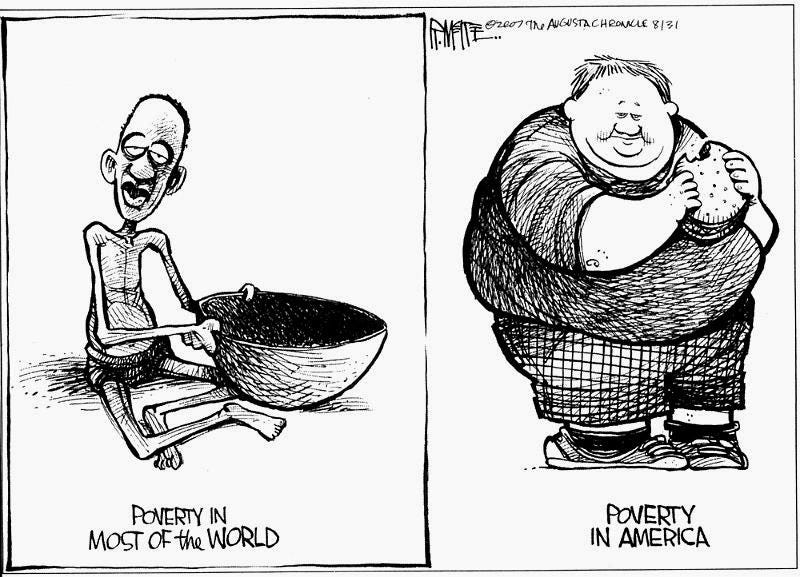
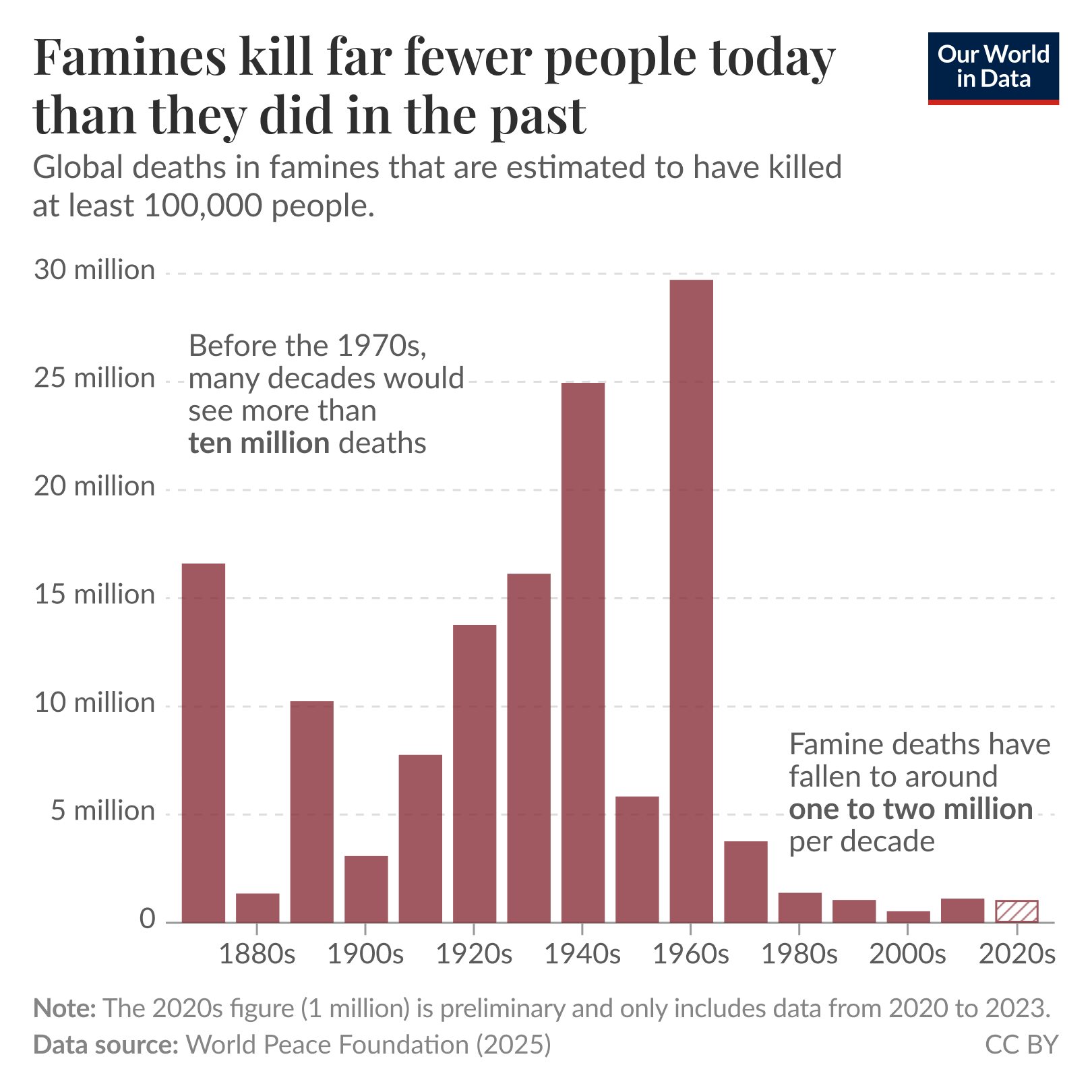
It’s well-known that poor people in the United States and around the developed world tend to be fatter than rich people. This observation feels astoundingly unintuitive to people who just learn it because they associate poverty with being rail-thin due to the historical association of poverty and an inability to eat in the Malthusian past. However, in today’s era of abundance, a person’s heft has little to do with their ability to acquire food because anyone can get tons of it with little effort.
Naturally, there are plenty of ways people have tried to explain this. One I’ve heard quite frequently is that poor people eat diets that have worse macronutrient profiles: more carbohydrate-heavy, less protein-rich, and depending on the person’s alignment on dietary topics, they’ll argue that their diets are too either too fatty or not fatty enough. One proposed mechanism for this to be harmful is macronutrients having different energetic effects; this is unlikely. Yet another explanation is that carbohydrates make people hungrier or that the diets with a poor-like profile have more processed food, which also supposedly makes people hungrier.
But before launching into explanations of how macronutrients make poor people hungrier, we should look into if they actually consume meaningfully different macronutrients. Thankfully, we have excellent survey data on this from the U.S. and the U.K. Let’s look at macronutrient profiles in the U.S.:1
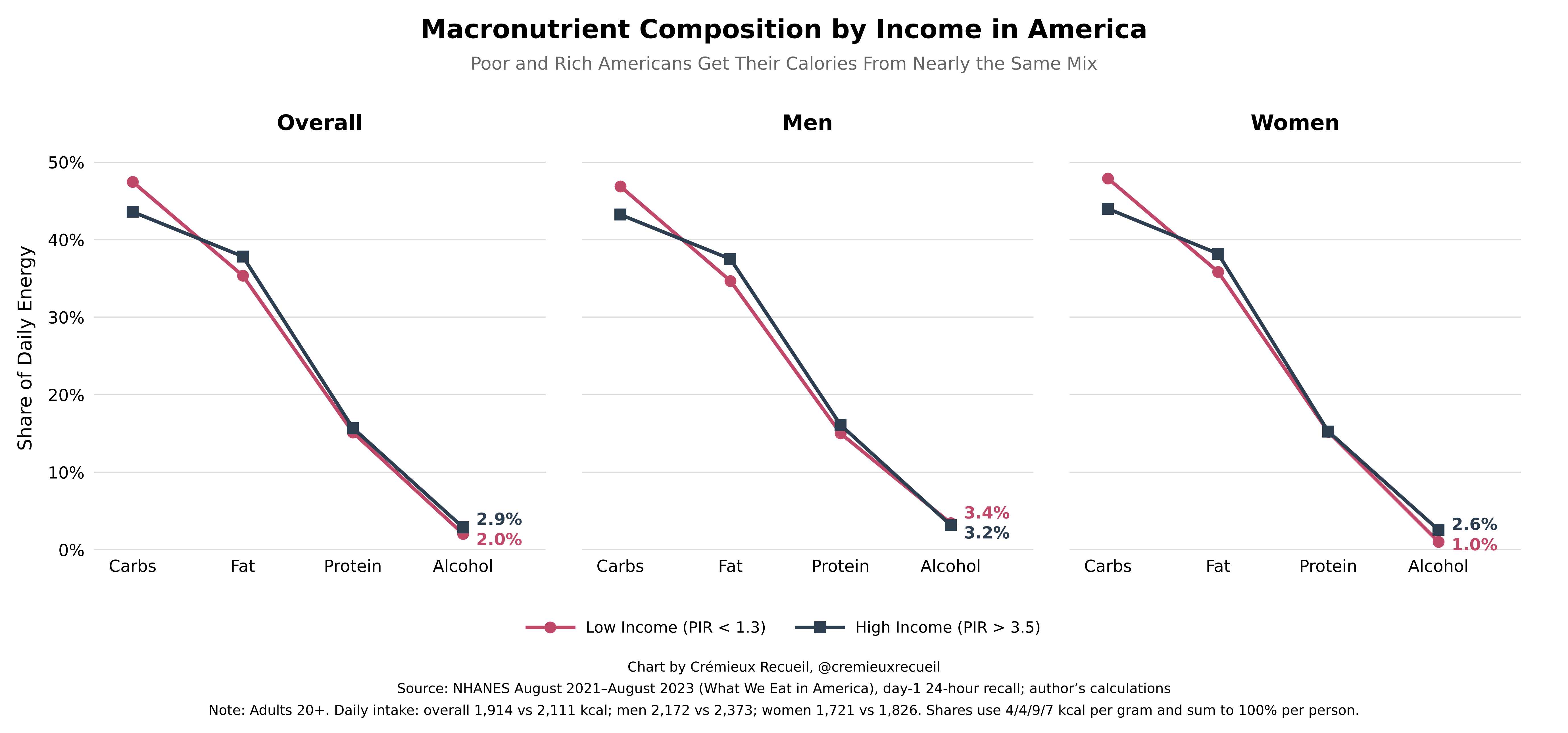
In the U.S. (and the U.K., see Footnote 1), the macronutrient profile of diets reported by rich and poor are very similar. Likewise, sex differences are minimal. What we see is that the poor eat slightly less fatty, slightly more carbohydrate-rich diets. But the magnitude of this difference is small, and certainly not sufficient to explain the obesity rate gap—especially given that the high poor obesity rate only shows up for women, and not for men.
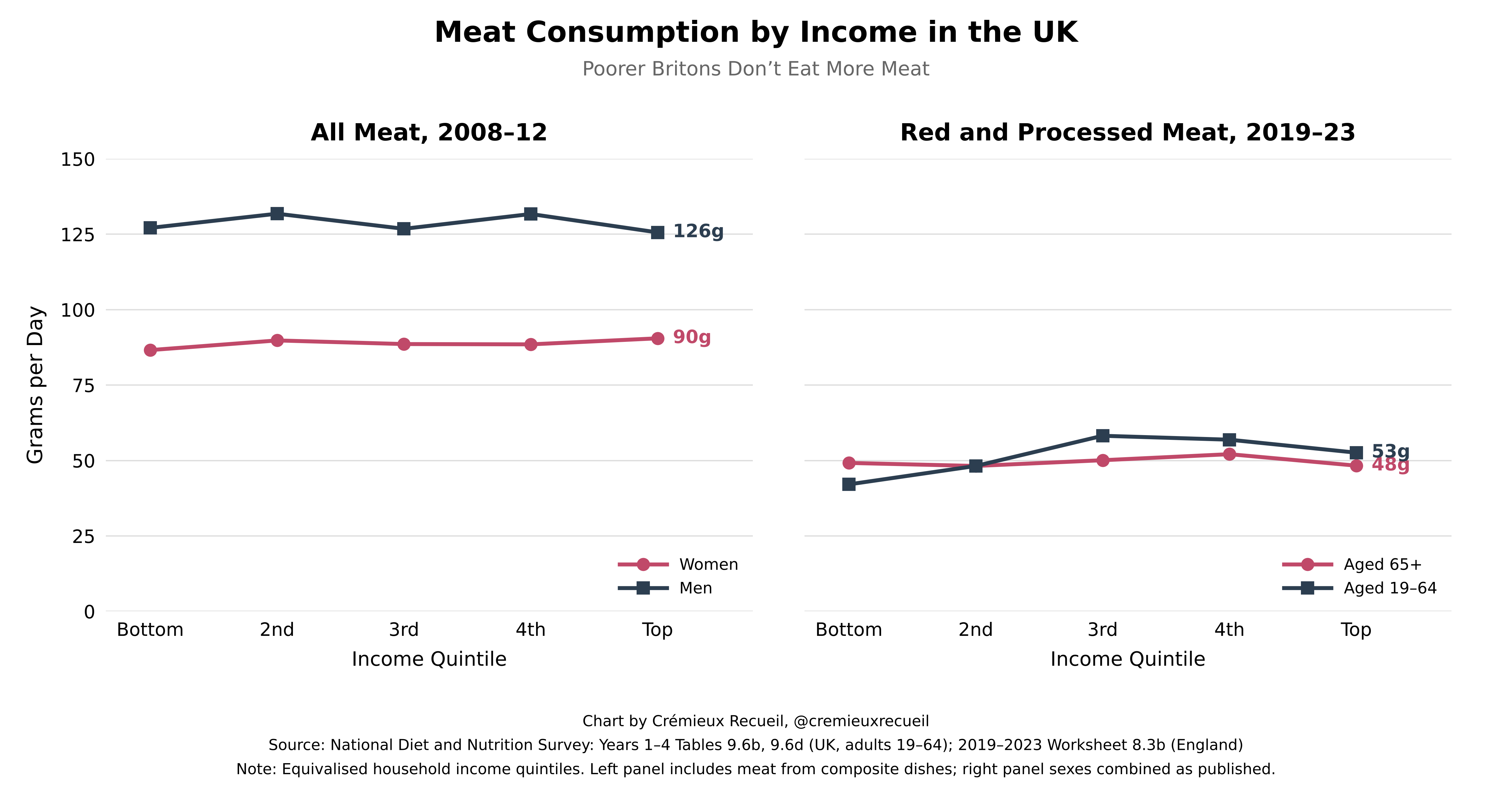
What about meat? It’s often claimed that the poor don’t get to eat meat because they’re poor. Never mind that EBT covers meat, people still believe this and use it to claim that the poor are beset by obesity because they’re missing out on the hearty goodness and potential testosterone stimulation of eating meat. Let’s look at the U.S. once again:2
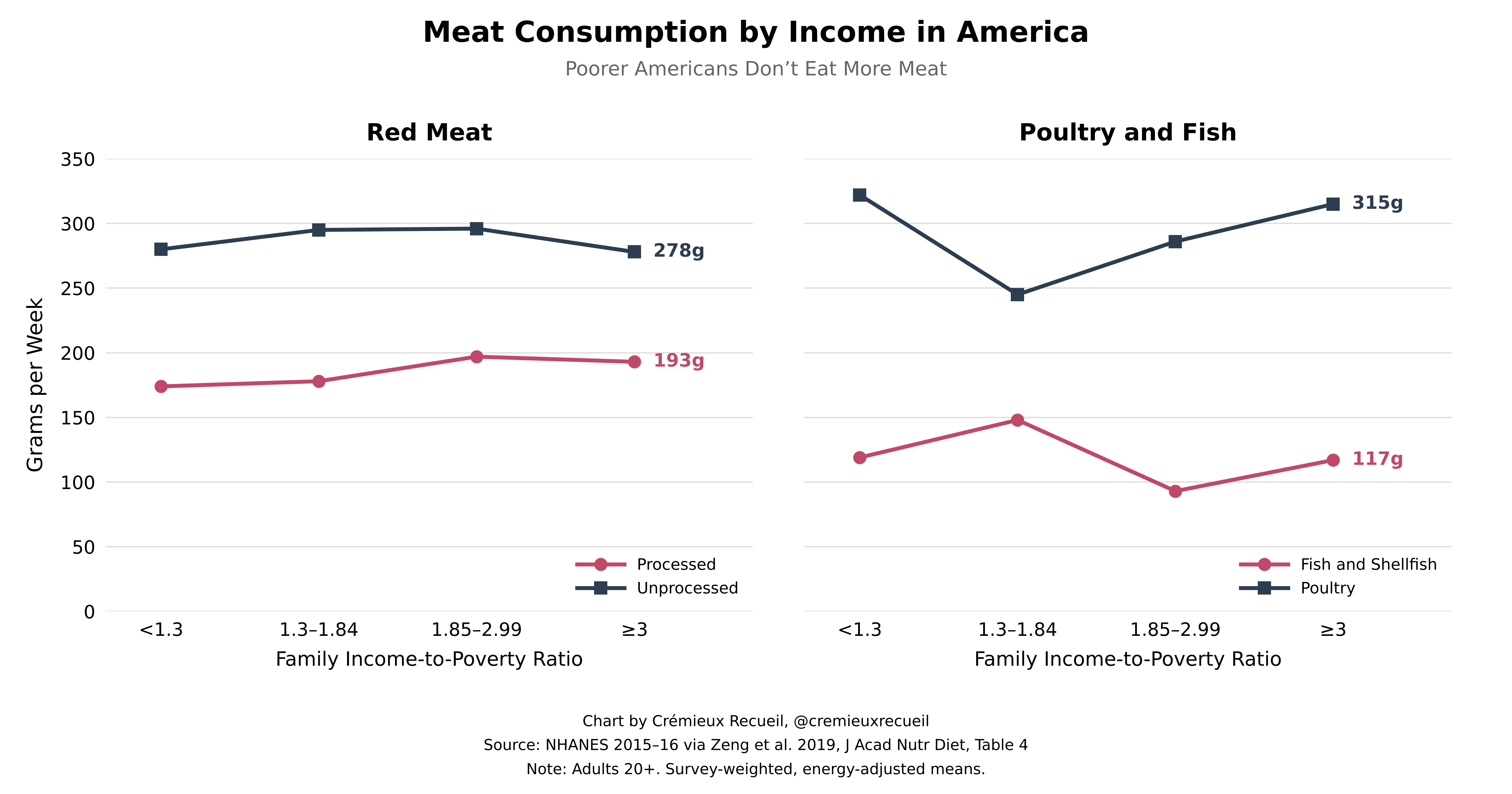
Meat consumption barely varies across the income spectrum. The types of meat eaten also barely differ, and certainly not in an explanatory way: the rich eat a little more processed red meat and the same amount of unprocessed red meat, with no clear tail differences in poultry and fish consumption, either. No, ultimately, you can slice-and-dice, but there’s no consistently supportable macronutrient-based theory that actually fits the data on poverty, obesity, and sex differences therein.
But, you might say, what if there’s misreporting going on? That’s reasonable. If you’ve ever watched someone else track their food intake, you’ve probably noticed an enormous number and variety of errors.
The classic method to evaluate errors in reported food intake involves giving people something called “doubly-labeled water”, which is a basically a water bottle containing water enriched with heavy hydrogen (²H) and heavy oxygen (oxygen-18). The difference in the rate of elimination of ²H and ¹⁸O in urine, saliva, and blood samples allows calculating CO₂ production and, from that, total daily energy expenditure.
We happen to have both U.S. and U.K. data using this as well! These results suggest that, the larger the person, the more they underreport food intake.3
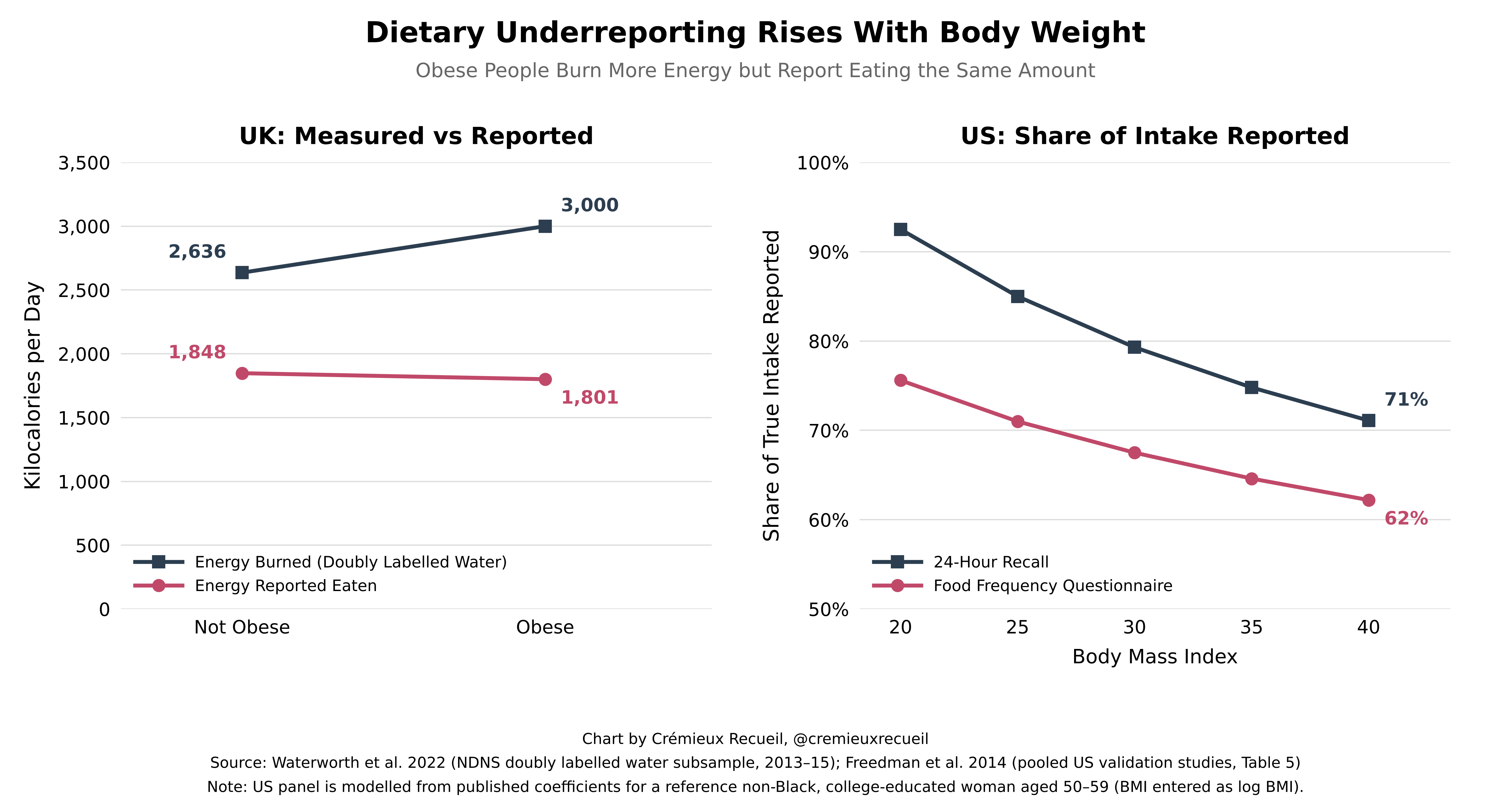
But think about this pattern of error: what it suggests is not that the macronutrient profile for the poor is worse, it suggests that they’re likely to be eating more than they report. This makes sense, because they actually report eating less, even though that’s implausible given that they’re fatter, unless of course, they are substantially less active. Are they? Well, it doesn’t seem that way! The rich might exercise better and more explicitly, but the rich and poor walk similar amounts of steps:
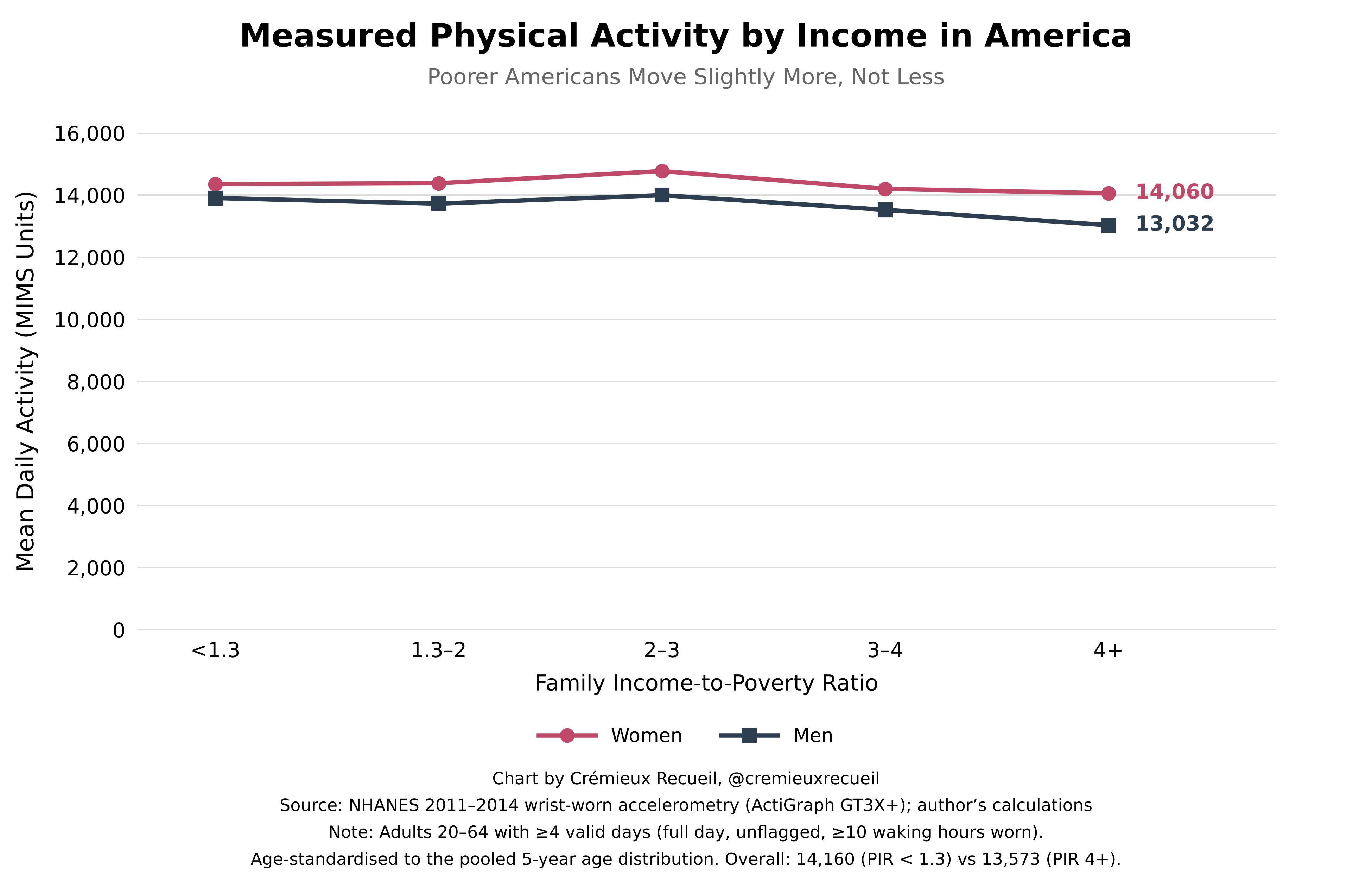
It could be the case that the unreported food has a worse macronutrient profile, but that’s not at all established, and it would make the sex and race differences more curious if it was the case. What’s more likely given all we know is simply that poor people eat more food, for whatever reasons. And, ultimately, that makes the reason they eat more food one of choice: they demand more food, healthy or unhealthy!

This was a timed post. The way these work is that if it takes me more than an hour to complete the post, an applet that I made deletes everything I’ve written so far and I abandon the post. You can find my previous timed post here.
A message from my sponsor, Mechanize:
We’re hiring software engineers to build environments and evals that frontier AI labs use to train coding agents.
To get a better sense of the work we do, you can check out GBA Eval, where we had models build Game Boy Advance emulators from scratch and scored their performance.
Base pay starts at $300K/year for junior software engineers, with more for senior roles, plus equity and performance bonuses. Apply here.
The U.K. profile difference is similarly meager, but some of the numbers differ considerably from the U.S., perhaps due to coding differences.
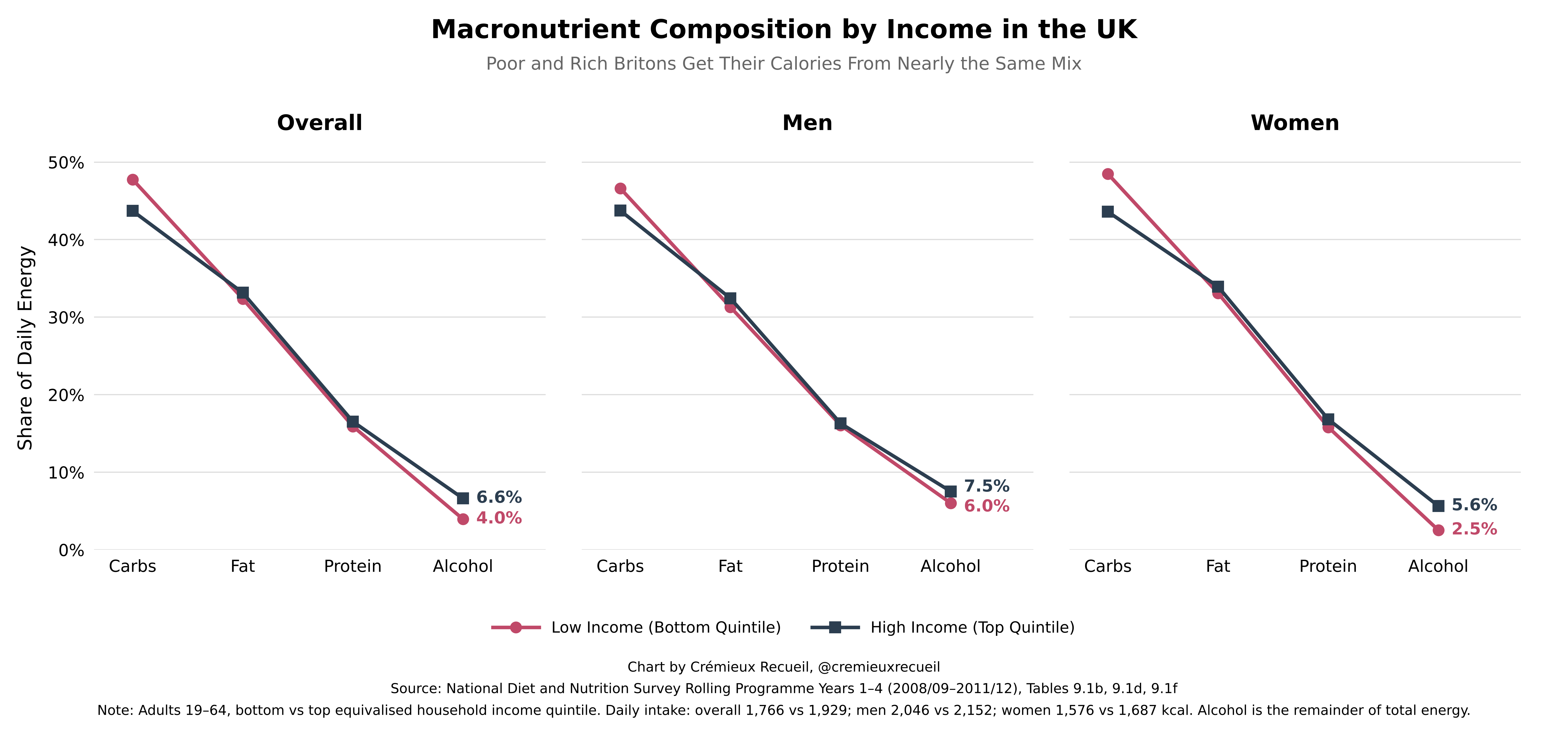
The U.K. sees a similar result, but our measures differ, so comparability is incomplete:
The classic citation on reporting discrepancies by weight is Lichtman et al. (1992). It found that people who claimed dieting didn’t work for them underreported food intake and overreported how much physical activity they engaged in. A more recent, expansive citation is Bajunaid et al. (2025), which reaches similar conclusions on energy intake. There’s also a 2019 systematic review.
Note: The U.K. citation suggests that this reporting error pattern is driven by scaling. That is, people who eat more—fat or otherwise—tend to have more reporting errors, and taking scale into account, the pattern dissipates.
Can the "carbs" be further divided into green vegetable share? There is a huge difference in glycemic index between bread, potatoes, and sticky rice vis-a-vis green vegetables. My guess is that this difference (perhaps along with the extent of processing of those carbs, e.g. fast food and shelf-stable versus fresh home preparation) is what is really driving the differences.
i arrived at the “they eat more” conclusion a long time ago bc that’s the case with most obesity. If someone is poorer they prob work weird hours at boring jobs and are bored and might snack. They won’t have gym memberships or pay for glp-1. But do you have other ideas why ppl who are poor may eat more? i think my idea is only one reason. There has to be more.